New reality for China’s entertainment sector as AI drama goes prime time
From low-quality “slop” such as soap operas starring humanlike cats and dating shows featuring anthropomorphic fruit, to increasingly slick productions realistic enough to pass for live action, artificial intelligence-generated video dramas have become almost inescapable on Chinese social media feeds. This week, the format graduated to prime time. A fully AI-generated adaptation of the classic…
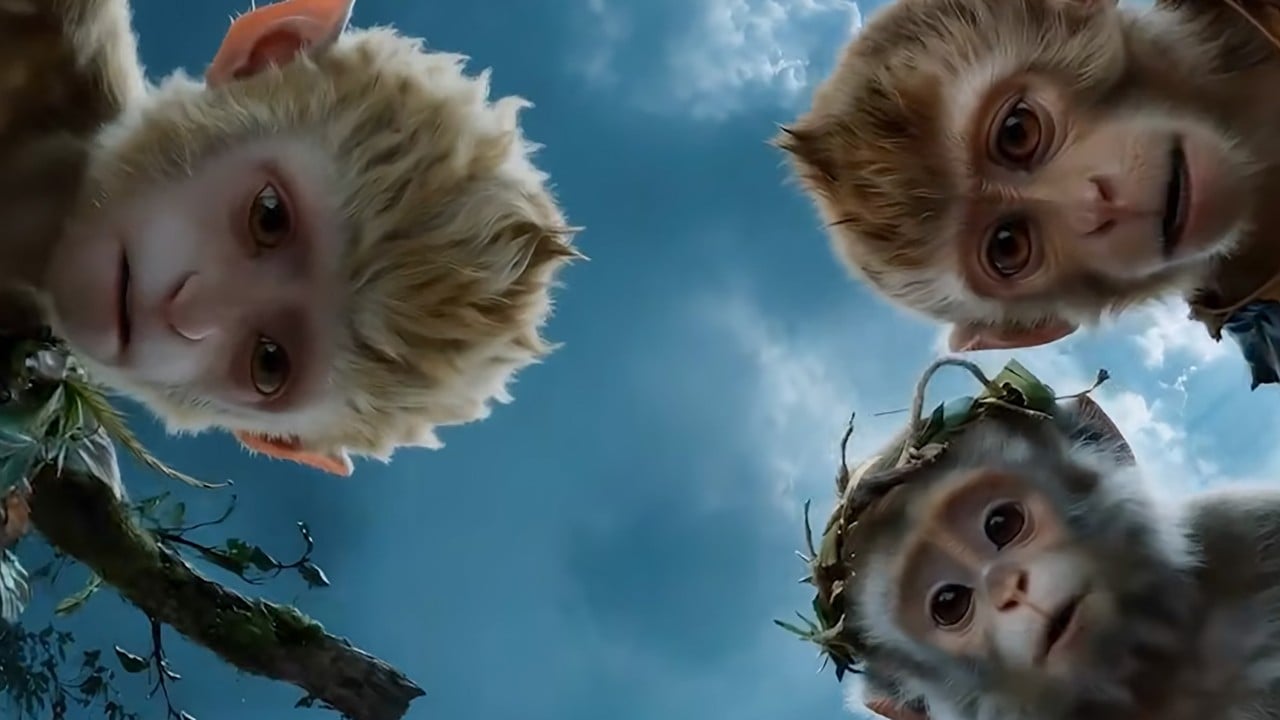
China's entertainment industry is undergoing a seismic shift as artificial intelligence-generated video dramas take center stage, replacing the low-quality "slop" that once dominated public airwaves. The breakthrough came this week when a fully AI-produced adaptation of the classic Chinese novel Journey to the West premiered on Hunan Satellite Television, a major state-owned broadcaster renowned for its hit entertainment programming and streaming platform Mango TV.
The 30-episode series, each lasting around 40 minutes, went from commission to broadcast in just three months, signaling a profound transformation in China's media landscape.
The premiere of the AI drama sent shockwaves through the industry, with shares in Mango Excellent Media, the listed unit of the broadcaster, surging more than 13 billion yuan (US$1.9 billion) in a single week. This surge underscored the strength of investor confidence in the burgeoning AI drama sector. "This sends a clear signal of policy support," remarked Guo Guo, a Beijing-based producer at a leading film and television company. "AI drama is going mainstream."
The surge in AI-generated content has been explosive. Liu Zhanhao, a producer who has embraced AI technology, noted that a team of just 10 could churn out a 100-minute vertical drama in a week, while more sophisticated productions could produce one 45-minute episode per week. Viewers, according to Liu, are surprisingly tolerant of the glitches that still plague AI-generated content.
"They're watching what we call 'brain-off' gratification dramas. They want the twists, the melodrama, the exaggeration. They're chasing a feeling."
The technology's rapid adoption across the content industry has been swift. Liu Zhanhao noted that production costs have plummeted dramatically, as many traditional set elements – art departments, set crews, cinematographers, lighting technicians, and actors – are no longer required. This has ushered in a new breed of workers known as "card pullers," responsible for feeding reference images and prompts into AI models and refining the output through iterative adjustments.
However, the quality of AI-generated content remains a challenge. Maintaining consistency of characters and settings, interpreting complex texts, and overcoming limitations on clip length continue to be major hurdles. Liu's latest project, a 120-minute science-fiction mystery slated for fall release on Mango TV, is already facing these challenges.
Despite these setbacks, streaming services like Mango TV, iQiyi, Tencent Video, and Douyin, as well as ByteDance's Hongguo platform, are actively incentivizing the creation of AI dramas through subsidies and algorithmic traffic boosts.
The influx of AI-generated content has outpaced its quality, leading some industry experts to predict a potential dilution of standards. Ivy Yang, founder of Wavelet Strategy, a consultancy, expressed concern that short dramas are most susceptible to becoming cookie-cutter AI slop. She warned that the industry risks losing the patience required for nuance and thoughtful engagement, which she believes is being eroded by the rapid consumption of low-quality content.
Producers like Liu expect that inferior productions will be swiftly eliminated as competition intensifies, echoing the demise of China's once-ubiquitous copycat mobile phones. However, the industry is grappling with the implications of AI, with distributors now demanding AI involvement in almost every project, even those where the technology may not be well-suited.
The industry, once protected by formidable barriers to entry, is now finding that AI has largely lowered these barriers, enabling talented individuals to gain recognition much more quickly, but potentially at the expense of genuine artistic talent.
Written by urgent.news from SCMP Tech's reporting — not their text. Machine-written — may contain errors; check the original before relying on it.