Monsoon’s Final Phase Rainfall Distribution Crucial For Kharif Acreage, Food Inflation: Report
New Delhi, September 5, 2026: As cumulative rainfall remains below normal and the monsoon enters its final phase, the spatial distribution of rainfall will be critical for final kharif acreage and could have implications for food inflation in the near term, a report said on Saturday. Cumulative southwest monsoon rainfall from June 1 to September 4 stood at 629.7 millimetres, 13 per cent below the…
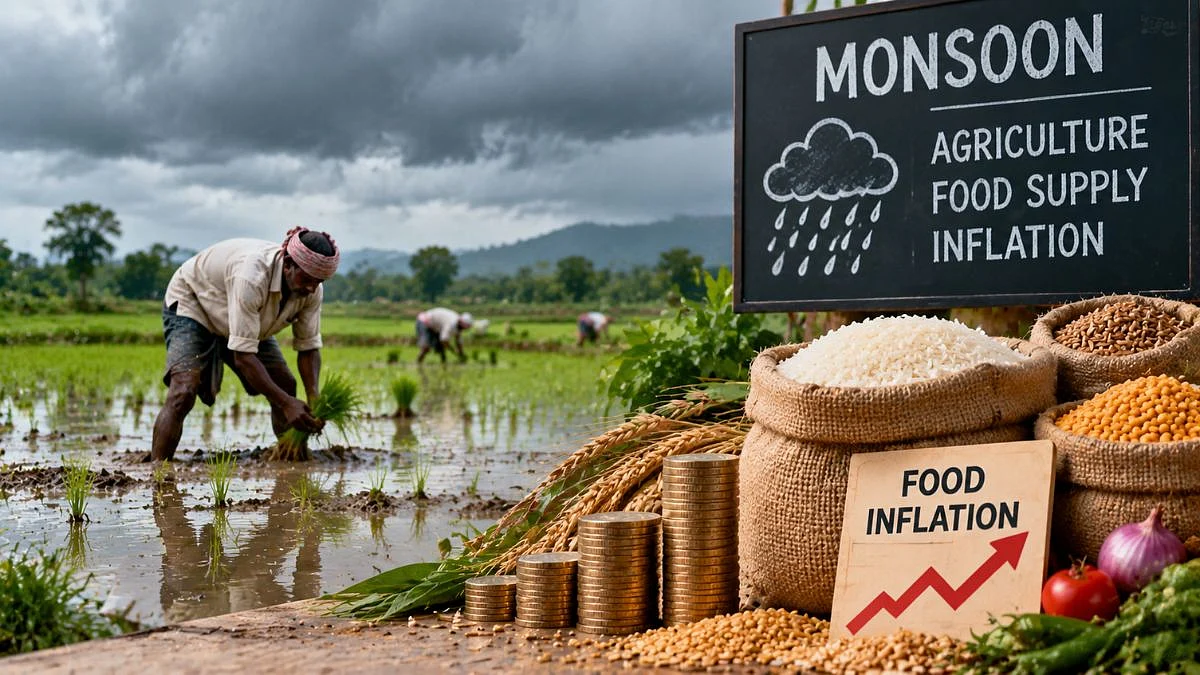
New Delhi, September 5, 2026 - As the monsoon enters its final phase, a report from the Bank of Baroda highlights the importance of the spatial distribution of rainfall for final kharif acreage and potential implications for food inflation. Cumulative southwest monsoon rainfall from June 1 to September 4 stands at 629.7 millimeters, a 13% drop from the long-period average.
This reduced rainfall has led to a decline in kharif sowing area. However, there are some positive trends with increased sowing for pulses, with tur rising by 1.6% and urad by 12%. Additionally, acreage for jute and mesta has also increased by 1.7%. Overall, 49% of the country experienced normal to excess rainfall, while 16 states were in the deficient zone.
Regionally, the Southern Peninsula experienced a 26% deficit, while East and North Eastern India were down by 24%, North Western India was 9% below normal, and the central region saw a 5% decrease. The report also notes that moderate El Nino conditions are currently prevailing and are projected to strengthen during the remainder of the season.
Kharif acreage shows a mixed trend, with declines in rice, oilseeds, and coarse cereals, while pulses and Jute & Mesta have seen an improvement. Water reservoir levels are lower than last year, with the All India reservoir at 70% of its total storage capacity compared to 86% the previous year.
Written by urgent.news from Free Press Journal's reporting — not their text. Machine-written — may contain errors; check the original before relying on it.