Making the legislative threshold adaptive and democratic
We must stop treating the parliamentary threshold as an arbitrary political horse trade and replace static cutoffs with an adaptive, evidence-based mechanism that protects voter representation.
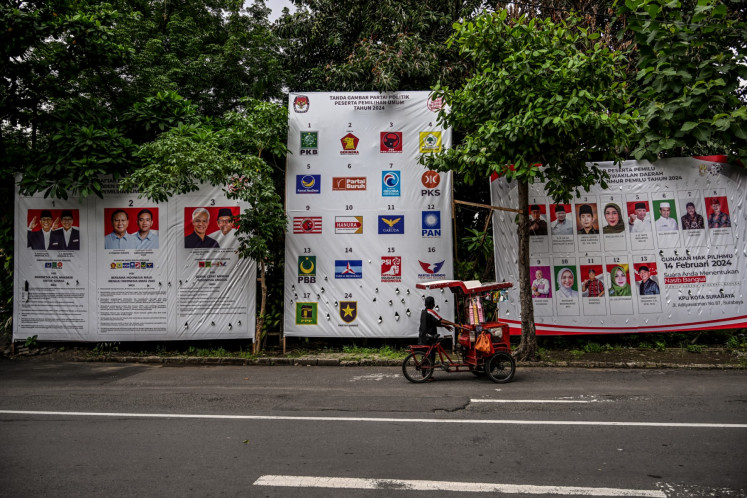
As the legislative threshold in Indonesia faces a pivotal moment, a shift from a static, arbitrary number to an adaptive, evidence-based mechanism is gaining traction among politicians. This transformation is not merely a political maneuver, but a constitutional obligation to improve voter representation, as ordered by the Constitutional Court in Ruling No. 116/PUU-XXI/2023.
Debates over the threshold's value are diverse, ranging from calls to eliminate it altogether to proposing higher cut-off points. However, simulations using the 2024 election data suggest that these varying thresholds yield similar outcomes. For instance, a threshold of 4, 5, and 7 percent all result in eight parties entering the House, leaving 11.40 percent of voters' ballots unrepresented or wasted.
On the other hand, lowering the threshold to 3.5 percent would admit nine parties, but at the cost of 7.53 percent of unrepresented votes. A 2.5 percent threshold allows for ten parties, reducing wasted votes to 4.72 percent. Clearly, the optimal threshold is not necessarily the highest possible one; rather, it is the one that provides stable representation without disproportionately disenfranchising voters.
The urgency for reform stems from the need to balance legislative streamlining with the protection of democratic representation. As the framework for the 2029 general election takes shape, initiating discussions on this issue is crucial. Your insights, suggestions, and experiences on this topic are sought by The Jakarta Post. Share your thoughts and help shape a more inclusive electoral system.
Written by urgent.news from The Jakarta Post Academia's reporting — not their text. Machine-written — may contain errors; check the original before relying on it.