Lunar terrain observed in Rafha reveals moon’s geological history
Astronomers in Rafha observed the moon’s last quarter phase, revealing geological features that document its early history and the solar system’s evolution.
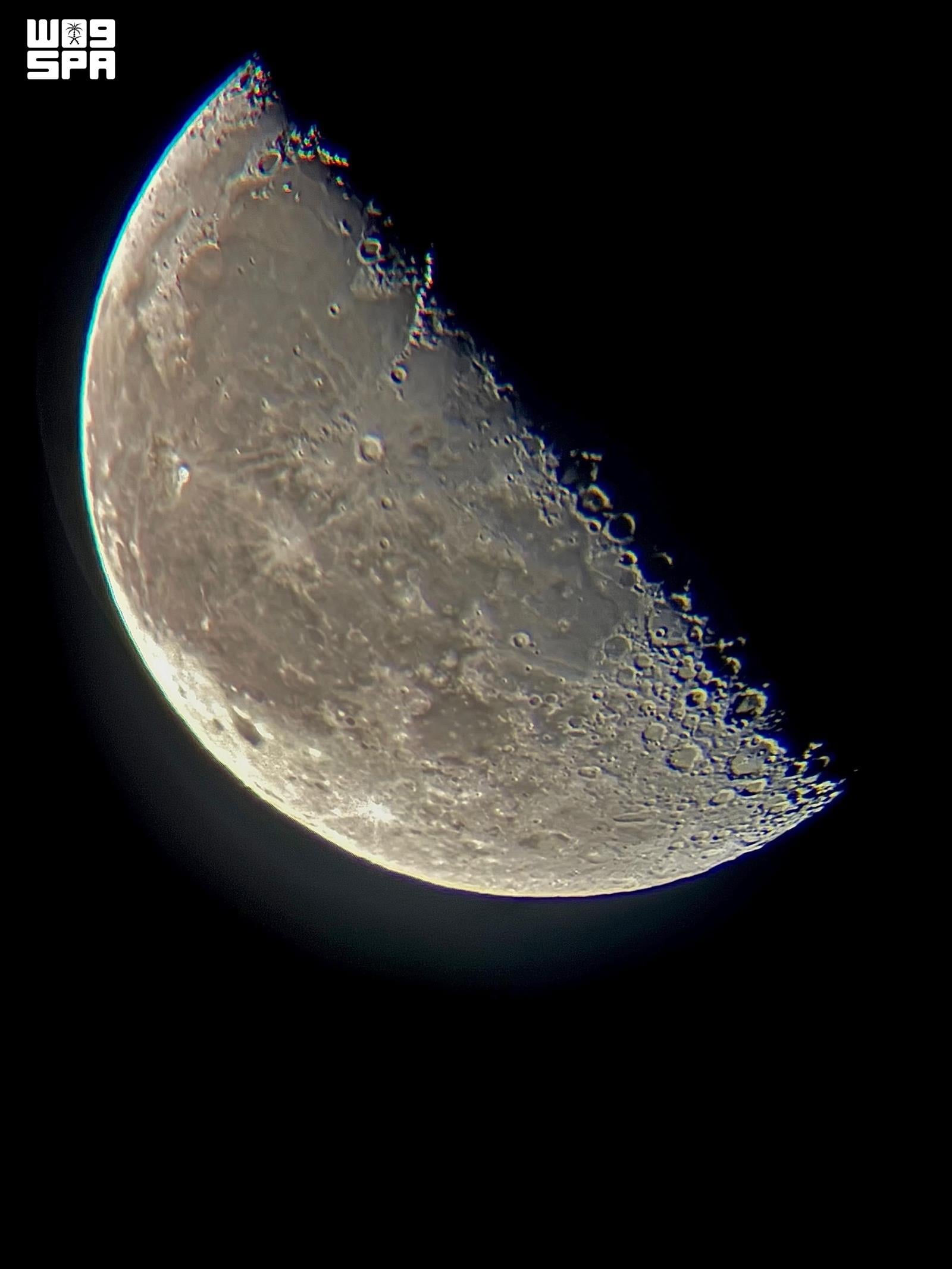
Astronomers in Rafha, Saudi Arabia, have observed the moon's last quarter phase, revealing geological features that document the moon's early history and the solar system's evolution. The observation, made by members of the Afaq Astronomy Association, highlighted impact craters, highlands, and dark lowlands, which serve as a natural record of the moon's geological past.
Burgis Al-Falih, a member of the association, explained that the clarity of these features depends on the moon's phase, the timing of observation, atmospheric conditions, and the quality of astronomical instruments used. The moon's terrain, shaped by meteorite impacts and ancient volcanic activity, provides valuable insights into the solar system's history.
Brief written by urgent.news from Ajel English's own syndicated text. Machine-written — may contain errors; check the original before relying on it.