ISRO launches EOS-05: What are the different types of satellite orbits, and why do they matter?
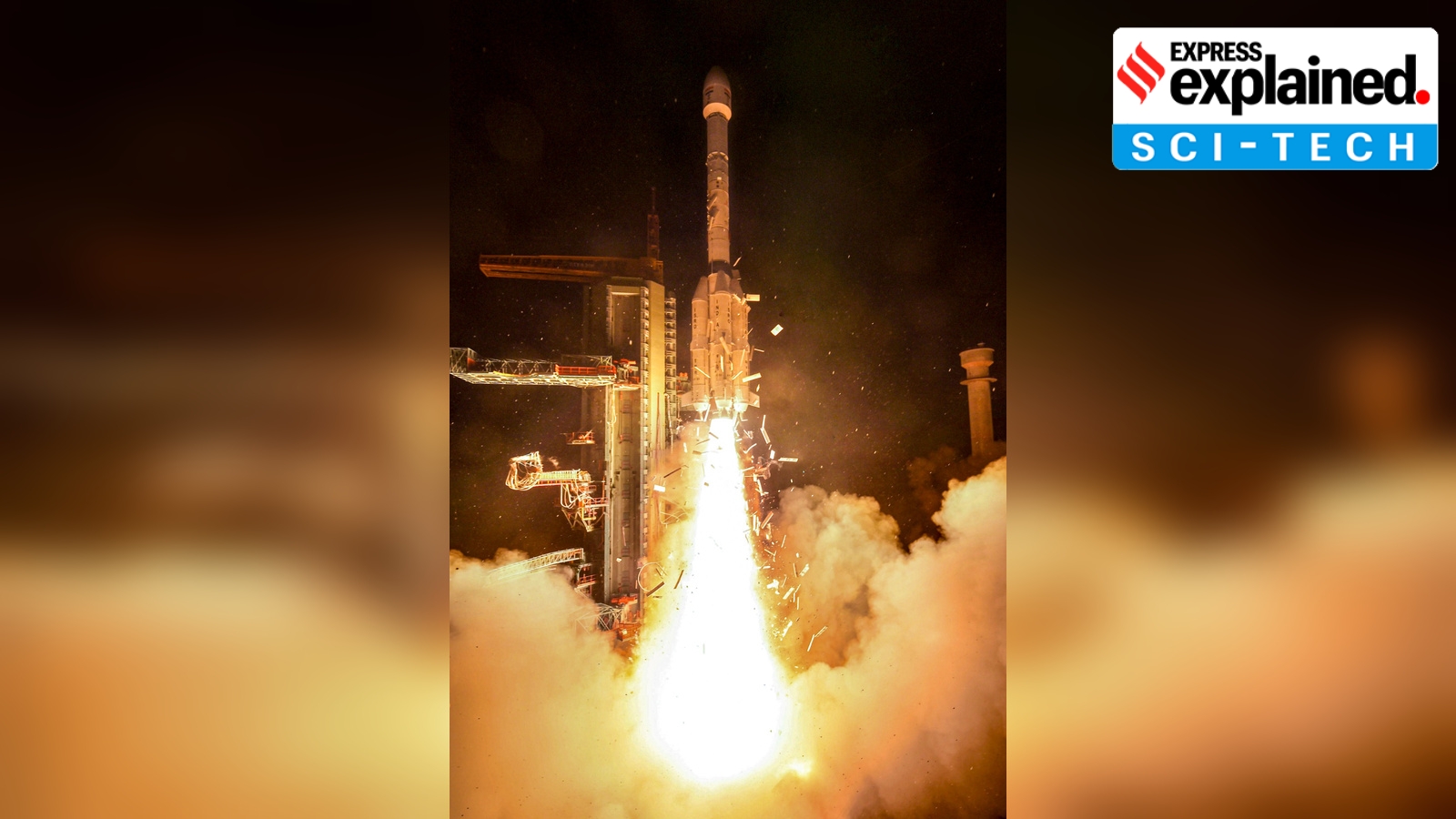
The Indian Space Research Organisation (ISRO) launched India's first dedicated imaging satellite, EOS-05, on Friday. This satellite will operate in geosynchronous orbit, located about 36,000 km from Earth. India currently has several other active Earth observation satellites in lower Earth orbits (LEO), which periodically capture imagery over India.
In geosynchronous orbit, the satellite remains stationary relative to Earth, enabling it to watch the same region continuously without any gaps. Different types of orbits serve various purposes, as outlined below.
Low Earth orbits (LEO) encompass the area immediately surrounding our planet, typically defined as the region between 160 km and 2,000 km above Earth's surface. Due to their proximity, LEO satellites experience reduced signal latency, making them ideal for communications and observation purposes. The International Space Station and numerous communication and observation satellites can be found in this zone.
However, due to atmospheric drag, satellites in VLEO (very low Earth orbit) face increased fuel requirements, while satellites in Sun-synchronous orbit (SSO) maintain a consistent angle relative to the Sun, optimizing their image capture capabilities.
Medium Earth orbit (MEO) encompasses altitudes ranging from 2,000 km up to 35,786 km. Unlike LEO satellites, which follow a fixed path around the Earth, MEO satellites have the flexibility to follow various orbital paths. A notable subset of MEO is the global navigation satellite system, such as the European Galileo constellation.
GEO (geostationary orbit), a subset of geosynchronous orbit, is situated above Earth's equator at approximately 35,786 km. In this orbit, satellites appear stationary relative to Earth as they move in sync with our planet's rotation. This stationary positioning allows GEO satellites to provide extensive coverage, with just three evenly spaced satellites capable of delivering near-global coverage. India currently operates 31 operational satellites in GEO.
Launching a heavy satellite like EOS-05 directly into geosynchronous orbit would entail significant fuel consumption. To circumvent this challenge, ISRO typically places the satellite in a geosynchronous transfer orbit (GTO) or a lower-energy sub-GTO and employs its propulsion system to raise and circularize the orbit, ultimately achieving operational orbit.
The EOS-05 satellite, weighing 2,367 kg, was released into sub-GTO by ISRO's GSLV rocket, which carries a capacity below the mass of the satellite. Subsequently, the satellite utilized its onboard propulsion system to attain the final geosynchronous orbit.
The benefits of satellites in geosynchronous orbit include persistent observation and area coverage, as their fixed position relative to Earth allows for continuous monitoring of specific regions. However, the increased distance from Earth results in a trade-off in image resolution, necessitating station-keeping measures and fuel expenditure to maintain the satellite's position.
Written by urgent.news from The Indian Express's reporting — not their text. Machine-written — may contain errors; check the original before relying on it.