Inaugural Global Education Summit explores AI, future talent and changing pathways
More than 2,000 policymakers, educators and parents from around the world gathered in Hong Kong on Saturday for the inaugural Global Education Summit, which focused on regional talent development, artificial intelligence integration and changing academic pathways. The two-day event, held at the Grand Hyatt Hong Kong in Wan Chai and co-organised by the South China Morning Post and HSBC Premier,…
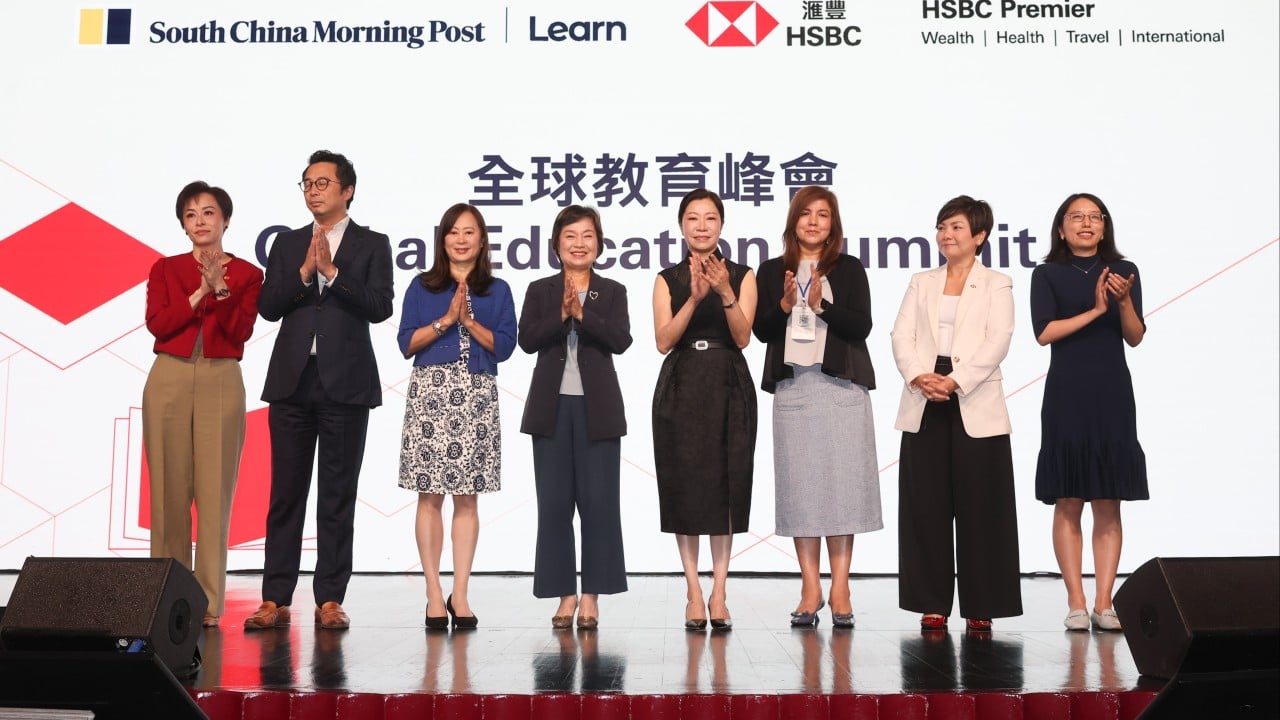
Over two thousand global policymakers, educators, and parents convened in Hong Kong for the inaugural Global Education Summit. This two-day event, organized by the South China Morning Post and HSBC Premier, aimed to assist families in navigating the complex academic landscape, focusing on regional talent development, AI integration, and evolving academic paths primarily for secondary and pre-university students in Hong Kong, mainland China, and Southeast Asia.
Secretary for Education Christine Choi Yuk-lin opened the morning session, emphasizing Hong Kong's shift from a "one-way street" trend to "two-way global highway" studying abroad. She highlighted the government's focus on expanding Science, Technology, Engineering, and Mathematics (STEM) education, including plans to allocate more land for higher education, with a goal to have 35% of undergraduates enrolled in STEAM disciplines by 2026-27.
The Northern Metropolis University Town (NMUT) project, expanding from 60 hectares to 300 hectares, symbolizes this shift, integrating education, technology, talent, industry, and urban development under a "One Town, Five Elements" model. Choi also reported a 30% increase in non-local students from over 100 countries in the 2025-26 academic year.
The summit featured a panel of university leaders discussing the need for higher education to adapt to the AI-driven workforce. Professor Irwin King from the Chinese University of Hong Kong stressed that universities should prioritize skills and attitude over traditional academic performance. He noted a 75% increase in non-local student intake at CUHK last year, looking for passionate students beyond just academic prowess.
Professor Jay Siegel from the University of Hong Kong cautioned against exposing young children to AI tools too early, warning it could hinder cognitive development and long-term mental health. Meanwhile, Professor Yike Guo from HKUST predicted a shift towards liberal arts education, emphasizing adaptability, passion, and openness as essential qualities for the future.
Written by urgent.news from South China Morning Post - Hong Kong's reporting — not their text. Machine-written — may contain errors; check the original before relying on it.