How did the Romans build their towering aqueducts?
The ancient Romans are well known for their aqueducts. But how did they build these impressive structures?
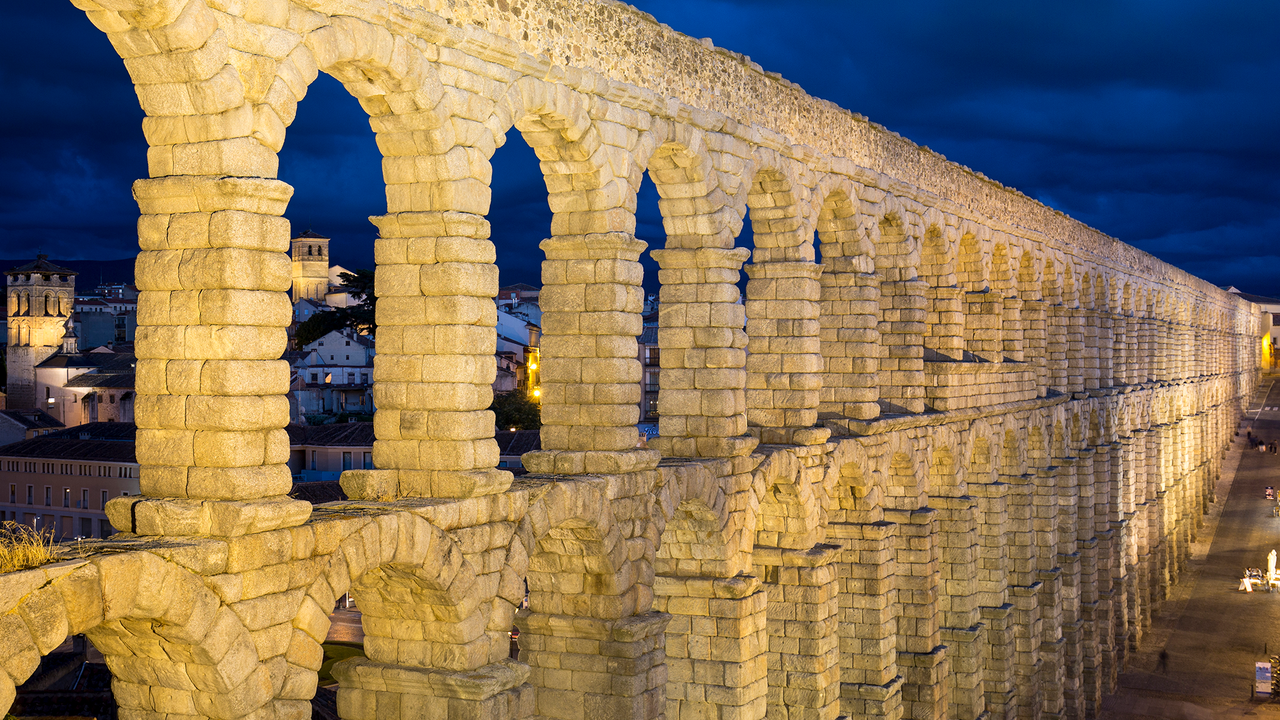
The Romans are renowned for their impressive aqueducts, which transported water to cities and settlements across their vast empire. These aqueducts could span considerable distances, such as the Valens Aqueduct in Constantinople, which stretched over 250 miles. Despite their immense size and longevity, the Romans' engineering ability remains a source of awe.
To begin construction, the Romans had to choose a reliable water source. Springs were a common selection, and the aqueducts were meticulously designed to ensure the water flowed towards its destination. This was achieved by creating a gradual downward incline from the water source to its end, guiding the flow of water.
Roman surveyors played a crucial role in designing these routes. They utilized tools like the libra or the dioptra to measure changes in elevation. The dioptra, for instance, was a disc with a sighting bar that could be suspended from a stand, allowing surveyors to compare elevations with rods in the ground.
The Romans employed a unique form of concrete, which proved far more durable than modern concrete. This concrete incorporated pozzolan, an ash-like substance, mixed with lime and water, creating a robust material that hardened when exposed to water. This durable concrete was vital in constructing bridges, arches, and other structural elements of the aqueducts.
Beyond the concrete, the Romans also took great care in selecting stable geological formations for the aqueduct routes, minimizing the risk of collapse. Regular maintenance, which often continued into the Middle Ages, further contributed to the aqueducts' remarkable preservation. They avoided unstable landscapes like volcanoes and instead used arches for aqueducts in challenging terrains.
Upon reaching the city, the water would often pass through settling pools, allowing sediment to settle before the water continued its journey to a distribution tank. This multi-step process helped ensure the water remained clean and drinkable.
The labor required to build an aqueduct varied depending on its size and completion timeline. For example, the Hadrianic aqueduct in Athens, spanning around 12.4 miles, could have been constructed by a team of approximately 500 workers over 15 years, as estimated in a 2022 study. Even after the fall of the Roman Empire, many aqueducts continued to function, some even into modern times, thanks to continued maintenance efforts.
Written by urgent.news from Live Science's reporting — not their text. Machine-written — may contain errors; check the original before relying on it.