Eye donation in India: current scenario and way forward
The future of eye donation in India lies in a strong public–private–NGO partnership. Awareness must translate into timely family consent, consent into retrieval, and retrieved tissue into high-quality transplantation
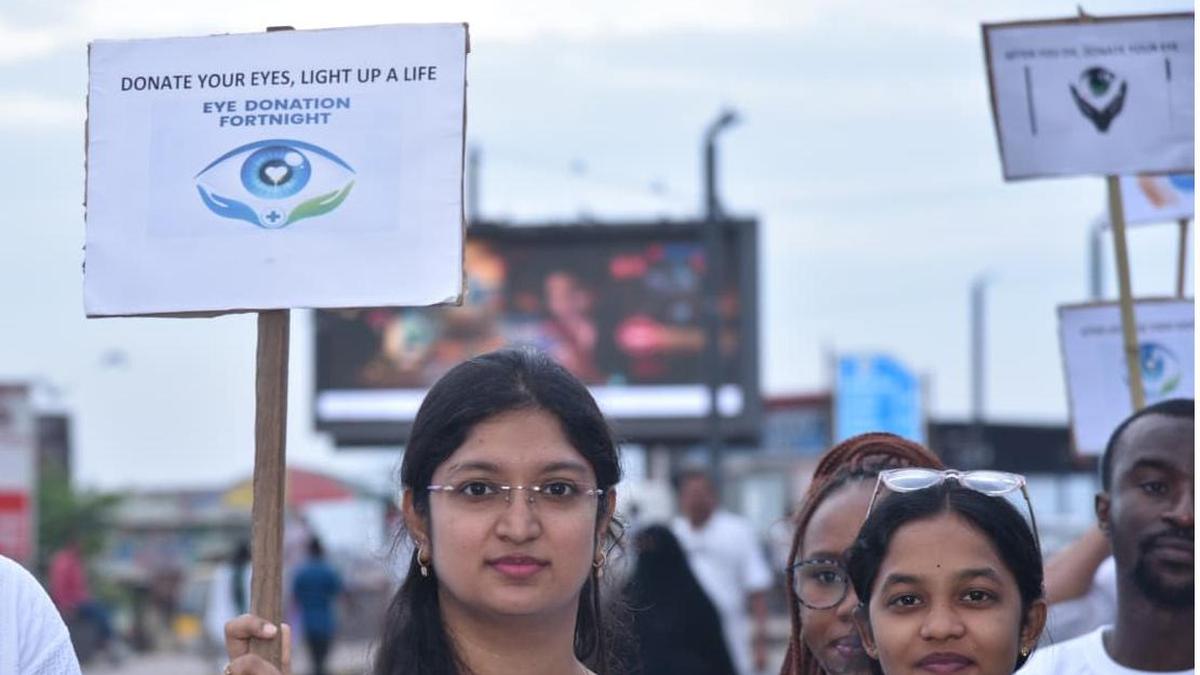
Eye donation in India represents a profoundly impactful act, with a single donor having the potential to restore sight to two individuals through corneal transplantation. The country has made significant strides in the field, boasting 396 functional eye banks, and witnessing a rise in corneal collections from 62,370 in 2022-23 to 69,848 in 2024-25.
However, the demand for donor tissue far outweighs its supply. Approximately 2 million people in India suffer from corneal blindness, yet only 40,000 corneal transplants are performed annually. The National Programme for Control of Blindness and Visual Impairment (NPCBVI) assumes a pivotal role in supporting the eye donation system, providing funding for infrastructure, training personnel, promoting donation, and supplying essential corneal storage media.
Government hospitals can enhance donation rates by implementing Hospital Cornea Retrieval Programmes (HCRP) and incorporating eye donation into standard end-of-life counseling. Non-governmental organizations (NGOs) and service organizations play a vital role in raising awareness, dispelling misconceptions, encouraging pledges, and most importantly, counseling families during the grieving process.
Entities such as eye bank networks, Lions Clubs, and community-based groups can disseminate the message of eye donation to schools, colleges, workplaces, and rural areas. Private eye hospitals and institutions can contribute by establishing or enhancing eye banks, developing efficient retrieval networks, upholding stringent tissue evaluation and preservation standards, and providing advanced transplantation procedures.
Recent endeavors, like the expansion of the National Eye Bank at AIIMS, Delhi through collaborations with additional hospitals, underscore the significance of joint retrieval networks. Ultimately, the trajectory of eye donation in India hinges on a robust public-private-NGO partnership. Turning awareness into timely family consent, consent into retrieval, and retrieved tissue into high-quality transplantation is crucial.
Strengthening each link in this chain is essential to alleviate the burden of corneal blindness and render the gift of sight a reality for countless more Indians. The ultimate objective is to convert the gift of eye donation into the gift of sight. Each donated cornea embodies a legacy of compassion, offering light to another's life.
Written by urgent.news from The Hindu - Sci-Tech's reporting — not their text. Machine-written — may contain errors; check the original before relying on it.
This story
This is one outlet's version. Read the fullest account.