Don’t deny contributions, sacrifices of non-Muslims in building M’sia
They not only help to defend the country but also drive its prosperity and shape its glory.
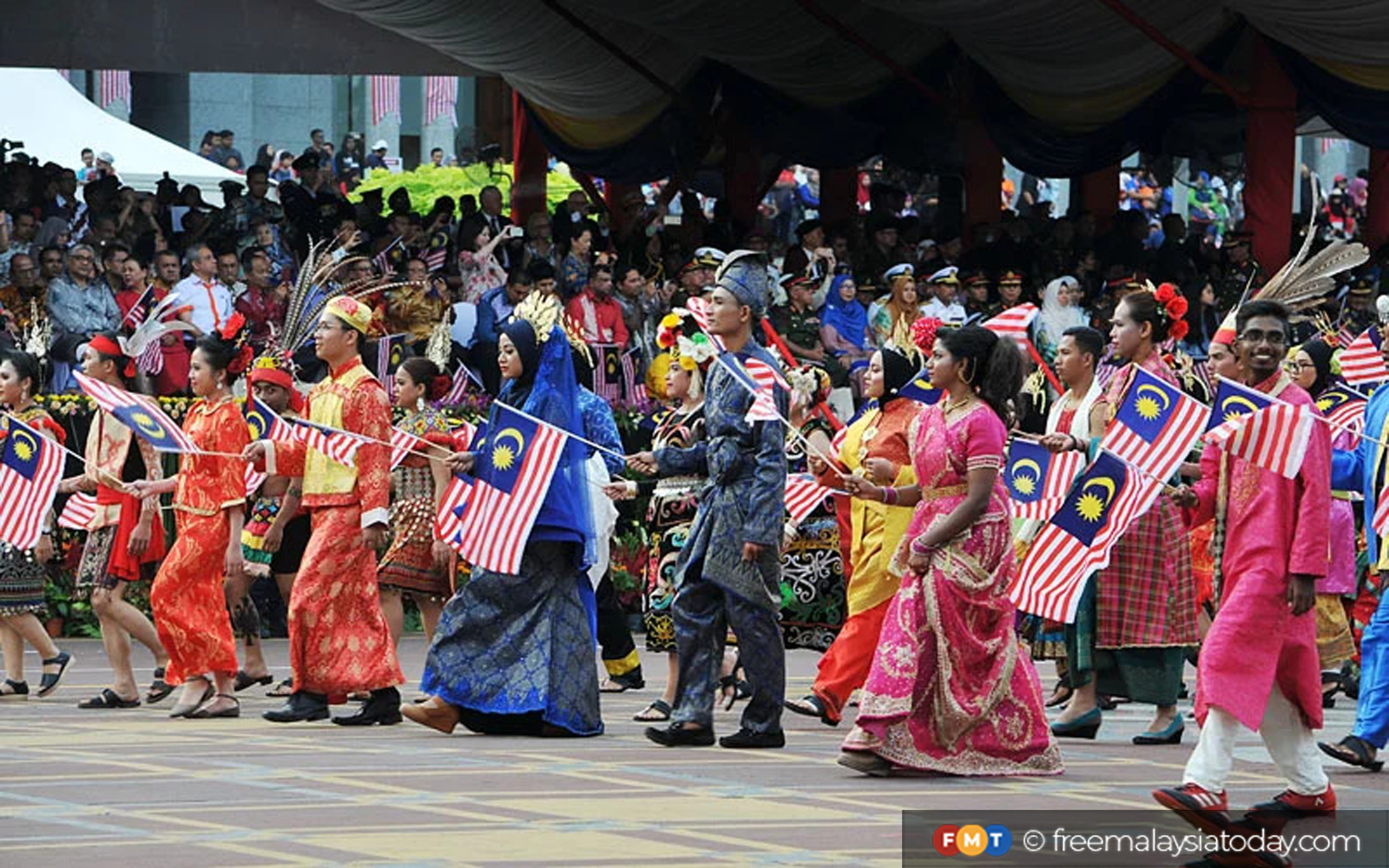
For the past 69 years since Malaysia gained independence, the non-Muslim community has played a crucial role in the nation's geopolitical landscape, from pre-independence times to the current postmodern phase. Their contributions span various critical areas that form the bedrock of national identity and stability. However, political dynamics can sometimes be influenced by religious and racial concerns, potentially threatening the social fabric of the nation.
It is important to recognize the sacrifices made by non-Muslim communities to appreciate their role as a key pillar in defending, advancing, and uniting Malaysia's socioeconomic and political landscape.
During the struggle for independence, non-Muslims showed great political tolerance to achieve national consensus. Tan Cheng Lock, a key figure, played an instrumental role as the founder and first president of the Malaysian Chinese Association (MCA) in 1949, helping to unite the Chinese community and demand independence for the Federation of Malaya.
His loyalty to the nation during the Emergency was instrumental in convincing the Chinese community to pledge their full commitment to the Federation, rejecting communist ideologies and Chinese geopolitical influences.
The formation of the Social Contract, which granted citizenship rights to non-Malays in exchange for recognizing the special position of the Malays, was made possible by substantial negotiations with Umno and a willingness to compromise on certain radical demands. This cooperative pattern was further strengthened by the Malaysian Indian Congress (MIC) within the Alliance Party. The coalition of Umno-MCA-MIC required great political sacrifice to meet the prerequisites for independence set by the British.
Post-1957, non-Muslim figures continued their active involvement in the country's executive and legislative institutions as ministers, members of Parliament, and senators. During the communist insurgency threat and the Indonesian Confrontation phase, thousands of non-Muslim security personnel, including indigenous communities from Sabah and Sarawak like the Iban, Kadazan, and Bidayuh, were directly involved in domestic defence and security operations.
Figures such as the late Warrant Officer I Temenggong Kanang anak Langkau, who received the prestigious Seri Pahlawan Gagah Perkasa (SPG) gallantry award, exemplified national resilience. His refusal to surrender despite sustaining severe injuries during a battle in Perak highlighted his commitment to the nation.
Non-Muslims accounted for an estimated 60% of the membership in the 1st Reconnaissance Regiment, which was deployed in domestic operations and United Nations peacekeeping missions in the Congo. Between the 1960s and the late 1970s, non-Malay personnel made up around 30% of the entire armed forces workforce, with higher representation in the navy and air force.
More than 500 soldiers and 1,300 police officers lost their lives during the Emergency. Psychologically, non-Muslim intelligence expert Too Chee Chew played a crucial role in counter-propaganda strategies through leaflets and radio broadcasts, effectively prompting thousands of communist guerrillas to surrender. His role as chief adviser to Tunku Abdul Rahman during the Baling Talks (1955) in analyzing Chin Peng's diplomatic maneuvers was critical in protecting the nation's sovereignty.
Written by urgent.news from Free Malaysia Today's reporting — not their text. Machine-written — may contain errors; check the original before relying on it.
Also reported by 1 other outlet
- Don’t deny contributions, sacrifices of non-Muslims in building M’sia freemalaysiatoday.com