Scientists discover bizarre microbe that 'gives birth' by bursting itself open
Scientists studying a tiny marine organism found in Scotland expected to see its cells reproduce in familiar ways. Instead, they watched something that reminded them of a science-fiction film. Get updated faster and for FREE: Download the Gulf News app now - simply click here. The microscopic creature grows new cells inside its own body. When those offspring are ready, the outer mother cell…
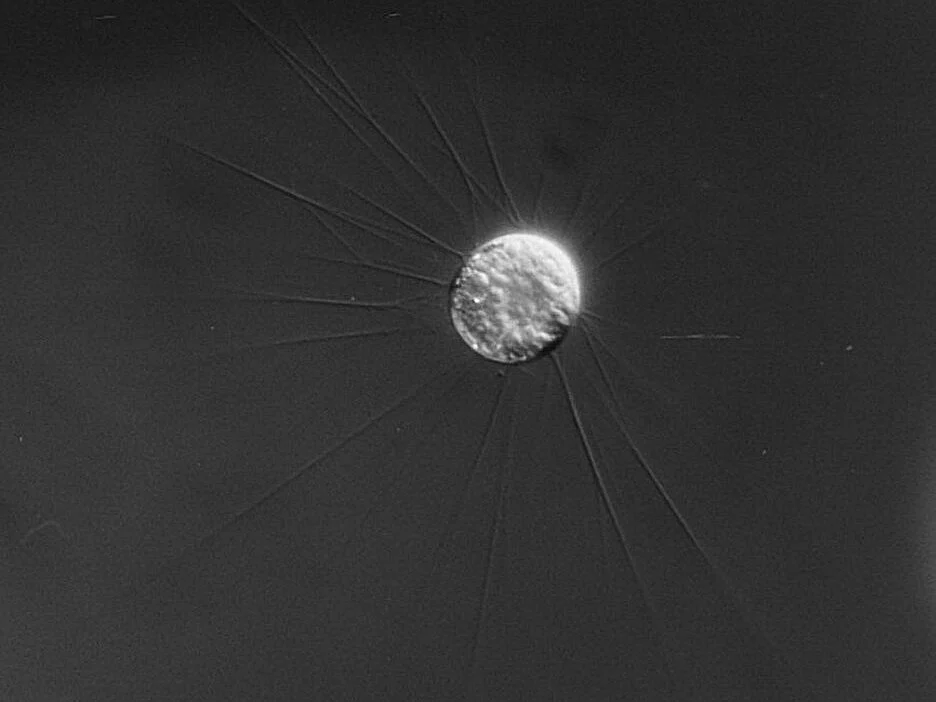
Scientists examining a unique marine organism discovered in Scotland were taken aback by its peculiar reproductive behavior. Typically, they would anticipate the cell to divide or generate spores to spawn new generations. However, the microscopic creature known as Caledochytrium aldermanii, belonging to the Labyrinthulomycetes group, exhibits an extraordinary method of reproduction.
Within its body, a mature cell develops a large chamber where new daughter cells form. When ready, the mother cell ruptures, releasing the offspring. In some instances, the daughter cells are already carrying a developing generation before they emerge. This unconventional reproductive strategy has led researchers to describe the organism as "pregnant grandmothers."
The discovery took decades to unveil, thanks to the meticulous observation of the microorganisms under a microscope. Dr. Jane Polglase, who has been studying this group for nearly 50 years, emphasizes the importance of detailed visual documentation, noting that they would have missed this unusual process without using an electron microscope.
The researchers named the organism Caledochytrium aldermanii, with "Caledo" referencing Scotland and "Alderman" honoring Dr. David Alderman, who contributed to preserving early cultures. Found in various Scottish environments, including areas associated with octopuses, rainbow trout, and a salt marsh, these tiny yet vital organisms play a crucial role in recycling organic material in marine ecosystems.
Moreover, C. aldermanii produces an ectoplasmic net used for movement, feeding, and buoyancy, which can serve as a nutrient source for marine larvae. Additionally, some species naturally produce high concentrations of omega-3 fatty acids, potentially contributing to the production of omega-3 oils and carotenoids used in various products.
While the commercial potential remains speculative, the discovery underscores the ongoing revelation of new microbial behaviors, highlighting the vastness of the microscopic world still awaiting exploration.
Written by urgent.news from Gulf News's reporting — not their text. Machine-written — may contain errors; check the original before relying on it.