Rüstung: Kursrutsch, Umsatzwarnung, Lieferprobleme – wie Armin Papperger bei Rheinmetall an Grenzen stößt
Risse im Rüstungswunder von Düsseldorf: Die Wachstumsgeschichte von Rheinmetall bekommt Kratzer. Im Mittelpunkt der Kritik steht Konzernchef Armin Papperger. Hat er sich überschätzt?
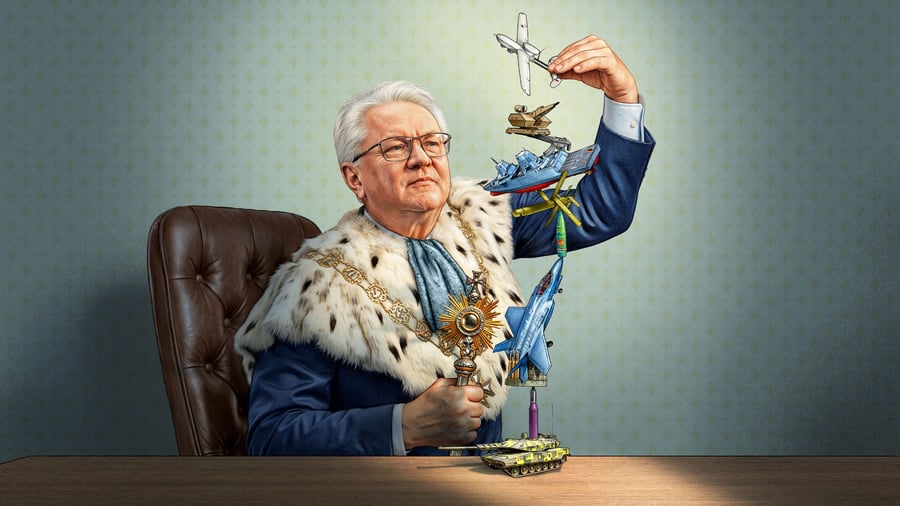
Armin Papperger, Rheinmetall's CEO, is struggling with challenges. On a hot June day in Paris, he rushed to the Croatian stand at the defense trade fair Eurosatory. His assistant urged him to attend the Croatian stand, as they had already discussed it with Jens Plötner, Germany's Minister of Defense. Papperger, who was already leaving the Rheinmetall pavilion, had bodyguards with him.
One of them stopped him, insisting they take the armored limousine to the Croatian stand, which was just a few meters away. Papperger hesitated, but ultimately agreed, understanding that any discussion would be pointless. He entered the armored car, which took him to the Croatian stand, only 500 meters away. The Rheinmetall CEO is now under constant protection, 24/7, at home, on the road, and everywhere.
This level of protection is unprecedented, even for Germany's Chancellor Friedrich Merz. Papperger emphasized that job creation is essential, and those who compromise face consequences. He firmly believes that his company is "systemically relevant," comparable to the major banks during the financial crisis. Since Russia attacked Ukraine and former Chancellor Olaf Scholz declared a new era, his company provides weapons to the German armed forces, numerous European NATO allies, and Ukraine.
This has made him a target for Russian assassins. As Germany sought companies to modernize its aging armed forces, Papperger was there, leading a defense company rather than a traditional industrial enterprise. His narrative rings true in the changed geopolitical landscape, where Russian President Vladimir Putin uses military power as a tool for his interests, and US President Donald Trump challenges the traditional fifth NATO article, questioning military aid.
However, Papperger's success is linked to his unique approach. Germany could invest over 600 billion euros in defense by 2035, with a significant portion going to Rheinmetall, which supplies the Bundeswehr with munitions, tanks, satellites, drones, fighter jet parts, and defense software. The company's stock has risen over 1000% since 2021, with a market capitalization of nearly 51 billion euros.
The company aims to double its revenue to 50 billion euros by 2030, its profits to twentyfold, and its workforce to double. To achieve this, Papperger plans to expand in the USA, tapping into the maritime and space industries. By the end of the year, the order book is expected to reach over 100 billion euros. Despite Rheinmetall's growth, there are concerns.
The company faces structural and operational issues despite its impressive growth figures. In June, Rheinmetall had to lower its revenue forecast for the current year due to a canceled carrier deal with the Bundeswehr and delays in key tank deliveries. Defense Minister Boris Pistorius is growing increasingly frustrated. The company's close relationship with Papperger also poses risks.
Rheinmetall's dependence on its CEO, coupled with his management style, creates a problematic dependency relationship.
Written by urgent.news from Handelsblatt's reporting — not their text. Machine-written — may contain errors; check the original before relying on it.