Populism poses serious challenge to independent central banks, Bailey says
Bank of England governor says central bankers must explain decisions or risk being seen as ‘unrepresentative elite’ The governor of the Bank of England has said the rise of populist politicians presents a serious challenge to independent central banks. As Nigel Farage’s Reform UK gathered for its annual conference in Birmingham, Andrew Bailey said central bankers must be prepared to explain their…
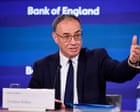
The Bank of England's governor, Andrew Bailey, has warned that the rise of populist politicians poses a significant challenge to independent central banks. Speaking at a conference at the London School of Economics, Bailey emphasized that central bankers must be prepared to explain their decisions to the public or face accusations of being an "unrepresentative elite."
He cautioned that central banks must not take their legitimacy for granted, as populist parties often claim to represent the authentic will of the people. Bailey stressed that any institution perceived as interfering with the people's will should be seen as an obstacle to popular sovereignty. He pointed out that most modern governments operate on the principle of legitimacy stemming from the plurality of society, not the preferences of a single group.
Populist parties, particularly on the right, have been gaining traction in both the UK and the US by attacking traditional institutions, including central banks. Reform UK's Nigel Farage has expressed interest in replacing Bailey if Reform comes to power, and US President Donald Trump has frequently criticized former Federal Reserve chair Jerome Powell for the Fed's failure to lower interest rates.
Bailey was among international central bankers who signed a statement defending Powell against Trump's criticism and emphasizing the importance of central bank independence. The Bank of England was granted independence in 1997, separating interest rate decisions from the chancellor and placing them in the hands of a nine-member Monetary Policy Committee (MPC) chaired by the governor.
Since the 2008 global financial crisis, the Bank has taken on additional responsibilities for financial stability. Bailey defended the Bank's insularity from politics, stating that it allows it to better maintain "the monetary and financial conditions that make sustained prosperity possible." The Bank's Monetary Policy Committee (MPC) is currently divided over how to address rising inflation due to the Iran war, with Bailey downplaying the risk of "second-round effects" that could perpetuate inflation through wage inflation.
The MPC maintained its 3.75% interest rate at its last meeting in July, but three members, including Chief Economist Huw Pill, advocated for a rate increase during a speech on Thursday, asserting that the Bank should act decisively in response to rising inflation. The Bank is scheduled to announce its decision on its controversial policy of quantitative tightening at its next policy meeting on September 17th.
This policy involves the Bank progressively selling off the bonds it acquired through quantitative easing, which has created money to prevent a recession. Critics, including Reform and left-wing think tanks, argue that these sales drive up the yield, or interest rate, on government bonds, making it more expensive for the government to borrow.
This is particularly concerning given the current tense bond market conditions. Bailey will appear before the cross-party Treasury select committee in the coming week to explain his decision-making process.
Written by urgent.news from Guardian Business's reporting — not their text. Machine-written — may contain errors; check the original before relying on it.