Nobody Knows Anything, Rate Expectations Edition
Heading out the door for the Labor Day weekend, with blue skies and 85° temperatures, I had to share a chart. It’s from the San Francisco Federal Reserve (via Torsten Slok of Apollo) and shows Wall Street expectations for Federal Reserve rate action. It’s the perfect explainer for why forecasts tend to be… Read More The post Nobody Knows Anything, Rate Expectations Edition appeared first on The…
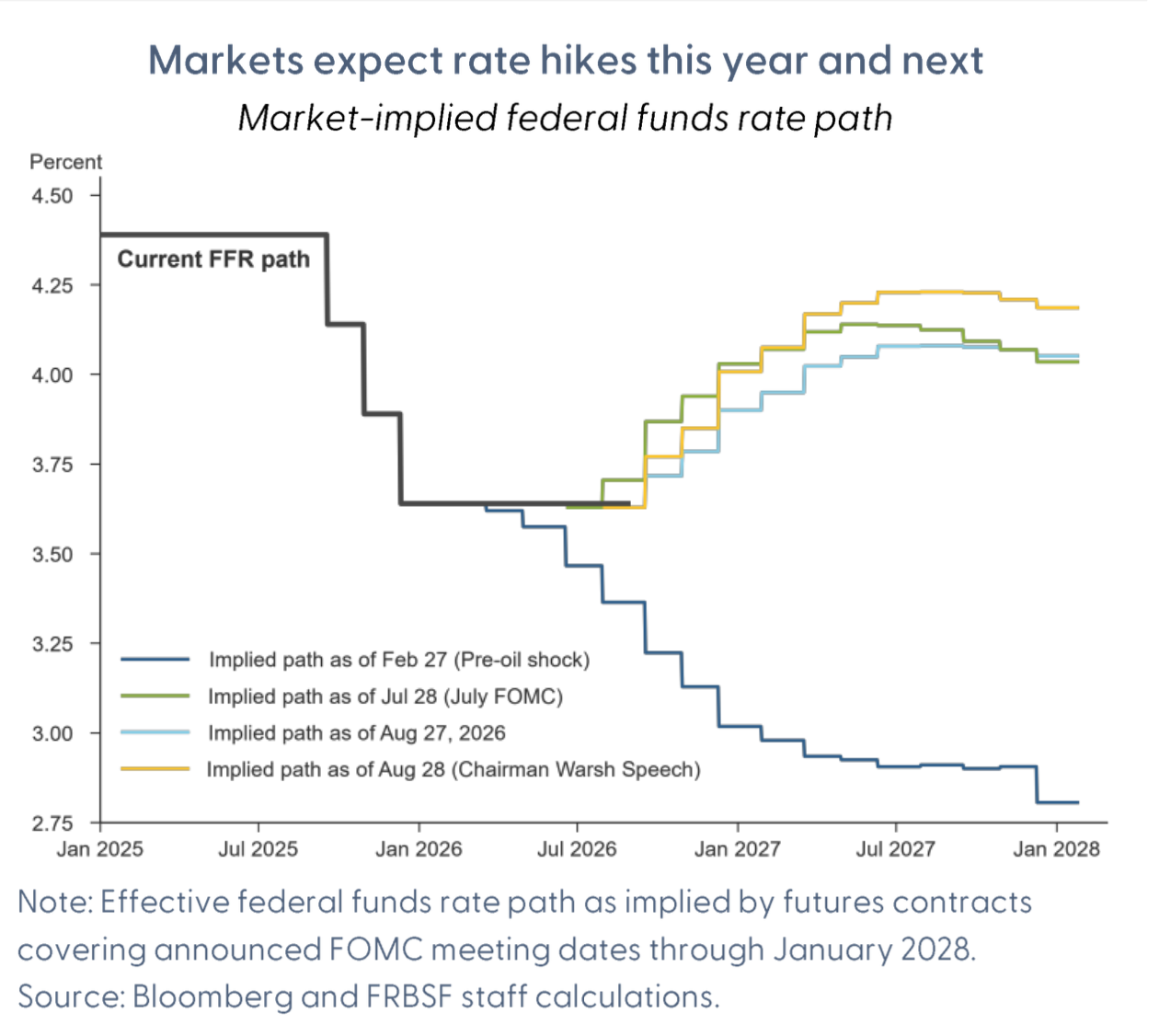
As I prepared to leave for the Labor Day weekend, blue skies and 85-degree temperatures greeted me. Along the way, I stumbled upon a chart from the San Francisco Federal Reserve, shared by economist Torsten Slok of Apollo. The chart illustrates Wall Street's expectations for Federal Reserve rate actions, offering a useful explanation for why forecasts are notoriously unreliable.
In early 2026, market participants anticipated a series of ongoing rate hikes, based on the previous trend. However, the escalating war sent food and energy prices soaring. Despite being predicted as a brief endeavor, the Middle Eastern conflict persisted, leaving expectations flat. Shortly thereafter, the "short military operation" evolved into a full-blown war, and inflation remained stubbornly high, prompting forecasts for modest rate increases.
As the war shows no signs of concluding, and tensions rise with a hostile actor controlling the Strait of Hormuz, expectations have been revised upward, leading to the current consensus of "higher for longer." Unless, of course, an unforeseen event intervenes...
Forecasts typically involve simple extrapolations of the present status quo or ongoing trends, often neglecting random or unexpected events commonplace in economics, markets, and geopolitics. When a forecast proves accurate, it usually signifies that no significant changes occurred, and the extrapolation happened to be randomly correct.
However, in most cases, something unexpected happens: wars erupt, pandemics strike, acts of terror occur, new technologies either thrive or fail, and governments either fail to meet budgetary obligations or overspend. The parade of unpredictable events often derails even the most diligent predictions. A year is simply too brief to guarantee that the prevailing secular trend will prevail, and too lengthy to avoid the impact of random occurrences.
Written by urgent.news from The Big Picture's reporting — not their text. Machine-written — may contain errors; check the original before relying on it.