Nepal floods could cost insurers over $130 million even before death, injury claims
MUMBAI: The devastating flood in Nepal last week could result in commercial insurance losses exceeding 20 billion Nepali rupees ($132.3 million), with hydropower projects accounting for most claims, according to a top official at one of the country’s leading insurers. The insurance cover, when paid out, covers losses borne by the operators of the power plants. Life insurance, personal accident…
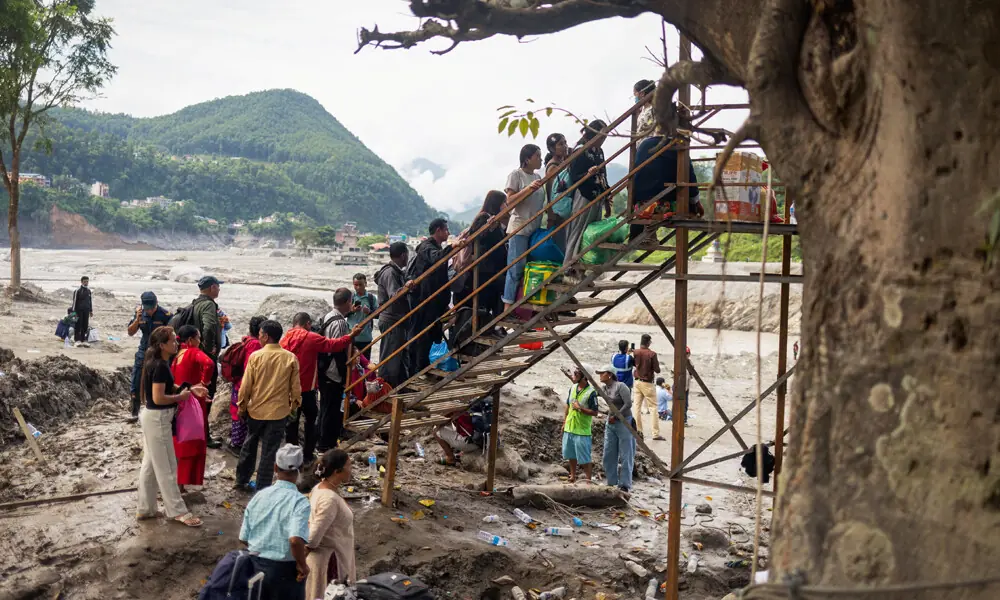
In Nepal, the recent floods have the potential to lead commercial insurers to face losses surpassing 20 billion Nepali rupees ($132.3 million), with the majority of claims stemming from hydropower projects, stated a senior official at a prominent insurance company in the region. These losses would entail compensating the operators of the affected power plants.
Separately, life insurance, personal accident, and workers' compensation claims are anticipated as authorities confirm fatalities and missing individuals in hard-to-reach areas. The disaster, occurring near Nepal's border with China's Tibet region, has inflicted estimated economic damages worth $2.56 billion on the nation of 30 million inhabitants, resulting in over 1,200 deaths and a larger number of people still unaccounted for.
Last-minute flood alerts reportedly saved approximately 900 Nepali students, according to the head of the school. Eleven Nepali hydropower projects located in the affected region, some under standard commercial insurance policies that are still under evaluation, were identified by Toton Chakraborty, the CEO of Oriental Insurance Company Nepal, a leading insurer in the area.
Chakraborty stated, "Hydropower projects situated along the inundated river corridor have sustained the most significant damage. In numerous instances, access roads and above-ground infrastructure have been obliterated." Projects such as Rasuwagadhi, Upper Trishuli-3A, Chilime, and Devighat have been directly impacted, while assessments for five others are still underway.
The Nepal Insurance Authority has received 583 flood-related claims totaling 25.87 billion Nepalese rupees ($171.13 million) as of August 31. Chakraborty clarified that these figures primarily represent insured exposure rather than the ultimate claims, which will become evident upon completing comprehensive surveys. It is possible that claims could escalate further if rebuilding efforts are delayed, as certain policies compensate developers for lost revenue due to postponed commercial operations, according to Chakraborty.
Nepal's non-life insurance sector is relatively minute on an international scale. During the July-August period, the 14 non-life insurers in the country collected premiums amounting to around 5.3 billion Nepali rupees ($35.06 million), compared to 314 billion Indian rupees ($3.3 billion) written by Indian insurers during the same timeframe.
The market is bolstered by domestic reinsurers Nepal Re and Himalayan Re, along with international entities such as India's GIC Re and Germany's Hannover Re. Reinsurers apprehensive about Himalayan risks Industry experts anticipate that the floods may exert long-term consequences on insurance coverage for Himalayan infrastructure.
Benjamin Ng, the power leader for Asia at Aon, an international insurance brokerage, cautioned that the recent mountain floods in South Asia might prompt insurers to reassess hydropower and infrastructure risks, particularly in highly exposed locales. Insurers could potentially implement exclusions, reduce sub-limits, and limit coverage, resulting in elevated premiums and more discerning underwriting, Ng elaborated.
Notable Himalayan disasters in recent times include the 2023 glacial lake outburst flood in India's Sikkim and the flash flood in the northern Indian state of Uttarakhand in 2021. The latest floods could potentially alter industry perspectives on risk accumulation and glacial lake outburst flood susceptibility, as per Sanjay Mokashi, the chief underwriting officer at India's state-owned reinsurer GIC Re.
Written by urgent.news from Business Recorder's reporting — not their text. Machine-written — may contain errors; check the original before relying on it.