NASA’s X-59 Aircraft Builds Momentum Through 25th Flight
After 25 test flights, NASA’s X-59 quiet supersonic experimental aircraft steadily continues to pass performance marks set by its team. This successful run of tests has the aircraft on a path toward a new phase later this year, where NASA will evaluate the sonic thumps the X-59 is designed to make when flying faster than […] The post NASA’s X-59 Aircraft Builds Momentum Through 25th Flight…
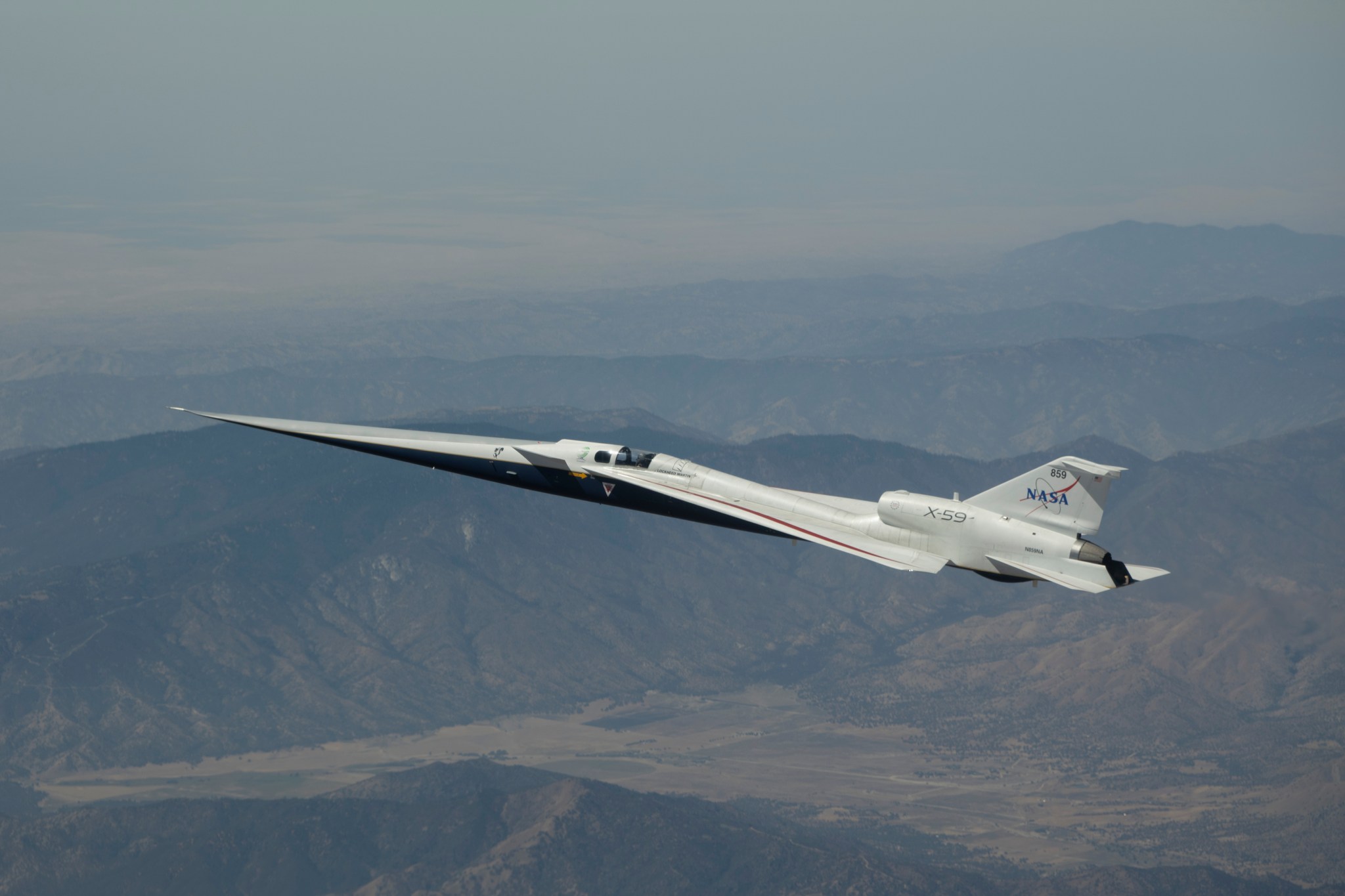
On Tuesday, August 18, 2026, NASA's X-59 quiet supersonic research aircraft took to the skies above the Mojave Desert in California for its 25th flight. This significant milestone marks the aircraft's steady progress toward its ultimate goal: demonstrating a new type of supersonic flight that produces a much quieter "thump" rather than the disruptive sonic boom currently associated with breaking the sound barrier.
After 25 test flights, the X-59 has consistently met and exceeded performance benchmarks set by NASA's team. Each flight contributes to validating the aircraft's design and predicted performance through real-world flight data compared to simulations. The X-59's unique design features a shape that minimizes sonic booms, requiring extensive modeling and analysis before construction.
Its 25th flight, lasting 72 minutes and reaching Mach 1.2 and approximately 49,000 feet, was accompanied by a chase plane to monitor any sonic booms, ensuring the focus remained on evaluating the X-59 itself. NASA project manager Cathy Bahm emphasized the importance of these test flights in providing valuable insights into the aircraft's performance and design challenges.
The team uses a "real-time digital twin" to compare flight data with simulated predictions, which so far closely match the X-59's actual performance. This includes its flying qualities, stability margin, and flight loads. Test pilot Nils Larson described the flights as "exciting but uneventful," indicating the aircraft is performing exactly as expected.
The X-59's 25 flights are part of a broader effort to prepare for the next phase of testing, known as the acoustic validation phase. This phase will focus on measuring the aircraft's sonic thumps using ground- and air-based tools to ensure they meet the objectives of NASA's Quesst mission, which aims to enable commercial supersonic flight over land.
Written by urgent.news from NASA Science's reporting — not their text. Machine-written — may contain errors; check the original before relying on it.


