Micro-Bladder Model Demonstrates How Phage Therapy Could Help to Reduce Recurrent UTIs
Researchers used a novel human 3D micro-bladder model to demonstrate how phage therapy could help to reduce recurrent urinary tract infections (UTIs) by attacking the reservoirs of bacteria hidden deep within the bladder wall, which antibiotics can’t address. The post Micro-Bladder Model Demonstrates How Phage Therapy Could Help to Reduce Recurrent UTIs appeared first on GEN - Genetic Engineering…
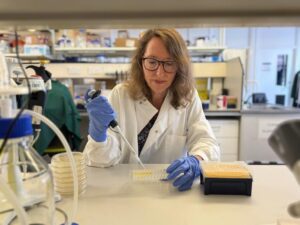
A team of researchers at University College London has used a novel 3D micro-bladder model to demonstrate how phage therapy could help reduce recurrent urinary tract infections (UTIs). UTIs, often caused by uropathogenic Escherichia coli (UPEC), can be painful and disruptive, with many infections recurring after antibiotic treatment. This contributes to the growing issue of antibiotic resistance.
The researchers focused on the "reservoirs" within bladder walls where UPEC can hide, which normal antibiotics can't reach. Professor Jennifer Rohn, the lead researcher, explained that recurrent UTIs frustrate patients because bacteria can survive antibiotics by hiding in these protected areas of the bladder wall.
To mimic real urinary tract conditions, the team developed a human 3D micro-bladder model with flowing urine. This model allowed them to test phage therapy on UPEC-infected bladders. They also tested the antibiotic nitrofurantoin and a cocktail of phages. While nitrofurantoin struggled to fully clear the infection in the micro-bladder, the phage cocktail showed promise.
However, when combined with the antibiotic, the results improved, suggesting that a two-pronged approach could be more effective than either treatment alone.
The phage treatment was particularly successful in reducing the number of protected bacterial reservoirs inside the bladder wall. These reservoirs can act as breeding grounds for future infections. By reducing them, phage therapy could help prevent UTIs from returning. The team also noted that urine flow significantly changes how bacteria behave and respond to treatment, highlighting the complexity of the infection process.
The study underscores the importance of testing phages under conditions that closely reflect the human body. Phage therapy is not yet a routine treatment for UTIs, but this research suggests it could be a promising addition to existing treatments, especially when combined with antibiotics.
Written by urgent.news from GEN Biotechnology's reporting — not their text. Machine-written — may contain errors; check the original before relying on it.