Japan Is Launching a Probe to Collect the First-Ever Samples From a Martian Moon
The mission to Phobos, Japan’s first Mars probe launch in 28 years, may reveal new information about our closest planetary neighbor.
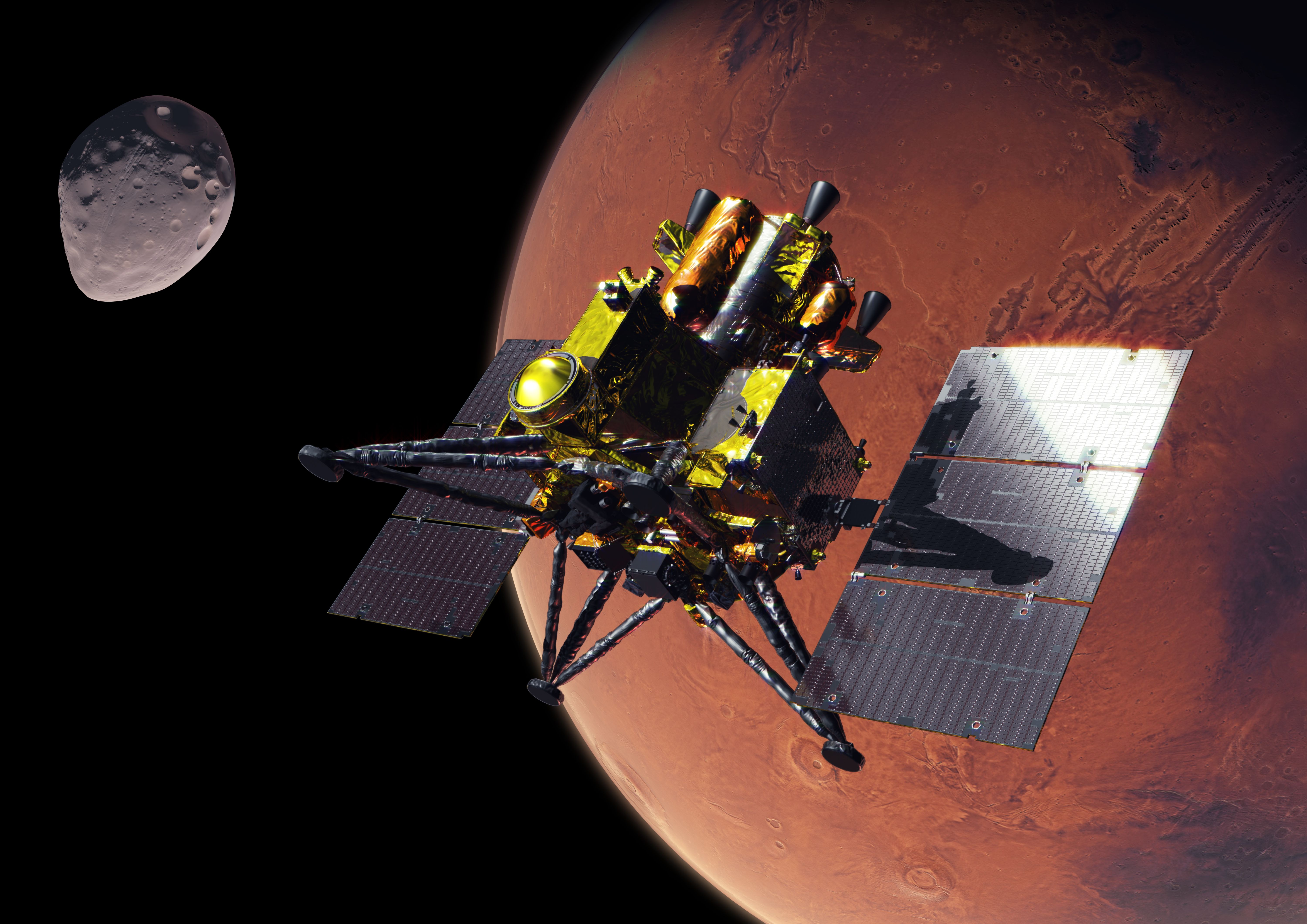
Japan plans to launch a probe called MMX to collect the first-ever samples from a Martian moon, Phobos. After a one-year journey to reach Mars, the spacecraft will spend three years orbiting the planet before returning to Earth with samples in 2031. The probe's mission aims to resolve the debate over how Mars' moons formed, with two leading theories: the moons formed from material ejected during a massive collision with Mars or were asteroids from the outer solar system captured by Mars' gravity.
To collect the samples, MMX will land on Phobos, a moon with a radius of about 11 kilometers, using high-precision autonomous navigation due to its weak gravity. A rover named IDEFIX, developed jointly by French and German space agencies, will scout the landing site before the main spacecraft touches down. Once on the surface, a robotic arm will drill into the lunar surface to gather samples, with about 0.1 percent of the collected material believed to come from Mars itself.
The $345 million mission is Japan's first Mars probe launch in 28 years and aims to test new technologies for future Mars missions.
Written by urgent.news from Wired's reporting — not their text. Machine-written — may contain errors; check the original before relying on it.
This story
This is one outlet's version. Read the fullest account.