Investors buoy gold price as central banks slow
Central-bank gold buying halved in July, indicating rising investment demand is supporting the market near record highs.
Central banks around the world reduced their gold purchases in July, with net official-sector buying falling by more than half compared to the previous month. China and Poland were the leading buyers, purchasing 20 and 8 tonnes, respectively, while Russia sold 6 tonnes. Turkey, Jordan, and Uzbekistan collectively sold about 1 tonne each.
Despite this moderation, investment demand is expected to drive gold's price growth through 2026, according to the World Gold Council. The council noted that central banks are on track for another year of net purchases, even if overall demand falls short of the 2025 level. Official sector purchases were down to 23 tonnes in July, a sharp contrast to the 51 tonnes in June.
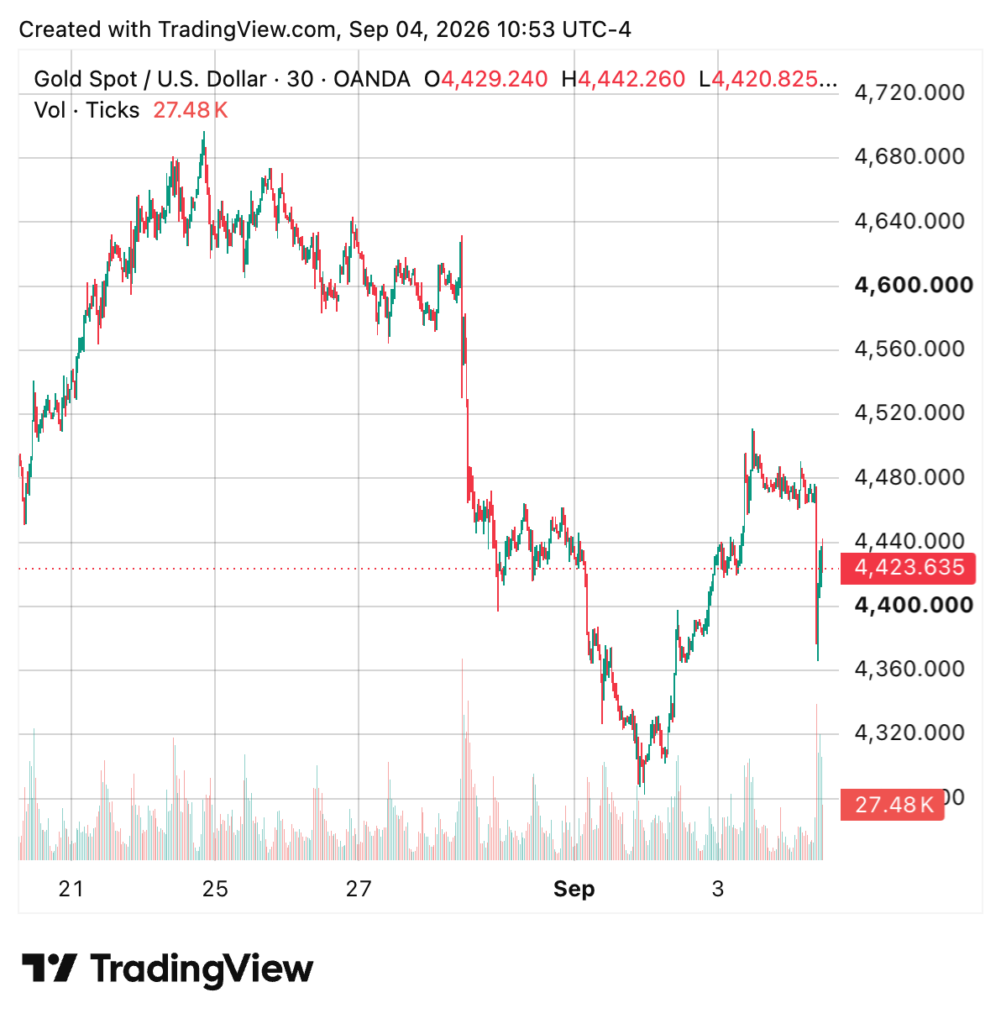
U.S. job data in August reignited concerns about interest rates, causing gold prices to drop shortly after the central bank figures were released. However, exchange-traded funds backed by physical gold saw a net inflow of $3 billion, reversing two months of outflows. This suggests that investor demand remains a significant factor in supporting gold's price.
Poland remains the largest official buyer this year, while China has consistently bought gold for 21 consecutive months. Uzbekistan, on the other hand, sold gold after purchasing it earlier in the year. The storage location of central bank gold reserves is also shifting, with some countries moving towards diverse storage options.
The changing demand for gold could impact mining companies, as they face a mismatch between their cash reserves and the need for undeveloped gold mines. Despite central banks' reduced buying, gold prices have not yet declined, indicating that investor demand continues to provide support for the metal's price.
Written by urgent.news from Mining.com's reporting — not their text. Machine-written — may contain errors; check the original before relying on it.