India’s Urban Map Expands, Growth Moves Beyond Big Metros
Mumbai: India’s urban economy is spreading beyond its largest metros, though Delhi, Mumbai, Bengaluru, Hyderabad, Kolkata and Chennai continue to dominate. The PRICE-Tata Sons report, “The Many Urban Indias”, divides 100 cities into four groups: Big Six, Boomtowns, Breakout cities and Frontier cities. The Big Six contain only 7.6 percent of India’s population but contribute 18.1 percent of…
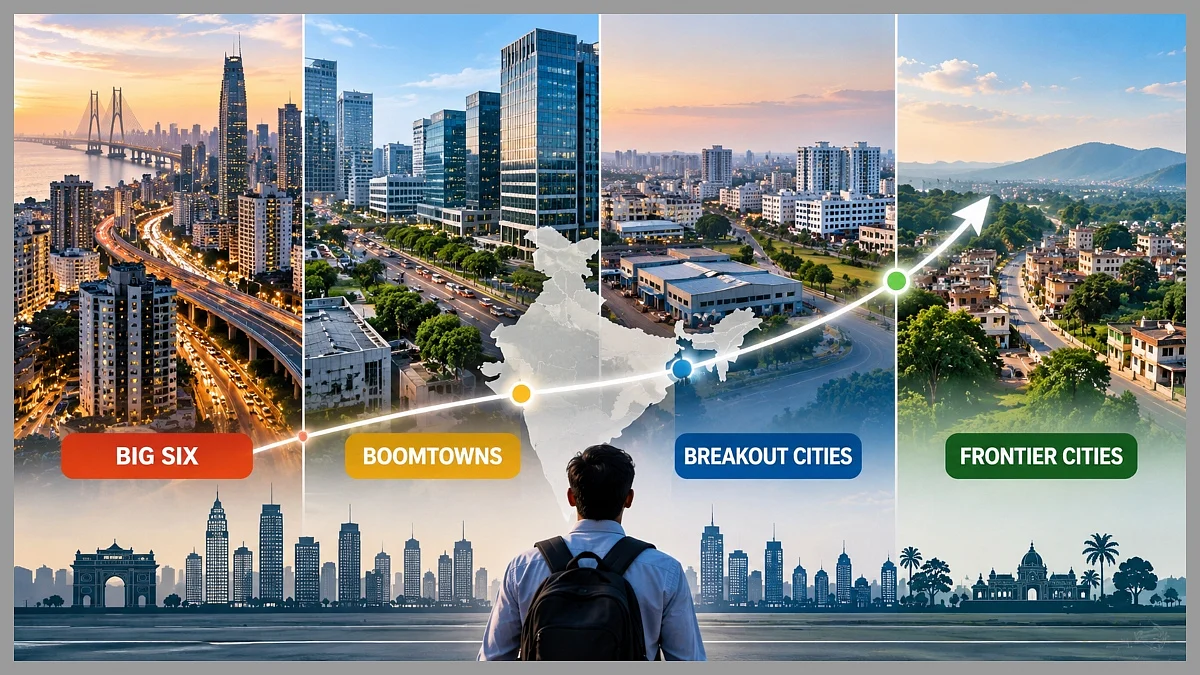
India's urban landscape is expanding beyond its top metropolitan areas, as revealed in the "The Many Urban Indias" report by Tata Sons. Although the six largest cities – Delhi, Mumbai, Bengaluru, Hyderabad, Kolkata, and Chennai – continue to lead, they now represent only a fraction of the nation's urban economic activity. These cities, comprising just 7.6% of India's population, generate 18.1% of the country's income and 30.3% of savings, while consuming 46% of the total urban consumption.
The report further categorizes the remaining 100 cities into four groups: Boomtowns, Breakout cities, and Frontier cities. The 19 Boomtowns have seen a significant rise in middle-income households, with nearly 51% now earning in this bracket, up from around a quarter a decade ago. Together, these cities account for 5.1% of India's population, 8.5% of income, and 8.3% of consumption. Cities like Thiruvananthapuram, Vadodara, and Surat even surpass the average household spending of the Big Six.
Breakout cities, such as Tiruppur, Ludhiana, Rajkot, Varanasi, and Moradabad, focus on niche industries like textiles, auto components, tourism, healthcare, education, and sports goods. These cities have a high proportion of working-age residents, supporting both employment and consumption. However, income levels vary greatly, ranging from Rs 19 lakh in Amritsar to Rs 7.9 lakh in Moradabad.
The 50 Frontier cities, housing nearly 10 million households, have the lowest income levels, with an average annual household income of Rs 12 lakh and expenditures of Rs 9 lakh. Their household savings are also considerably lower, averaging below Rs 3 lakh.
These distinctions highlight the need for varied city-specific strategies rather than a uniform approach for all urban markets. India's urban growth trajectory is set to diversify, with cities exhibiting stark differences in income, industries, and consumer preferences.
Written by urgent.news from Free Press Journal's reporting — not their text. Machine-written — may contain errors; check the original before relying on it.