How to Run a Sandboxed LLM in a School Lab With No Cloud Bill
Cloud AI in schools means three recurring problems: data leaving the building, a monthly bill that scales with use, and a hard dependency on reliable internet.
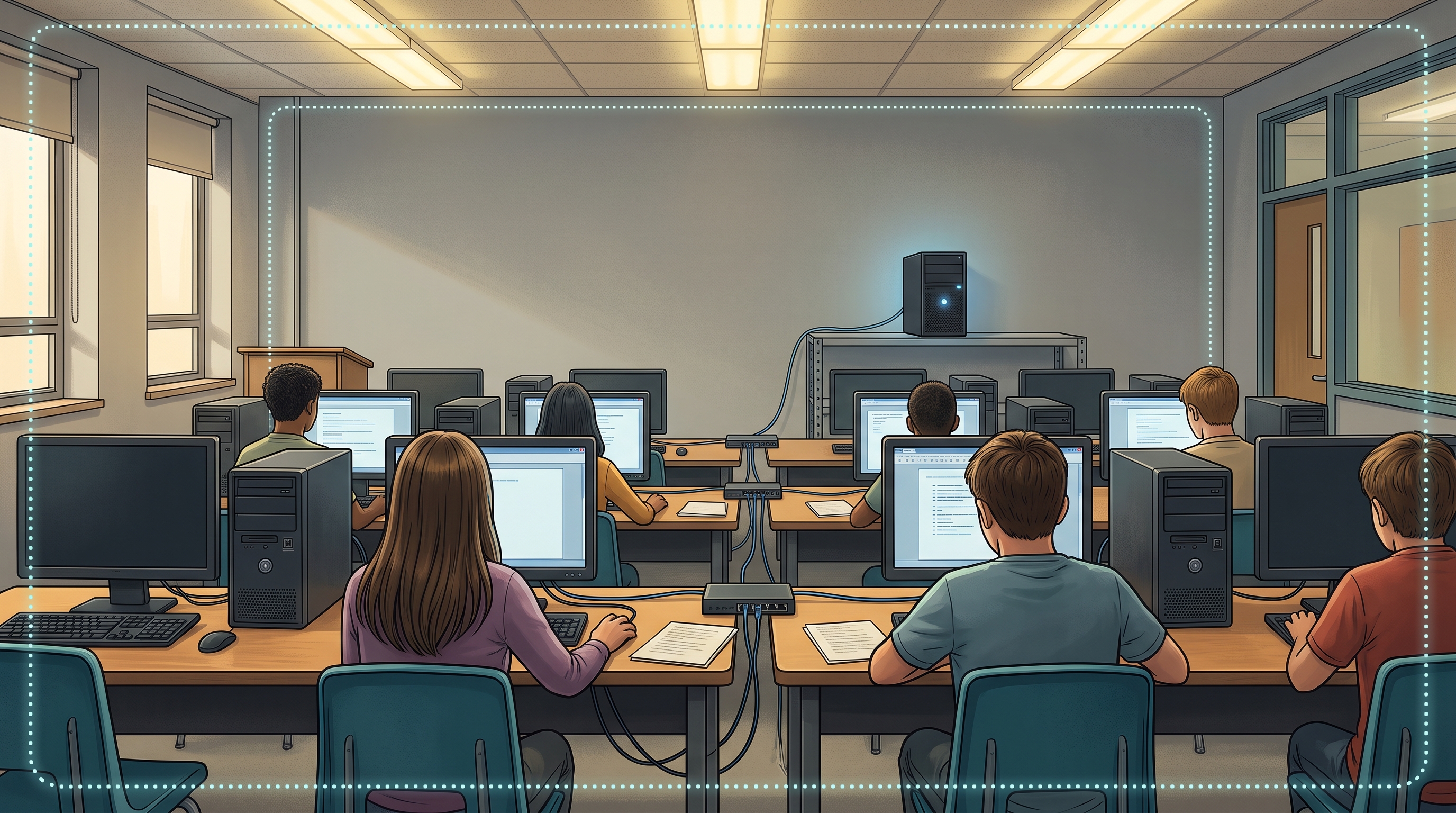
When schools adopt AI, they often send student work to a vendor's cloud. This creates three problems: student data leaves the building, the bill scales with use, and reliable internet is required. A better solution is to run a small open model locally on the school's own hardware, sandboxed from the internet. This keeps data in the building, costs flat, and works without internet.
Offline means the model runs on a local machine without calling external APIs. Sandboxed means the model process is isolated, reading the prompt and returning an answer without sending data out. A local model can handle tasks like explaining concepts, checking writing, and answering questions about texts. This privacy case makes it easier to comply with student-data rules, as the data remains under the school's control.
The cost case shows that a local model's marginal cost of each additional prompt is electricity, while cloud AI costs per use and grows with usage. The reliability case highlights that a cloud tool is only available when the internet is, while a local model works even without a connection. To start small, take one capable workstation, install a local inference runtime, and load a small open model in a few billion parameters range. Give one class access for one unit and measure the results.
Written by urgent.news from HackerNoon's reporting — not their text. Machine-written — may contain errors; check the original before relying on it.