How Hyderabad spread beyond its ‘boundaries’
In five decades, the capital has transformed from a compact city into a sprawling, multi-centred metropolis. Jobs, migration, rising incomes and major infrastructure projects have pushed development far beyond its historic core, creating new residential and commercial hubs across the west, south and north — and reshaping not just the city’s skyline, but the way people work
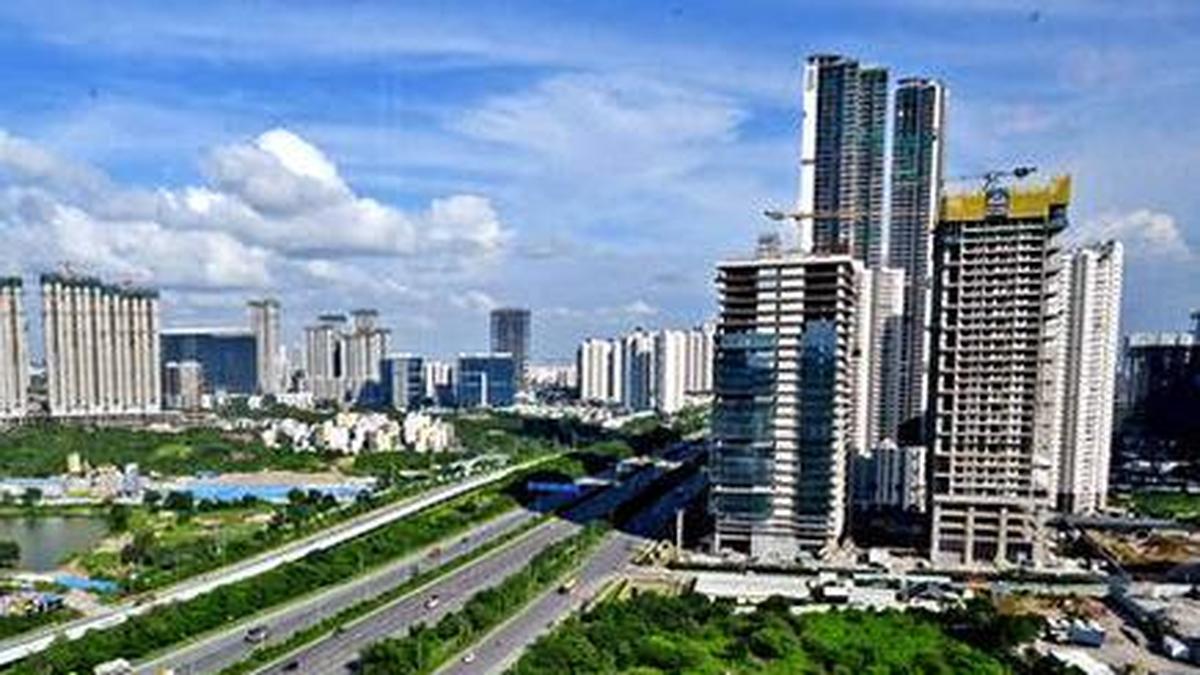
Hyderabad, once a compact city with activity centered around its older neighborhoods and commercial hubs, has undergone a significant transformation over the past five decades. The modern city now extends far beyond its initial boundaries, expanding into the west, south, and north. This expansion has been driven by various factors, including jobs, migration, infrastructure, rising incomes, and changing family structures.
One of the most striking examples of this change can be observed from Hyderabad's Rajiv Gandhi International Airport (RGIA) towards Gachibowli via the Outer Ring Road (ORR). Initially, there were open lands with greenery surrounding the airport. As one travels further, buildings begin to emerge, gradually giving way to clusters of high-rises, glass towers, and construction sites. The skyline has undergone a dramatic shift, with entire areas now dominated by modern infrastructure.
This transformation was not instantaneous. During the 1980s and 1990s, residential colonies and industrial areas gradually pushed the city beyond its earlier limits. Areas such as Kukatpally, Balanagar, and Jeedimetla became more connected to the city's economy, while Madhapur remained largely undeveloped. The technology industry, with the inauguration of HITEC City in Madhapur in 1998, marked a turning point.
As technology companies set up offices, the western corridor gained economic significance. This led to a demand for housing, followed by various other essentials like schools, hospitals, restaurants, hotels, malls, and entertainment spaces.
The development of Madhapur towards Kondapur and Gachibowli, along with the emergence of Raidurg as a major office district, further fueled the city's growth. The Financial District also saw substantial commercial development. More recently, Kokapet and Neopolis have come to symbolize the next phase of Hyderabad's western expansion.
The growth of the western corridor has had a profound impact on the city's land value. What was once agricultural or sparsely developed land has now attracted developers and investors. Improved roads and infrastructure have made previously distant parcels more accessible, and the proximity of employment centers has driven demand for both homes and commercial spaces.
In addition to its outward expansion, Hyderabad has also grown vertically. While independent houses and low-rise buildings once dominated the city's residential landscape, apartments have become increasingly common as land prices have risen. Gated communities now offer not just homes but a range of amenities, reflecting the changing lifestyle preferences of residents.
The skyline of newer parts of the city is now characterized by towering 40 and 50-floor structures, with even taller buildings shaping the emerging urban landscape.
The opening of the 158-km Outer Ring Road (ORR) in 2007 and the establishment of Rajiv Gandhi International Airport (RGIA) in Shamshabad in 2008 have further strengthened Hyderabad's metropolitan connectivity. The introduction of Metro rail in 2017 added a mass-transit network to a city increasingly defined by long-distance commuting. While these developments have made it easier to travel between different parts of the metropolitan region, they have also led to longer journeys for commuters.
Written by urgent.news from The Hindu's reporting — not their text. Machine-written — may contain errors; check the original before relying on it.