GLP-1 Weight-Loss Drugs Can Slow Aging and Extend Life Span, Mouse Study Suggests
Older female mice—equivalent in age to 60-year-old women—given daily injections of the active ingredient in Ozempic lived about 12 percent longer than animals that didn't receive the drug
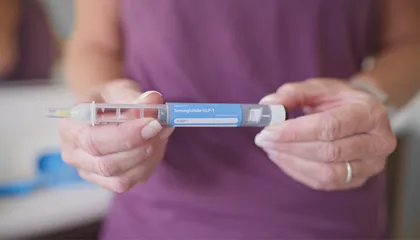
GLP-1 weight-loss medications, such as semaglutide—sold under brand names Ozempic and Wegovy—have gained popularity in recent years. These drugs function by mimicking a natural hormone that induces feelings of fullness and aids in controlling blood sugar levels. Besides managing obesity and type 2 diabetes, the medications have been approved in the United States for mitigating cardiovascular risks, preventing kidney disease progression, and alleviating sleep apnea.
A fresh investigation, however, suggests that semaglutide could potentially offer an additional advantage: slowing down the aging process. According to a study published in the journal Nature on September 2, giving semaglutide to elderly female mice extended their life spans while dampening several indicators of aging at the cellular level.
Danica Chen, an aging biologist at the University of California, Berkeley, proposed that a pharmaceutical intervention could capture the anti-aging benefits of a caloric restriction diet without the constant hunger. "Since GLP-1 medications lower food intake, it's logical for us to question whether GLP-1 medicines operate as calorie-restriction mimetics to slow aging and extend life span," Chen said to Chemical and Engineering News' Laurel Oldach.
Chen and her team injected 20-month-old female mice (equivalent to 60-year-old humans) with semaglutide daily for the remainder of their lives, while another group received saline injections. The mice treated with semaglutide exhibited a 12 percent increase in life span, with a median of 834 days compared to 742 days for the control group.
The researchers excluded male mice due to their more aggressive nature, which could affect the study's outcomes. The GLP-1-treated mice also demonstrated enhanced physical and cognitive capabilities. After just three months of treatment, they were more active, curious, and agile than untreated mice. They performed better in tasks like balancing on rotating rods, running longer on a treadmill, and navigating a maze swiftly.
Molecular analyses revealed that the treated mice's tissues had reduced signs of aging, including DNA damage and inflammation. The researchers compared the effects of semaglutide to those of caloric restriction by comparing GLP-1 mice, which had reduced their food intake by 24 percent, with mice whose diets were restricted by the same amount by the researchers.
Both approaches led to similar life spans and improvements in some tests, like endurance and motor coordination. However, semaglutide-treated mice showed improvements in memory and exploration tasks, as well as better glucose tolerance. Chen noted that these benefits likely stem from "more than just calorie restriction." However, the mechanisms behind GLP-1's potential longevity benefits remain unclear.
Michael Corley, an aging biologist at the University of California, San Diego, who wasn't involved in the study, told Nature's Mariana Lenharo that the findings are promising but need further investigation in mice. Chen emphasized that more testing is necessary, especially because the study involved only female animals. Ho Ko, a neuroscientist at the Chinese University of Hong Kong, told Nature that interventions that work in one gender may not generalize to others.
A significant concern is the risk of muscle loss, which often accompanies GLP-1 use, although it's generally associated with weight loss regardless of the method. This concern is particularly relevant for older adults, who naturally experience muscle mass loss due to aging. Accelerating frailty through semaglutide may therefore counteract the intended benefits of extending life span. Exercise is crucial to counteract potential muscle loss.
Written by urgent.news from Smithsonian's reporting — not their text. Machine-written — may contain errors; check the original before relying on it.