Firm demand backs Bank Negara's 2.75pct OPR hold: experts
KUALA LUMPUR: Bank Negara Malaysia’s decision to keep the overnight policy rate (OPR) at 2.75 per cent despite stronger economic growth reflects confidence that domestic demand remains firm without creating excessive inflationary or financial pressures, an economist said.
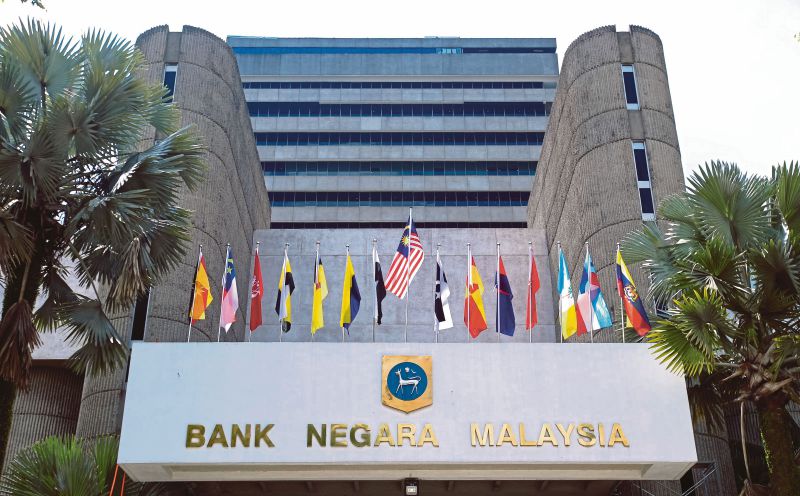
Bank Negara Malaysia has maintained its overnight policy rate (OPR) at 2.75% during its fifth Monetary Policy Committee (MPC) meeting of 2026, despite stronger economic growth. This decision reflects confidence that domestic demand remains strong without causing excessive inflation or financial pressures, an economist from Universiti Teknologi Malaysia, Dr Muhammad Najib Razali, stated.
Strong GDP growth and resilient consumer spending do not automatically necessitate an interest rate increase. Instead, the more pertinent question is whether demand is leading to persistent inflation, excessive borrowing, speculative asset-price increases, or instability in the ringgit. Najib noted that current headline and core inflation rates of 1.8% and 2%, respectively, do not provide a strong case for an immediate tightening of monetary policy.
The central bank's decision to hold the OPR at 2.75% for a 14th consecutive month comes after a 25 basis point reduction to 2.75% in July 2025 to cushion growth against external headwinds. Malaysia's economy expanded 5.7% in the first half of 2026, leading to an expectation of around five percent growth for the year. This growth is supported by several engines, including domestic consumption, private and public investment, and exports.
Importantly, Malaysia is increasingly benefiting from sectors linked to global demand, such as semiconductors, electrical and electronics, machinery, digital infrastructure, and artificial intelligence-related investments. Maintaining relatively low financing costs can also support the expansion of productive capacity, particularly in infrastructure, manufacturing, and technology.
This strategy could enhance Malaysia's resilience in the face of global economic challenges, including tariff uncertainty, geopolitical conflicts, energy-market disruptions, and weaker global trade growth. While a low OPR does not make Malaysia invulnerable to external shocks, the economy's strong domestic demand can provide some cushion against a slowdown in global trade.
However, a prolonged US-China trade confrontation, a sharp downturn in semiconductor demand, or a major global recession could still affect Malaysian exports, manufacturing, and investment. Energy prices also pose a risk, especially if Middle East conflicts lead to higher global commodity prices and increased domestic inflation.
If geopolitical shocks generate sustained inflation or financial instability, maintaining the same rate to support growth might become counterproductive. Based on the current outlook, Najib expects Bank Negara to keep the OPR at 2.75% until at least the end of 2026 and potentially through much of the first half of 2027. He anticipates that the case for a rate hike will become stronger later in 2027 if inflation persists, particularly if core inflation approaches three percent, wage pressures intensify, household borrowing accelerates, or property prices rise excessively.
Written by urgent.news from New Straits Times's reporting — not their text. Machine-written — may contain errors; check the original before relying on it.