Elara Launches elUSD, a Dollar-Referenced Treasury Asset for Idle Stablecoins
Elara turns idle stablecoins into a dollar-referenced treasury asset. How elUSD and sELUSD work, what the Sherlock audit covers and who the product is for.
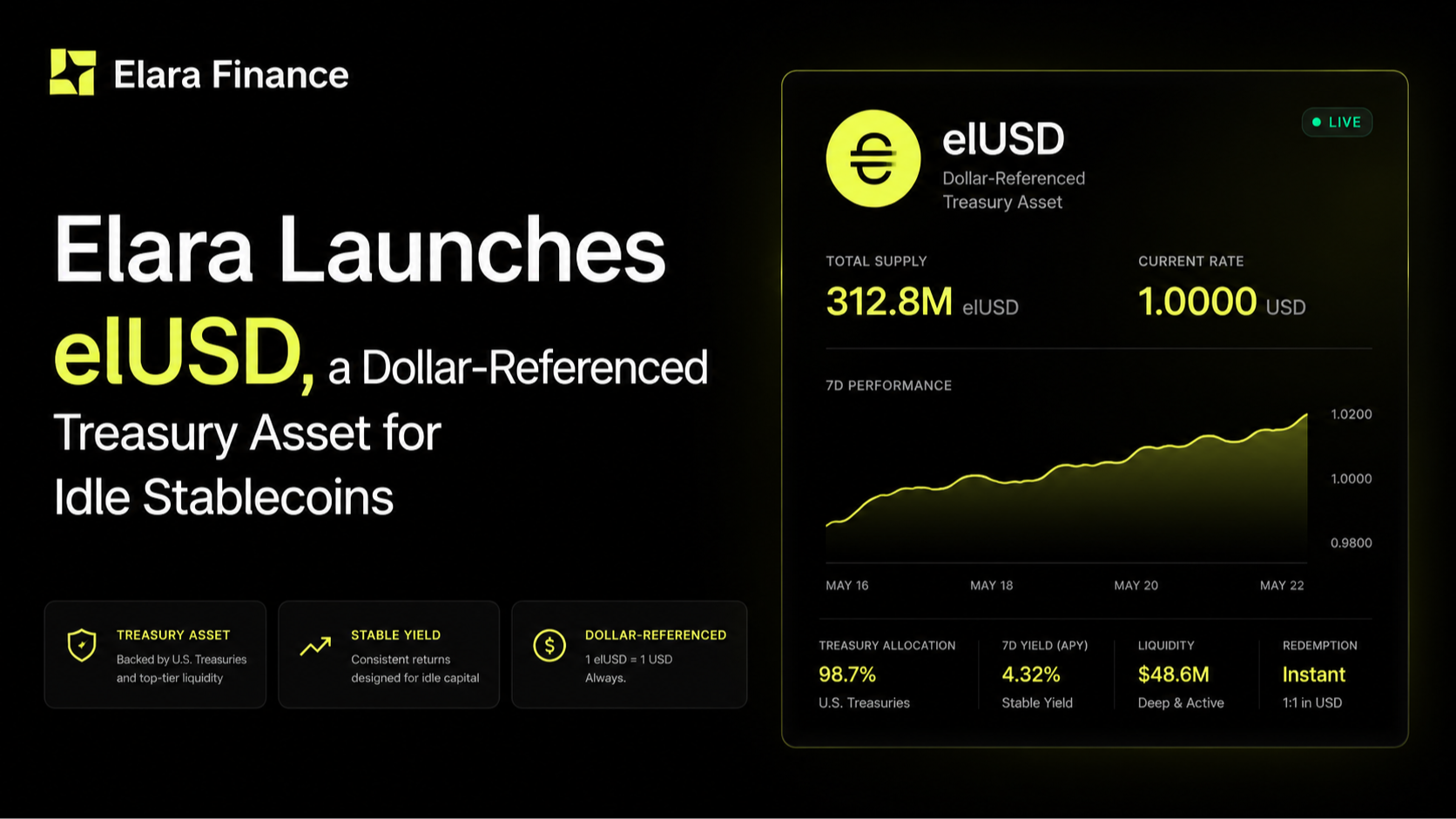
Elara has introduced elUSD, a dollar-referenced treasury asset, aimed at putting idle stablecoin capital to work rather than letting it remain stagnant. The Brila ecosystem, which hosts Elara, is responsible for this new asset. elUSD is distinct from stablecoins as it is not backed by fiat reserves and does not carry a government guarantee. Instead, it serves as a dollar-referenced asset designed for capital preservation with yield as an outcome of active management.
The process is straightforward: depositing an accepted stablecoin yields elUSD, a liquid dollar-referenced token that can be held, transferred, or redeemed. To generate yield on top of this, users can stake their elUSD into sELUSD, a wrapper that appreciates in value with time. There is no separate claim process, and the yield is built directly into the asset itself.
Elara's yield generation is a more involved topic, which will be detailed in a future report. Two key differentiators set Elara apart from other new tokens. First, its core contracts have undergone a thorough security audit by Sherlock. The audit covers every core contract in the system, ensuring a comprehensive review. Second, Elara already has an operating track record before its public launch, which is unique in the industry.
Elara's yield generation is underpinned by audited and tested strategies, with no reserve fund or junior tranche to cover strategy or NAV losses. The asset is not available to US, UK, EU/EEA, or Singapore residents, nor to anyone in jurisdictions where access would be prohibited.
Elara aims to address the growing concern over idle stablecoins and the potential for yield from dollar tokens, which is expected to gain more attention as FASB and the GENIUS Act move dollar tokens onto corporate balance sheets as serious asset classes.
Written by urgent.news from HackerNoon's reporting — not their text. Machine-written — may contain errors; check the original before relying on it.