Designing a Driving Profile From Telematics Data
How we designed a driving behavior system for a large car-sharing platform, helping drivers improve through UX, transparency, and visual feedback.
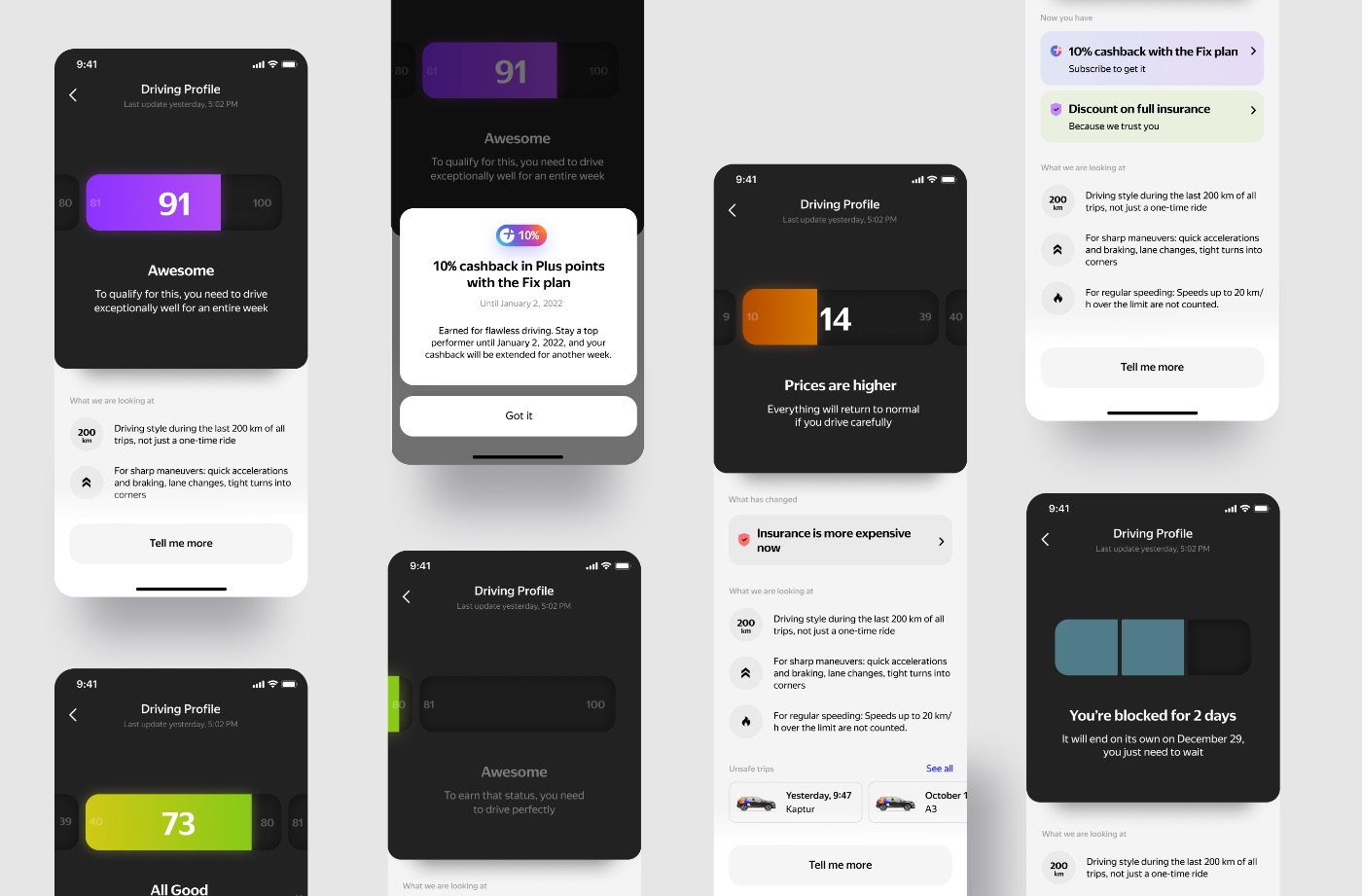
Valeria Terekhina, a former Product Designer at Yandex, recalls the challenges of creating a Driving Profile for the company's car-sharing service. The algorithm analyzed telematics data to evaluate drivers' most recent 200 km of driving, factoring in hard braking, rapid acceleration, sharp turns, abrupt lane changes, and speeding.
Two main reasons drove the need for a Driving Profile: rising insurance costs due to reckless driving and a tarnished public perception of car sharing. Initially, the concept focused on classifying trips as aggressive or non-aggressive, with a progress indicator showing the number of aggressive trips. However, this approach had flaws, such as trips resetting after four months or drivers being unable to see which trips affected their score.
The team also struggled with defining what constituted a trip and how to evaluate telematics data accurately. After extensive iterations and discussions with the data analyst, Kirill Lunev, the team ultimately refined the Driving Profile to focus on distance driven rather than individual trips. This change improved user understanding and encouraged safer driving habits.
Written by urgent.news from HackerNoon's reporting — not their text. Machine-written — may contain errors; check the original before relying on it.