Concern that Dengue Could be Added to the Problems Caused by the El Niño Phenomenon
The serious consequences looming over Colombia due to the El Nino phenomenon, which has not yet reached its full intensity, could be joined by another one that concerns specialists and arrives in the form of a mosquito. The extreme heat characteristic of this climate phenomenon is accelerating the reproduction of the Aedes aegypti mosquito in […]
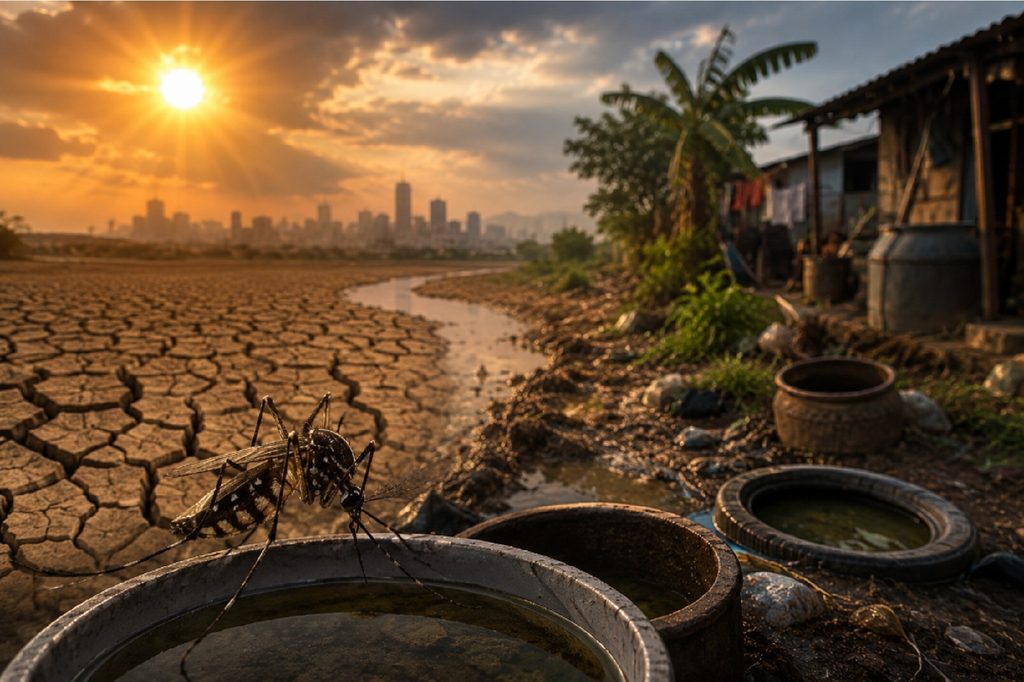
The El Niño phenomenon, still in its early stages of intensity, could bring about additional challenges for Colombia, according to specialists. The extreme heat associated with this climate event is hastening the reproduction of the Aedes aegypti mosquito in nine regions of the country. This mosquito, known for transmitting diseases like dengue and gastrointestinal infections, is becoming hungrier and biting more frequently due to the heightened temperatures.
The causal relationship between El Niño and the mosquito has been recognized for some time. However, with concerns growing over a potential "super El Niño," there is now added worry about the spread of dengue. The World Health Organization (WHO) explains that vectors like mosquitoes are sensitive to changes in temperature, precipitation, and humidity, which impact their survival and activity.
In Colombia, Dr. Emiro Buendia, an internal medicine specialist and biomedical sciences doctor at Serena del Mar Hospital in Cartagena, previously explained to 'Tu Podcast de Salud' that El Niño increases temperatures and decreases rainfall. This accelerates the life cycle of Aedes aegypti, as the temperature range of 32 to 35 degrees Celsius shortens the mosquito's life cycle from 12 days at 30 degrees to just seven days at 32 to 35 degrees. Consequently, mosquitoes become smaller, hungrier, and more aggressive in their biting behavior.
Dr. Buendia also noted that during droughts, people often store water in unsanitary containers, leading to increased mosquito populations. Dr. Carmen Hernandez, national director of Comprehensive Health Risk Management at Bienestar IPS, recently told El Colombiano that the high temperatures associated with El Niño can cause the Aedes aegypti mosquito to complete its life cycle more rapidly, transitioning from egg to adult faster.
Additionally, the heat speeds up the replication of the dengue virus inside the mosquito, thereby increasing its capacity to transmit the disease.
Hernandez emphasized that elevated temperatures also facilitate the proliferation of bacteria such as Escherichia coli and salmonella in improperly stored or contaminated food and water. This increases the risk of gastrointestinal diseases and food poisoning. She agreed with Dr. Buendia that during droughts, many households resort to storing water in tanks, pools, buckets, or containers to ensure their supply.
However, if these containers are left uncovered or uncared for, they can become breeding grounds for the dengue-transmitting mosquito. Hernandez strongly recommends keeping these containers completely covered, regularly cleaning the storage areas, and eliminating any stagnant water inside or around the home to prevent mosquito breeding.
Written by urgent.news from Colombia One's reporting — not their text. Machine-written — may contain errors; check the original before relying on it.