BRICS In Delhi: Can India Turn A Diverse Bloc Into Strategic Influence?
The BRICS Summit in New Delhi on September 12–13 will test whether an expanded BRICS can translate its growing political weight into a coherent voice on global crises, trade, finance, and security. For India, it is an opportunity to demonstrate strategic autonomy and shape the international order. India has chaired BRICS in 2012, 2016, and 2021. The present chairmanship carries the theme…
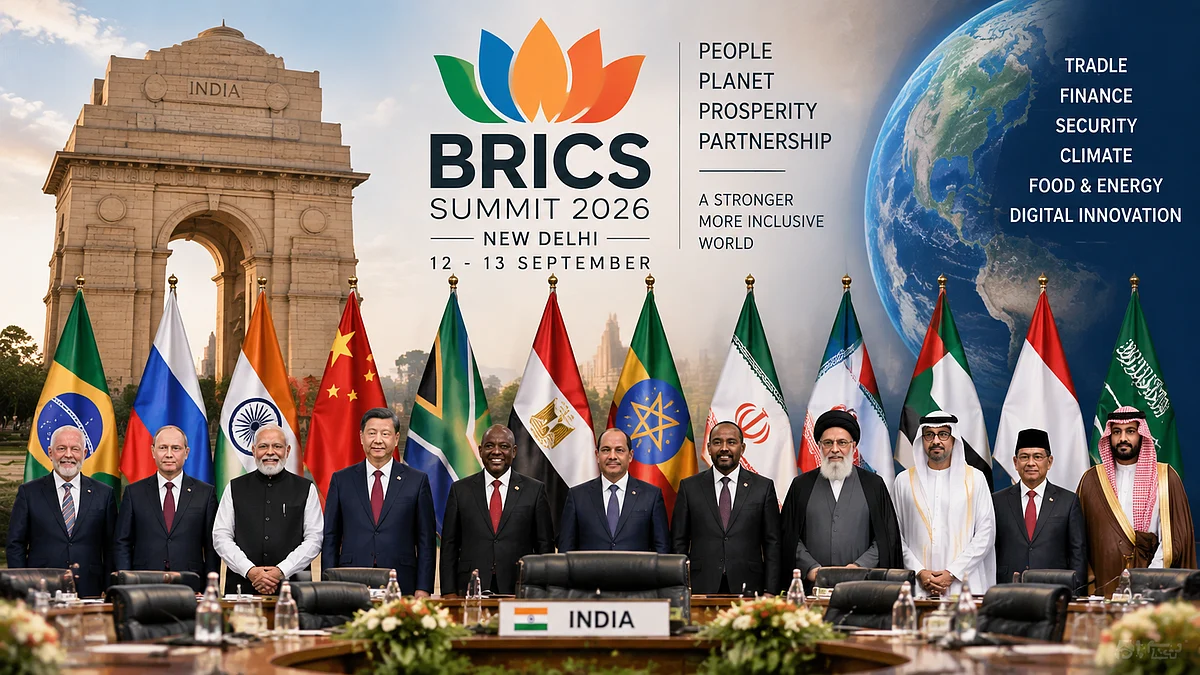
The BRICS summit in New Delhi on September 12-13 will assess whether the expanded bloc can turn its growing political clout into a unified voice on global issues like crises, trade, finance, and security. For India, it's a chance to showcase strategic autonomy and influence the international order. The chairmanship's theme is "Building for Resilience, Innovation, Cooperation, and Sustainability," reflecting Prime Minister Narendra Modi's people-first approach.
The summit will bring together 11 member nations and 10 partner countries, including Brazil, Russia, India, China, South Africa, Egypt, Ethiopia, Iran, the UAE, Indonesia, and Saudi Arabia. The agenda includes financial reform, local currencies, trade, digital infrastructure, AI, climate change, food and energy security, terrorism, and development finance. Issues like resilience, critical minerals, agriculture, energy, pharmaceuticals, and manufacturing could give the summit economic substance.
Washington is likely to view the Delhi summit cautiously, fearing that BRICS expansion and the rising influence of China and Russia might challenge the existing global economic order, especially if they reduce reliance on the dollar or develop alternative financial mechanisms. Nevertheless, Washington is unlikely to confront India directly due to their strategic partnership. India must reassure it that the presidency strives for stronger Global South cooperation and institutional reform, not an anti-American alliance.
Iran's presence at the summit adds complexity, given the US-Iran confrontation. It presents challenges in energy security, trade, and regional stability, but India must strike a delicate balance, preserving its ties with Iran, energy interests, and avoiding involvement in an escalating conflict. The presence of Chinese President Xi Jinping adds significance, marking his first visit to India in seven years since the 2020 border crisis.
However, economic competition, regional security differences, and the unresolved Himalayan border remain central concerns.
India must preserve its independent position, avoiding any power dominating the conversation. Another diplomatic test is Bangladesh, whose participation comes amid strained relations over Sheikh Hasina. India must discourage the issue from overshadowing priorities and ensure the dispute doesn't hinder Bangladesh's participation.
BRICS' fundamental challenge is its lack of strategic coherence, with countries having conflicting interests. Russia and Iran confront the West, while China and India are strategic competitors. The challenge lies in reforming global institutions without becoming an instrument of geopolitical rivalry. Managing expansion, with 11 members and 10 partners, is another hurdle.
India's strategic opportunity lies in demonstrating its convening power and fostering constructive dialogue among diverse nations.
Written by urgent.news from Free Press Journal's reporting — not their text. Machine-written — may contain errors; check the original before relying on it.