Ancient Coins Reveal a Wealth of Information About the Roman Republic
Change you can believe in The post Ancient Coins Reveal a Wealth of Information About the Roman Republic appeared first on Nautilus .
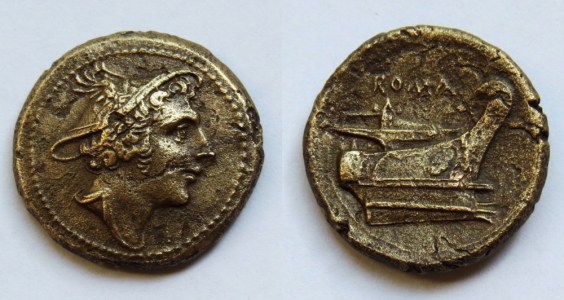
The Roman Empire, though renowned for its vastness, began as a Republic in the last centuries BCE. This era was characterized by wars, territorial expansions, and the establishment of Roman dominance over distant lands. Eduardo Haddad, a researcher from the University of São Paulo in Brazil, recently published an intriguing study that sheds light on this period using an unexpected source: ancient coins.
Haddad's investigation revealed that these coins could provide valuable insights into the Roman Republic's history, including where they were minted, when they were produced, and where they were discovered centuries later.
Haddad and his team analyzed over four million coins from 155 BCE to 2 CE. They discovered that these coins were often found near significant Roman trade routes. By tracing these coins along the paths of Roman roads, the researchers were able to map the spread of Roman currency across the growing empire. This analysis revealed a clear pattern: as Rome's influence expanded, its coins were found at greater distances from their original minting locations.
Initially, many trades in outlying territories relied on bartering, such as exchanging grain for cloth. However, as Roman control expanded, currency-based transactions became more prevalent. The researchers applied economic analysis tools to reconstruct the Roman economy during this time. They found that while the Roman military, paid in coin, played a role in introducing monetary circulation, it was the development of economic, religious, administrative, and civic structures in conquered territories that ultimately sustained this currency system.
In essence, the military's expansion introduced the concept of currency, but it was the integration of these territories into the Roman economic system that ensured its long-term viability. This study highlights that economic integration and development were stronger drivers of currency adoption than military conquest alone.
Written by urgent.news from Nautilus's reporting — not their text. Machine-written — may contain errors; check the original before relying on it.