Why the Same Crypto Swap Can Cost More: How to Compare Crypto Exchange Rates Before You Trade
You enter the same amount and crypto pair on two platforms, yet one provider offers noticeably more of the destination asset than the other. How can the same swap produce The post Why the Same Crypto Swap Can Cost More: How to Compare Crypto Exchange Rates Before You Trade appeared first on Ventureburn .
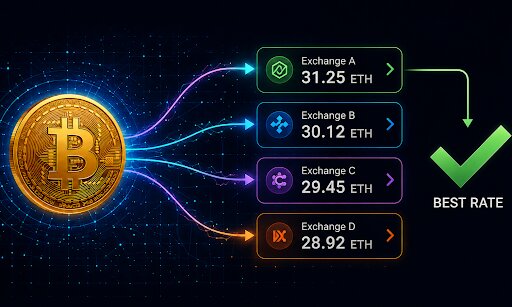
When comparing crypto exchange rates, it's important to understand that the same swap on two different platforms can yield varying results. This is due to several factors that influence the final quote, including liquidity, transaction size, spread, network costs, routing, rate type, and market conditions at the time of the quote. Instead of solely focusing on advertised fees, it's crucial to consider the amount of the destination cryptocurrency you'll actually receive.
Each provider has unique liquidity sources, pricing structures, and execution processes, which can lead to different final quotes for the same crypto pair and amount. The size of the transaction also plays a role; a provider might offer an attractive rate for a smaller swap but not for a larger one, as larger trades can interact differently with available liquidity. Therefore, determining the best crypto swap rates should be based on the specific transaction size rather than a provider's general pricing.
Spread and provider pricing further complicate the comparison. A provider may charge a small visible fee while incorporating more of its margin into the exchange rate through a wider spread. Conversely, another provider may have a higher visible fee but offer a tighter spread, ultimately delivering more crypto. Comparing fee percentages without considering the final quote can create a misleading impression about which offer is cheaper.
Network costs and routing also impact the final amount you receive. After the swap, the destination cryptocurrency needs to be sent to your wallet, and providers may handle blockchain costs differently. The route used to complete the exchange can introduce different conversion costs, affecting the quote and the amount you receive.
Crypto prices and liquidity fluctuate continuously, so a quote reflects conditions at a specific moment. Comparing quotes generated at different times may not accurately capture the true cost differences. Similarly, rate types matter, as fixed-rate quotes lock the exchange amount for a limited period, while floating rates depend on market conditions at the time of deposit confirmation. Comparing fixed and floating quotes without accounting for their different pricing conditions can lead to incorrect conclusions.
To compare crypto exchange rates effectively, keep five variables consistent: input amount, crypto pair, blockchain networks, rate type, and quote timing. By doing so, you ensure a meaningful comparison. The metric that truly matters is the delivered crypto output, which represents the amount of the destination cryptocurrency expected to reach your wallet. This common metric allows for a fair comparison of providers, regardless of how they structure their costs.
Monivo, a crypto swap aggregator, simplifies the comparison process by presenting quotes from connected providers based on the user's selected assets, networks, amount, and rate type. It ranks compatible offers based on the amount of destination cryptocurrency expected to be credited to the user's wallet, making it easier to determine the best deal.
Written by urgent.news from Ventureburn's reporting — not their text. Machine-written — may contain errors; check the original before relying on it.