Why Are IAS Officers Quitting Uttar Pradesh Bureaucracy?
Divya Mittal's decision to quit the IAS after 13 years should worry Uttar Pradesh more than it should invite political speculation. A 2013-batch officer, she was only 42 and had a long administrative career ahead of her. Yet, on August 30, she chose to leave the service. Mittal, who served as district magistrate of Mirzapur and Deoria, developed a reputation as a hands-on field officer. In…
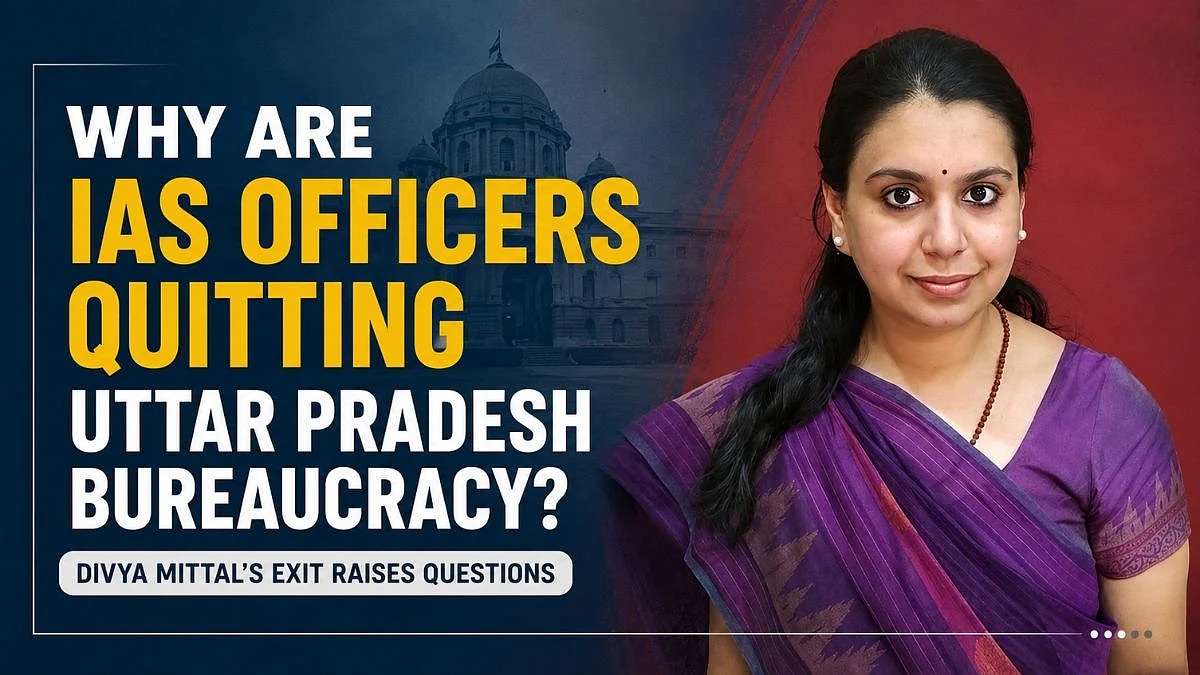
The decision of IAS officer Divya Mittal to leave the Uttar Pradesh bureaucracy after 13 years, at the relatively young age of 42, is raising concerns about the state's administrative system. Mittal, a 2013 batch officer, had a distinguished career, serving as district magistrate in Mirzapur and Deoria, where she was known for her hands-on approach and successful implementation of government schemes.
Her resignation, however, is part of a broader trend, with several other UP IAS officers opting for retirement or resignation in recent years.
Mittal's departure is particularly noteworthy as she is an IIT Delhi and IIM Bangalore alumna, who previously worked in a foreign city in a lucrative private sector job. This background sets her apart from many other IAS officers who enter the service directly after their graduation. Her departure prompts two major questions: first, whether the UP bureaucracy is effectively utilizing the talent it recruits, and second, how the nature of administrative work is evolving, making it less appealing to some officers.
The first issue relates to the type of officers the UP government is recruiting. With a growing number of officers having higher degrees from prestigious institutions and prior private sector experience, the traditional allure of prestige, authority, and the opportunity to make a tangible difference in people's lives may be waning. Mittal's case highlights the need for the UP government to ensure that its administrative system continues to offer meaningful assignments and professional respect to its mid-career officers.
The second issue concerns the changing dynamics of the relationship between elected representatives and civil servants. In a large and politically charged state like Uttar Pradesh, district officials often find themselves navigating complex political pressures while enforcing government policies. The tension between political accountability and civil service duty can lead to a cautious approach, where officers avoid taking risks or making controversial decisions for fear of repercussions.
This can result in an administrative system that is risk-averse rather than proactive, undermining its effectiveness in addressing complex problems.
While it would be incorrect to attribute every departure to political pressure, the pattern of several UP IAS officers leaving the service raises concerns about the health of the administrative system. The government must examine the reasons behind these resignations and take steps to ensure that civil servants feel supported, respected, and confident in their ability to make impactful decisions without fear of political interference.
Addressing these concerns is crucial for maintaining a robust and effective bureaucracy in Uttar Pradesh.
Written by urgent.news from Free Press Journal's reporting — not their text. Machine-written — may contain errors; check the original before relying on it.