Who was Kim Keum-hwa?
Kim Keum-hwa (1931-2019) was a master shaman born in Jangyon, South Hwanghae Province, in what is now North Korea — a region once known for its rich shamanic traditions. Affected by "sinbyeong" (spirit sickness) as a child, she was taken to a local shaman where she soon began her apprenticeship as a "gangsinmu" (a "spirit-conjuring" shaman). Kim performed her first complete ritual at the age of…
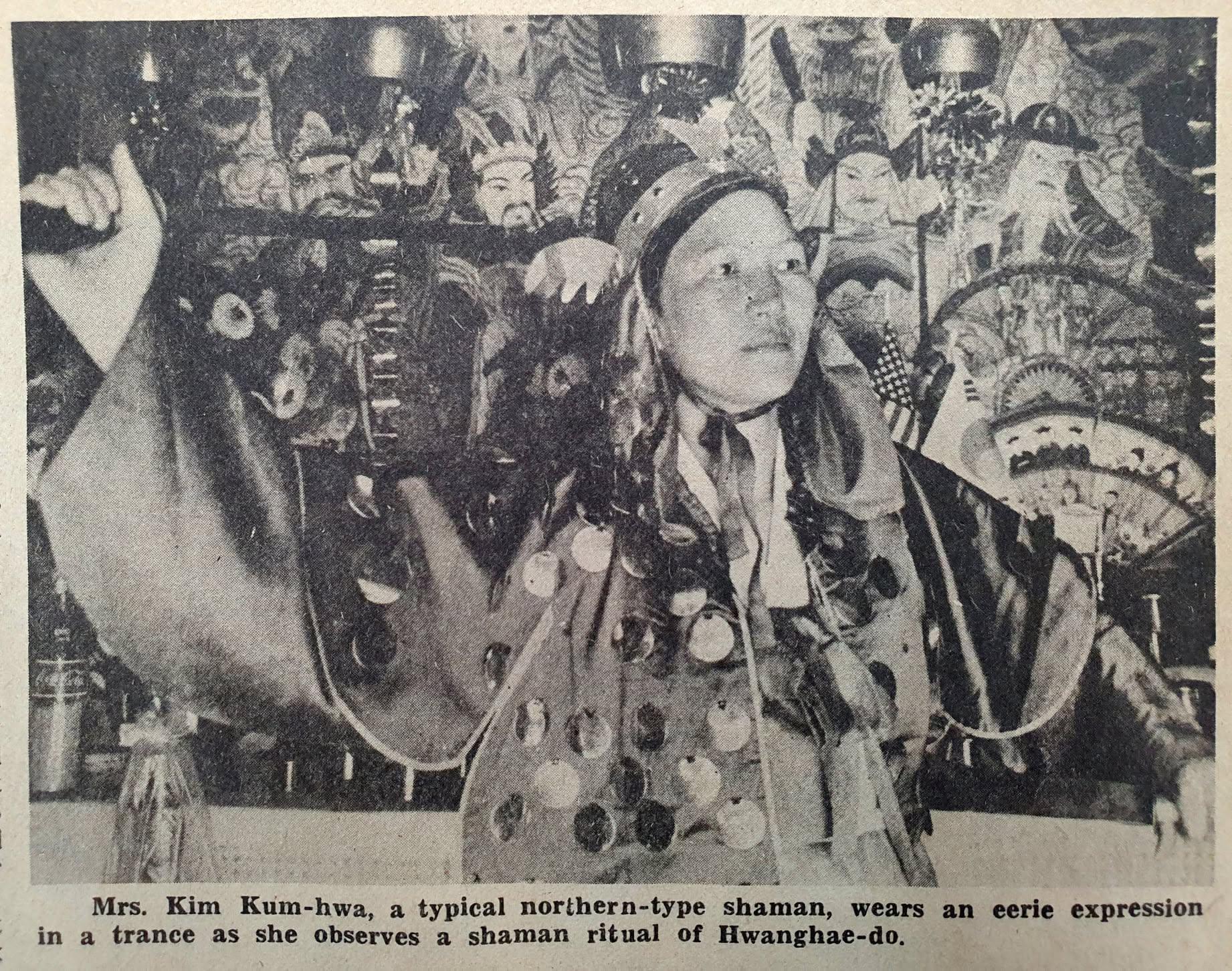
Kim Keum-hwa (1931-2019) was a highly skilled shaman originating from Jangyon, South Hwanghae Province, currently situated in North Korea. This region was once celebrated for its profound shamanic heritage. As a child, she suffered from the affliction known as sinbyeong, a form of spirit sickness. Her family took her to a local shaman who became her mentor, launching her apprenticeship as a gangsinmu, a practitioner of spirit conjuration.
At the tender age of 15, she conducted her maiden complete ritual, and by her 20th birthday, she had earned a sterling reputation within her community. During the 1950-53 Korean War, she was compelled to relocate southward, yet she persevered in her shamanic practices despite the chaos of war. As a high-ranking mansin, or practitioner of 10,000 spirits, Kim's primary shamanic deity was General Cho, whom she venerated as her protective spirit.
In her rituals, she also called upon other spiritual entities, including the Dragon King, the spirit of the Big Dipper, the mountain spirit Sansin, and a multitude of other spirits and deities. Kim conceived herself as "a receptacle for the gods." Starting in the early 1980s, she participated in festivals, conferences, and events across 25 nations worldwide, disseminating the practice of Korea's shamanism.
Written by urgent.news from The Korea Times's reporting — not their text. Machine-written — may contain errors; check the original before relying on it.
Also reported by 1 other outlet
- Who was Kim Keum-hwa? koreatimes.co.kr