View: From ‘Make in India’ to ‘Design in India’
India's automotive market thrives by owning technology, not just assembling imported parts. Past partnerships built manufacturing and vendor capabilities for Indian companies. New energy vehicles require mastering battery and software engineering for global standards. Tata Motors and Mahindra now lead India's EV market through sustained investment. This shift moves India from 'Make in India'…
The automotive industry in India is now the third largest globally, yet the conversation still centers on the divide between Indian brands and foreign technology. Contrary to the binary view, no carmaker constructs vehicles entirely on their own. Components like cells, semiconductors, software, and design capabilities are typically sourced from partners, both within and outside India. Therefore, it is more insightful to examine what transpires after these technologies enter the country.
While partnerships were imposed by policy in the past, companies today have the freedom to choose their partners and define the benefits they seek from these collaborations. The essence of the relationship is determined by how the partners leverage this alliance. Technology that remains solely licensed and purchased must be acquired anew for every product cycle, while comprehended, dissected, tested, and rebuilt technology becomes an enduring asset that a company can carry forward.
In recent years, India has honed world-class capabilities over four decades through continuous learning, adaptation, and innovation. Maruti Udyog's collaboration with Suzuki in 1982 resulted in more than just a small car; it introduced lean manufacturing, quality systems, and an entire component industry. Similarly, Tata Motors incorporated Indica's platform with styling guidance from I.DE.A Institute, Mahindra partnered with Ford and later Renault, integrating the acquired knowledge into their own designs.
The current focus, however, is shifting from merely assembling vehicles to designing them. Vehicles are increasingly defined by their batteries, power electronics, and software. Whereas mastering mechanical refinement over four decades was once the key to competitiveness, it is now no longer the primary determinant of value. In the era of electric vehicles, skills that were crucial in the past have become less relevant.
The knowledge required to excel in battery engineering, software, updates, and charging systems is what now sets apart successful companies.
China has emerged as a leader in this area, constructing the complete battery value chain, from raw materials to cells, battery management systems, and packs, holding over 75% of the global installed EV battery capacity. Tesla exemplifies how battery engineering, software, updates, and charging can be integrated into a unified system rather than being pieced together from separate components.
For Indian companies aiming to produce electric vehicles at a global standard, acquiring this essential knowledge is critical, and there is no shame in seeking it.
A significant difference from the past is that companies now have the autonomy to select their partners and determine the outcomes of these collaborations. The presence of a partnership alone does not convey much about a company's capabilities. What truly matters is how a company utilizes this partnership. Technology that is merely licensed and bought must be repeated with every product cycle, while technology that is understood, deconstructed, tested, and rebuilt becomes a permanent asset that a company can carry into subsequent programs.
Investment in areas that typically yield slow returns is crucial for success. This includes funding R&D continuously, regardless of product demand, establishing vehicle architecture ownership, enhancing manufacturing depth in cells, power electronics, and thermal systems—beyond mere final assembly. Developing suppliers domestically, as Maruti did in the 1980s by building a component industry, is essential for controlling costs and maintaining quality.
Furthermore, having engineers who have conducted rigorous tests and overcome failures is vital, as design judgment cannot be transferred through paper.
Market trends are already indicating which approach is more effective. In July, Tata Motors and Mahindra together dominated over 65% of India's EV registrations, with Tata holding 41.4% and Mahindra 23.8%. Neither company achieved this position quickly; they invested years in iteration, committing capital even before seeing returns. The necessary policy framework is already in place; what remains is for companies to leverage it to build platforms rather than solely focus on importing cheaper parts.
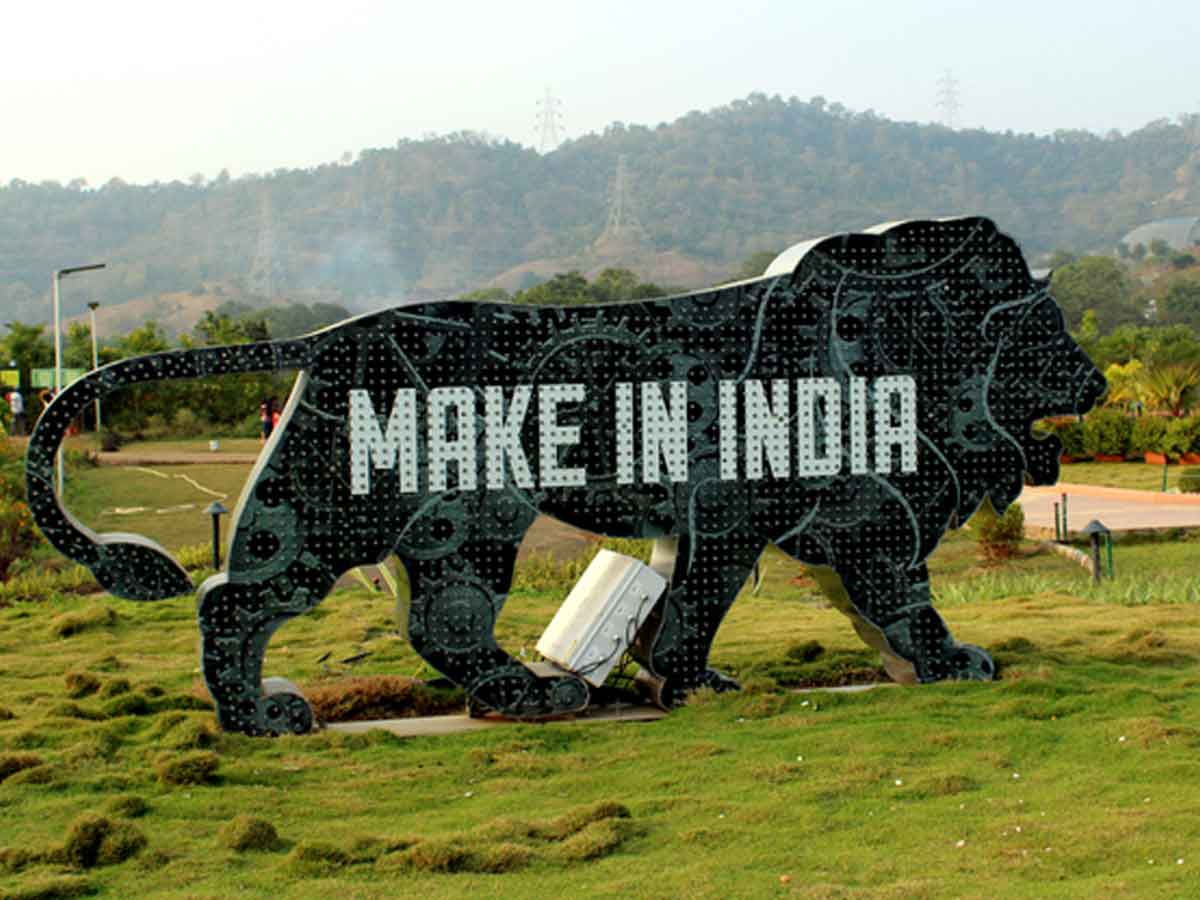
In conclusion, the goal is clear: transitioning from 'Make in India' to 'Design in India.' An industry that only assembles vehicles remains reliant on external decisions regarding cost, supply, and timing. Conversely, an industry that owns its architecture and supply base can dictate its own future. While partnership remains a sensible starting point, ownership must ultimately be the objective.
Written by urgent.news from The Economic Times - Economy's reporting — not their text. Machine-written — may contain errors; check the original before relying on it.