The New Battleground And Old Weaponry: Brand Memory And Preference
Democratisation of information and access to technology has made differentiation increasingly difficult. Features that once took years of R&D and massive investment can now be copied, adapted, or sourced with surprising speed. A small brand can access manufacturing capabilities, AI tools, design talent, logistics platforms, and digital marketing infrastructure that were once available only to…
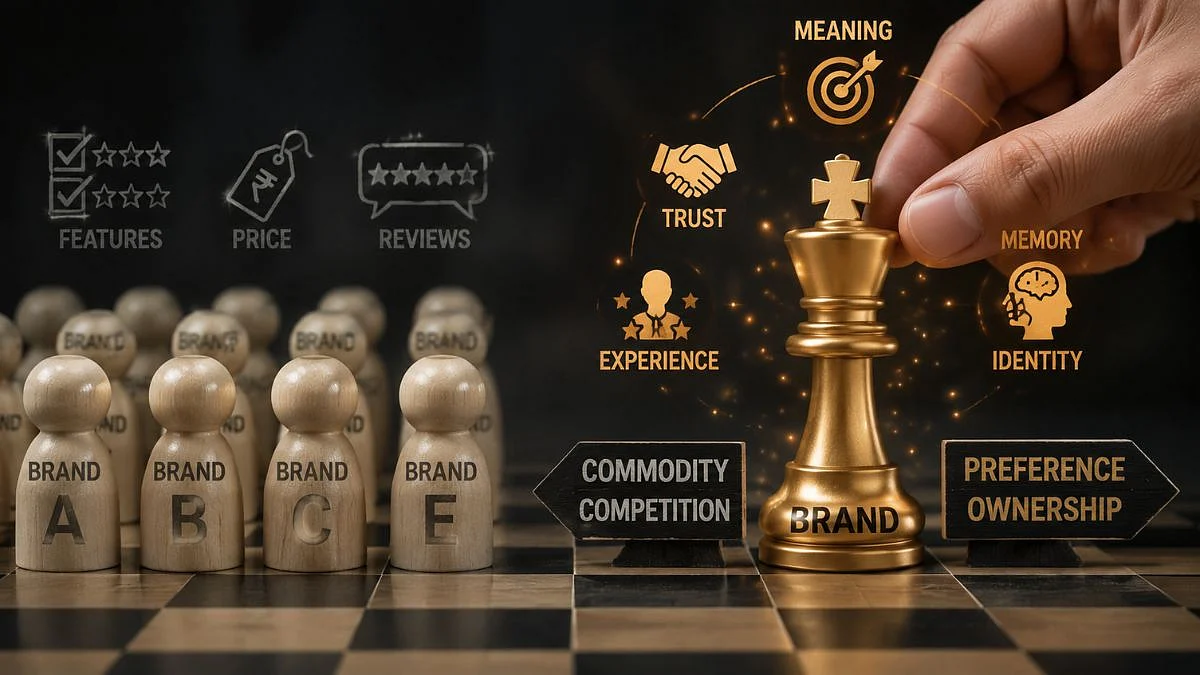
In the era of information democratization and technological advancements, the battleground for preference has shifted. Once, differentiation required years of research and development, but now small brands can access manufacturing, AI, design, logistics, and digital marketing capabilities that were once exclusive to large corporations.
E-commerce further blurs the lines between competing brands, offering similar products, features, prices, and reviews. This has made it difficult for brands to stand out, leaving them to rely on meaning and experience to create preference.
Meaning becomes the new weapon in this war of preference. Brands like Volvo, Apple, Harley-Davidson, and Rolex have successfully differentiated themselves by selling more than just their products. Volvo sells peace of mind and safety, Apple empowers creativity and simplifies life, Harley-Davidson promotes freedom and belonging, and Rolex represents achievement and status. These brands sell experiences and emotions that go beyond mere functionality.
Experience drives brand preference, as highlighted by Osho. Consumers choose products not only based on their utility but also on how they feel, what they represent, and how they align with their identity. Factors like trust, ease of returns, and customer service experiences play a significant role in shaping consumer preference. Brands must focus on building emotional connections and creating lasting memories with their customers.
Memory shapes consumer choice, as brands are often already present in consumers' minds before they even enter the market. Colours, sounds, stories, personalities, and past experiences create mental shortcuts that make it easier for consumers to choose familiar brands. When consumers need a product, they tend to gravitate towards brands they are already familiar with, reducing the need for extensive comparisons.
The ultimate goal is not merely to be the "best" product but to be the one consumers want. Emotional ownership is the real win, as consumers are more likely to remain loyal to brands that have established a strong emotional connection. In the future, the winner will be the brand that sells something more than just features and specifications.
Brands must re-examine their customer care and after-sales service to build a comprehensive brand experience and memory, which can serve as a strategic advantage in the competitive marketplace.
Written by urgent.news from Free Press Journal's reporting — not their text. Machine-written — may contain errors; check the original before relying on it.