The blueprint for taste: Scientists map the neural circuitry behind feeding decisions in fruit flies
Everything you eat passes one checkpoint before it enters your body: taste. In a fraction of a second, it decides what gets swallowed and what gets rejected, a judgment call critical to survival. Now, for the first time, researchers at the Champalimaud Foundation (CF) and their collaborators have mapped the complete neural wiring behind this process in an animal, tracing taste signals from…

Scientists have mapped the neural circuitry behind feeding decisions in fruit flies, providing insights into how taste triggers anticipatory insulin release before a single calorie is absorbed. This research, led by the Champalimaud Foundation in collaboration with various institutions, could accelerate understanding of how brains, including human brains, turn sensation into action.
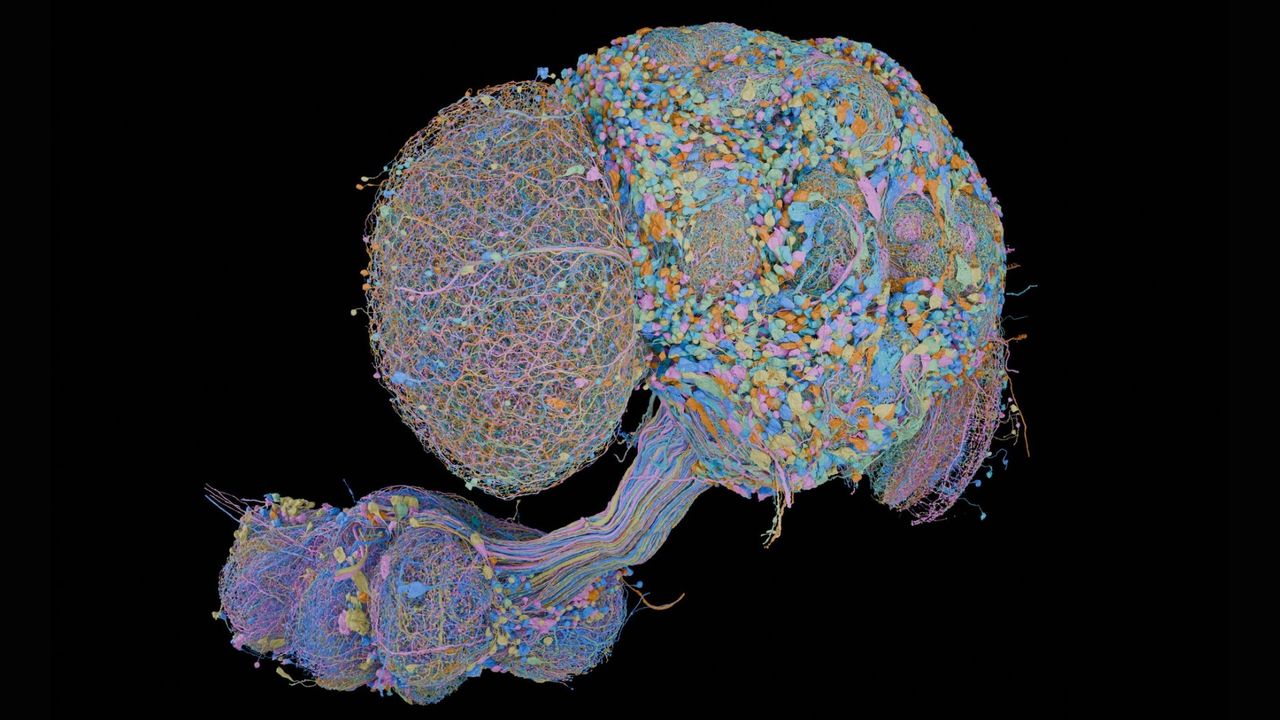
The study reveals that taste signals from sensory neurons across the fruit fly's body are routed to motor neurons that drive feeding, and that neural pathways may explain how taste influences behavior. The taste map is one of two studies published in Cell, the other mapping the wiring of the entire central nervous system of a fruit fly.
The task was made possible through artificial intelligence, which reconstructed the connections between nearly 167,000 neurons with a high degree of accuracy. The findings demonstrate that taste is more widely distributed across the fruit fly's body than other senses, with taste receptor neurons located on its legs, wings, mouthparts, and throat.
Written by urgent.news from Medical Xpress's reporting — not their text. Machine-written — may contain errors; check the original before relying on it.