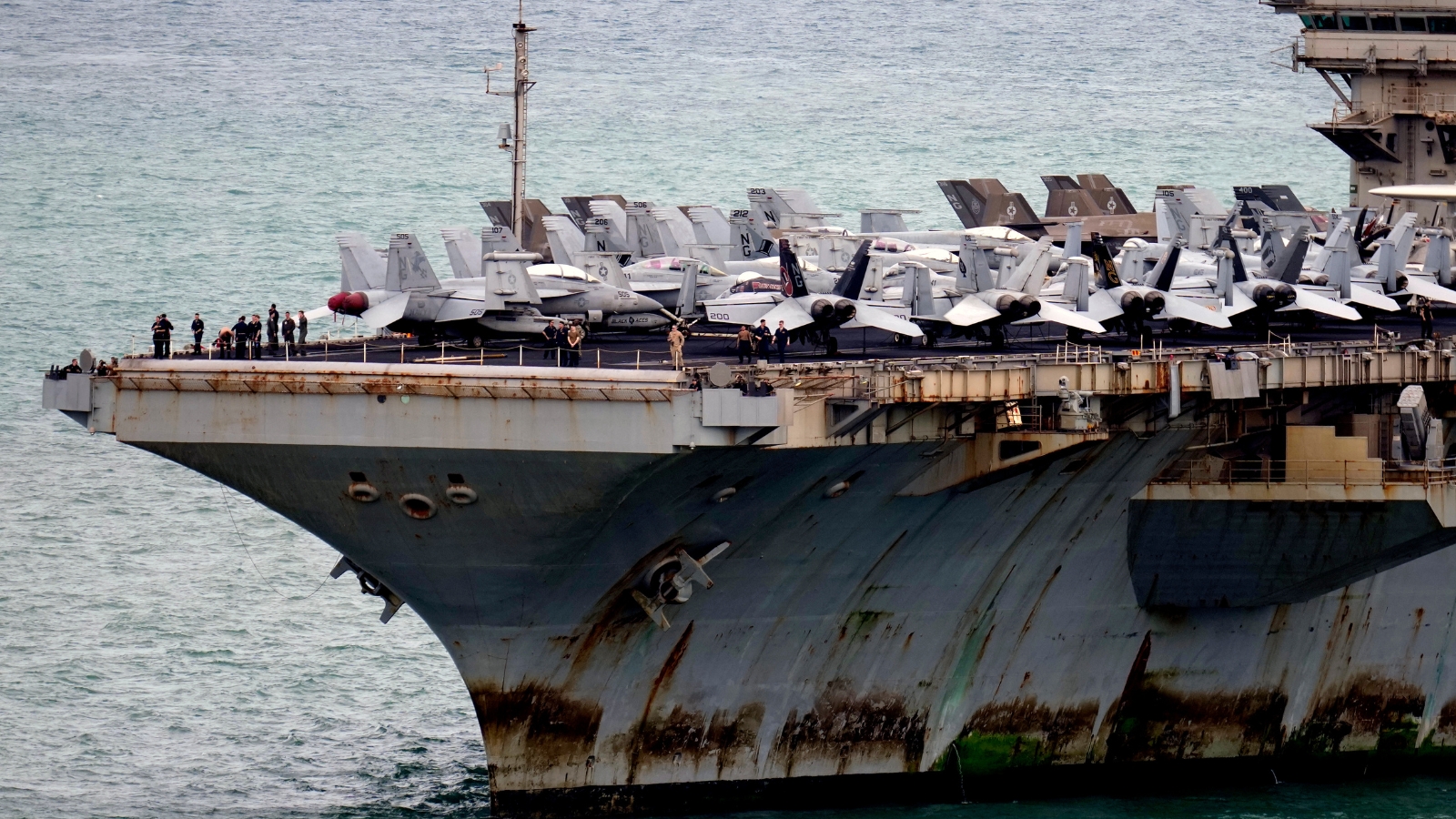
Rust, 286 days at sea and ‘shocked observers’: USS Abraham Lincoln’s before and after images
Washington has decided to prolong its military presence in the Middle East until 2027 in response to the ongoing conflict with Iran. Secretary of War Pete Hegseth authorized the extension, which will impact US Army units, air-defense forces, fighter squadrons, and Navy personnel stationed in and around the region. Currently, approximately 50,000 troops are deployed in the Middle East.
In a letter to soldiers' families, military leaders expressed their understanding of the strain a longer deployment would place on families. The Army's 82nd Airborne Division, a key rapid-response force, could remain in the region well into 2027. Initially, the deployment was viewed as a swift and decisive military action, but now, the Pentagon anticipates deployments lasting a year or longer.
Army air-defense units, responsible for intercepting Iranian missiles and drones, have had their usual deployment periods extended. Some have been stretched to a full year, while others have spent over a year in the Middle East. These extended deployments are raising concerns about their impact on military readiness. Tom Karako, director of the Missile Defence Project at the Centre for Strategic and International Studies, warned that the operational tempo for air defense units is already among the highest in the joint force.
Extended deployments could lead to tired troops, delayed equipment maintenance, and hinder long-term military modernization.
The Navy is also facing challenges due to the prolonged conflict. The disruption in the region has hindered the Navy's normal resupply capabilities, leading to increased reliance on the remote US base at Diego Garcia in the Indian Ocean. Sailors aboard some warships have experienced reduced opportunities for mail, care packages, and time away from their vessels.
The Navy currently has around 19 warships operating in connection with the regional military posture, along with additional aircraft and air-defense systems protecting American forces and bases.
The Pentagon's open-ended deployment framework is designed to preserve the president's military options as the conflict evolves. It does not guarantee that all forces will continue in the region until 2027, but it provides commanders and the White House with a baseline force from which operations can proceed or expand. The ongoing uncertainty stems from President Trump's private discussions with advisers about possibly declaring an end to the conflict with Iran, despite the continued exchange of direct strikes between American and Iranian forces.
As the conflict persists, military commanders must strike a delicate balance between maintaining sufficient forces to protect American personnel and preserve the president's options, while simultaneously preventing repeated and extended deployments from exhausting troops, disrupting family life, and limiting the time available for maintenance and modernization of the broader US military.
Written by urgent.news from Dawn's reporting — not their text. Machine-written — may contain errors; check the original before relying on it.
This story
This is one outlet's version. Read the fullest account.
- US extends Middle East deployments into 2027 as Iran conflict drags on dawn.com
- US extends Middle East deployments into 2027 dailytimes.com.pk
- Trump defends handling of US munitions amid Iran conflict thehill.com
- Starlink expands Middle East footprint with UAE launch: What to know al-monitor.com
- USS Abraham Lincoln crew receives first rest day amid reports of extended Middle East deployment jpost.com