NSE’s ₹1,500-Crore Settlement Draws A Line Under SEBI Cases As Supreme Court Closes Appeals
New Delhi: The Supreme Court on Thursday disposed of petitions filed by the Securities and Exchange Board of India (SEBI) against the National Stock Exchange (NSE) after the regulator approved a nearly Rs 1,500-crore settlement in the long-running co-location and dark fibre cases. A bench comprising Justices JB Pardiwala and K Vinod Chandran took note of the settlement between the NSE and SEBI…
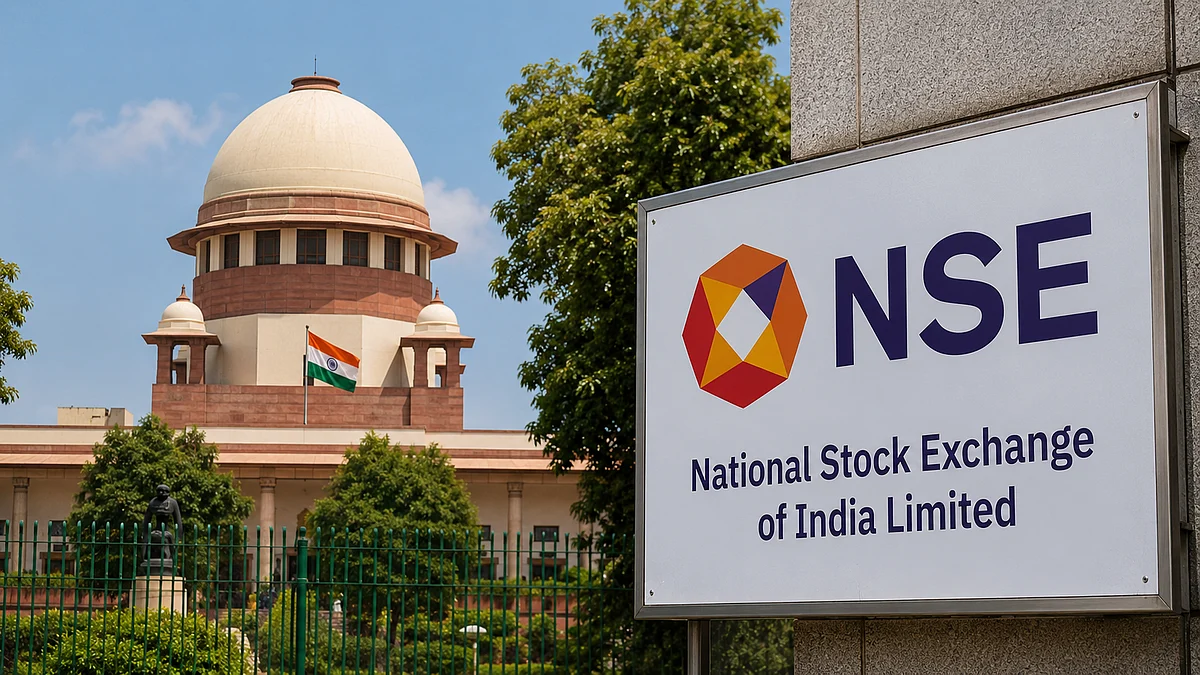
The Supreme Court dismissed petitions filed by the Securities and Exchange Board of India (SEBI) against the National Stock Exchange (NSE) following the approval of a substantial ₹1,500-crore settlement in ongoing co-location and dark fibre cases. A two-judge bench comprising Justices JB Pardiwala and K Vinod Chandran reviewed the settlement before closing the cases.
The disputes revolved around allegations that specific stockbrokers enjoyed preferential market data access, potentially enabling them to execute trades ahead of other investors. In July, NSE paid SEBI Rs 714.74 crore after receiving in-principle approval for a settlement of ₹1,491.21 crore, encompassing both co-location and dark fibre issues.
Adding to the Rs 776.47 crore deposited earlier, the latest payment finalized the agreed-upon settlement sum. Originally, NSE submitted two settlement proposals in June 2025, totaling ₹1,387.39 crore. Subsequently, the exchange adjusted the terms in March 2026, raising the total to ₹1,491.21 crore.
The resolution of these long-standing cases is particularly significant for NSE as it readies for its highly anticipated IPO. SBI Group is set to sell up to 1% of its stake in NSE, with a proposed ₹30,000-crore IPO slated for imminent issuance. NSE filed its draft IPO papers with SEBI in June, proposing an entirely equity-based offering of 14.89 crore shares, representing roughly 6% of the exchange's equity capital.
With no component of fresh shares, the IPO is valued at approximately Rs 30,000 crore, potentially positioning it among India's largest public offerings.
Written by urgent.news from Free Press Journal's reporting — not their text. Machine-written — may contain errors; check the original before relying on it.