Igniting Roman’s Journey
Now on a three-month, million-mile journey to its final orbit, NASA’s Nancy Grace Roman Space Telescope will soon reveal the universe’s darkest secrets. The mission launched at 7:26 a.m. EDT on Aug. 30 aboard a SpaceX Falcon Heavy rocket from Launch Complex 39A at the agency’s Kennedy Space Center in Florida. Roman pairs a large […] The post Igniting Roman’s Journey appeared first on NASA Science…
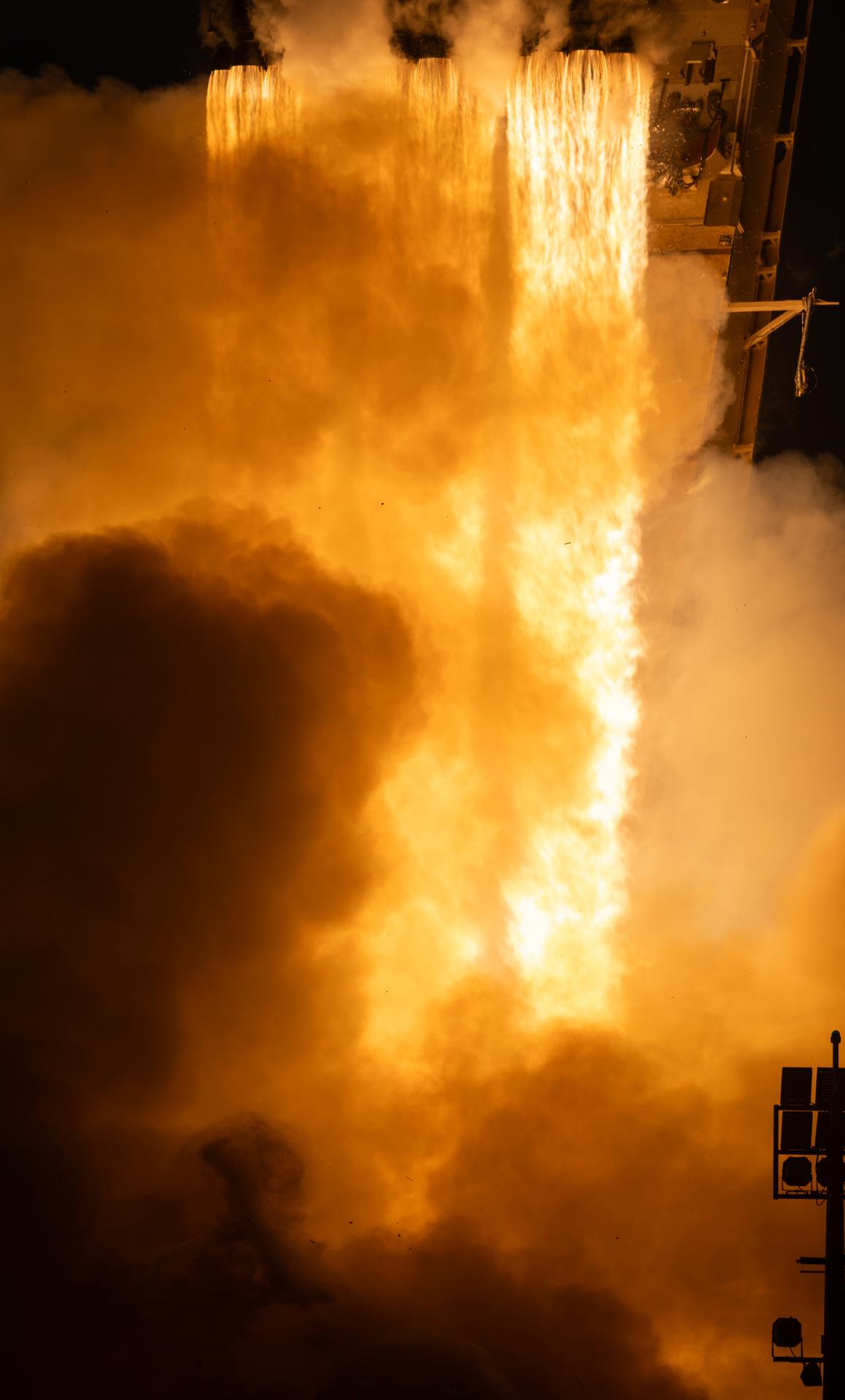
On August 30, 2026, a SpaceX Falcon Heavy rocket propelled NASA's Nancy Grace Roman Space Telescope into space from Launch Complex 39A at the Kennedy Space Center in Florida. The telescope, set to embark on a three-month journey of over a million miles, aims to unravel the universe's deepest mysteries.
With its expansive field of view and precise infrared vision, Roman will scrutinize expansive areas of the cosmos, probing deep into the annals of cosmic history. This flagship mission is poised to shed light on some of the most enigmatic aspects of our universe, including the elusive nature of dark matter and dark energy, as well as the existence of exoplanets, worlds that orbit stars beyond our own solar system.
NASA's Launch Services Program collaborated closely with SpaceX to expedite the launch schedule, ensuring Roman's early completion. This mission marks the fourth primary mission NASA has launched on a Falcon Heavy rocket, a testament to the formidable capabilities of this powerful spacecraft.
The launch of the Nancy Grace Roman Space Telescope marks a significant milestone in NASA's ongoing quest to expand our understanding of the cosmos. As it embarks on its voyage, Roman stands poised to unlock new insights into the fundamental forces that shape our universe, paving the way for groundbreaking discoveries that could redefine our perception of the cosmos.
Written by urgent.news from NASA Science's reporting — not their text. Machine-written — may contain errors; check the original before relying on it.
Also reported by 1 other outlet
- Igniting Roman’s Journey nasa.gov