ICE Seizes 22,000 Antiquities in Florida
The seizure of the allegedly smuggled artifacts comes amid the agency’s escalating violence and the Department of Homeland Security’s waiver of cultural preservation safeguards.
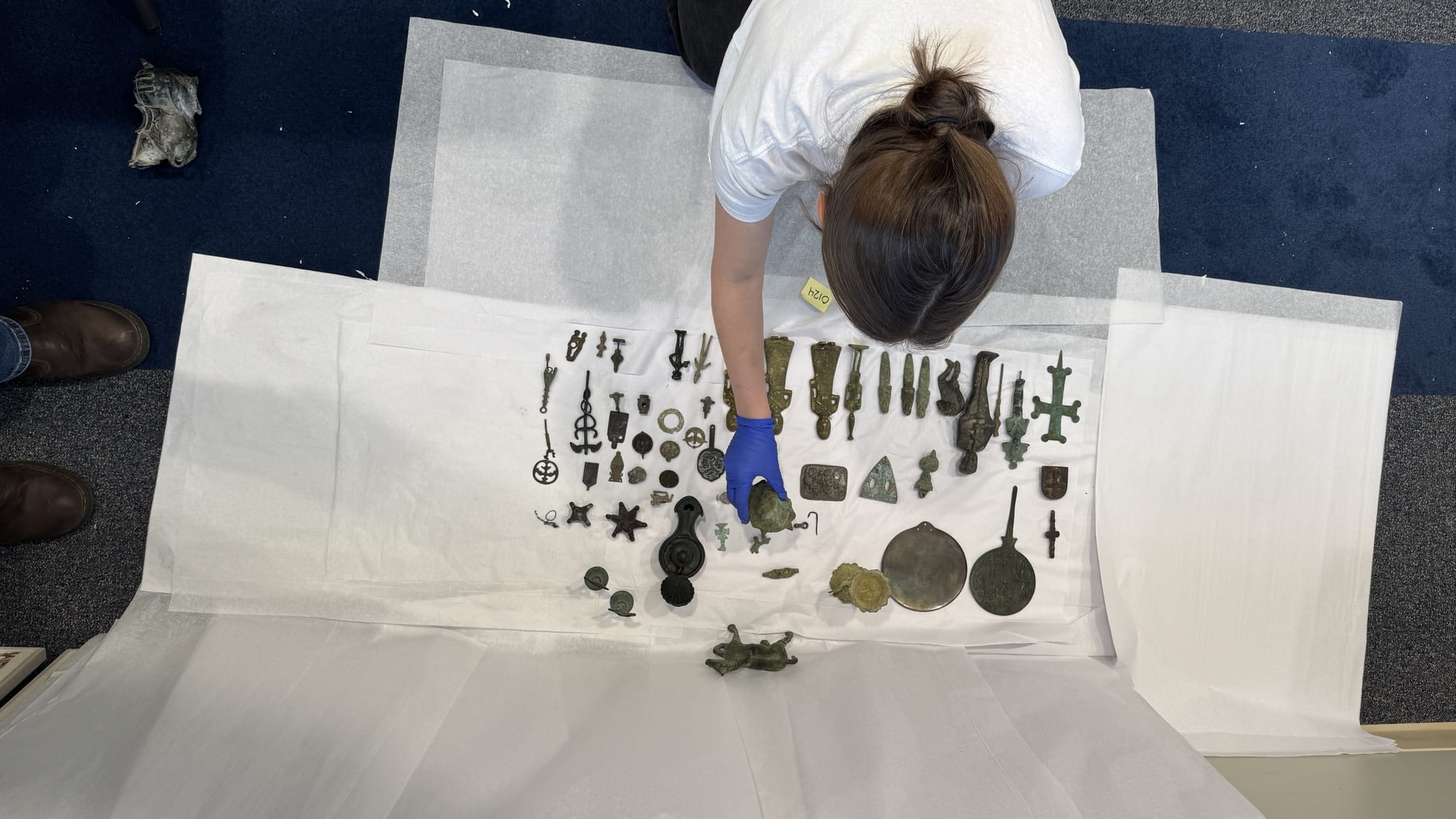
Immigration and Customs Enforcement (ICE) made a significant discovery in Florida, seizing over 22,000 ancient artifacts last month. These items, ranging from 1,000 to 5,000 years old, included Greco-Roman coins, terracotta and glass vessels, jewelry, and mosaic frames. The objects, believed to have originated from various locations including Europe, the Eastern Mediterranean, Africa, and the Levant, marked the largest recovery in ICE's ongoing investigation into antiquities smuggling in the state.
The Tampa Homeland Security Investigations (HSI) unit collaborated with academic experts from the University of South Florida and the University of Pennsylvania to authenticate, contextualize, and conserve the seized items. This partnership was crucial in ensuring the artifacts were properly analyzed and preserved for future study and appreciation.
The ongoing campaign by ICE and its parent agency, the Department of Homeland Security (DHS), has not only been criticized for its treatment of immigrants but also for its impact on cultural heritage. This April, DHS faced backlash after Customs and Border Protection crews, while constructing Trump's border wall, inadvertently damaged the 2,000-year-old Las Playas Intaglio in Arizona. The heavy machinery used in the project caused significant harm to a quarter of the Native American archaeological site.
In July, DHS further threatened cultural heritage sites when it waived numerous environmental, public health, and historical preservation regulations to expedite the construction of border barriers from the Big Bend region to Amistad Reservoir in Texas. This decision jeopardized over 400 archaeological sites in the region, highlighting the department's prioritization of border security over cultural preservation.
Written by urgent.news from Hyperallergic's reporting — not their text. Machine-written — may contain errors; check the original before relying on it.