Geld: Der Millionenerbe, der die Millionen nicht will
Kai Viehof hat den Großteil seines Erbes ausgeschlagen, auch vom Rest will der Enkel des Allkauf-Gründers das meiste weggeben. Über einen Mann, dessen Beruf es ist, sinnvoll Geld loszuwerden.
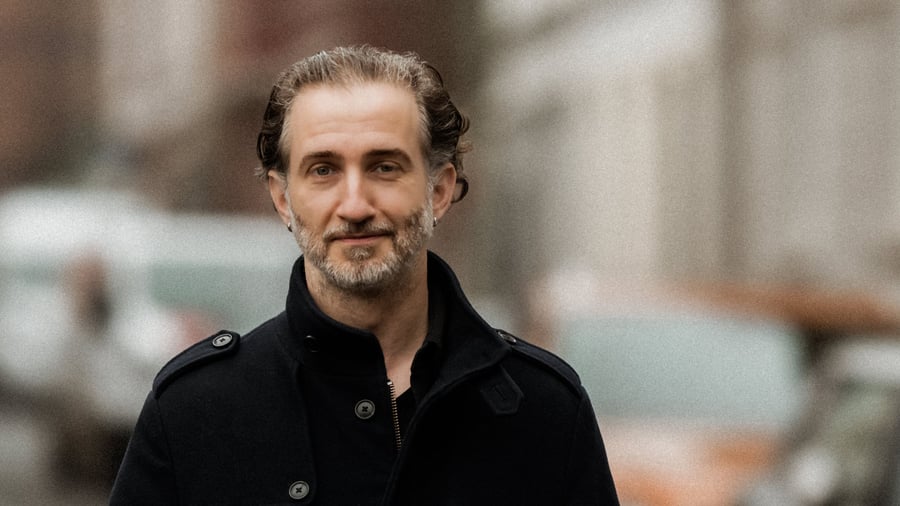
Kai Viehof, a self-made millionaire, is not your typical billionaire. At 44 years old, he stands out among the wealthy elite, as he refuses to increase his wealth and instead chooses to distribute it. His austere demeanor at the ARD talk show "Hart aber fair" on the topic of inheritance contrasts with that of his fellow millionaire, an Electrotechnics entrepreneur from Neuss with a larger-than-life presence.
Despite his modest appearance, Viehof decided to speak out about the issue of wealth distribution. His ancestors built the Allkauf chain in the 1960s, which was sold to Metro AG for around 1 billion marks in 1998. Viehof received his share but declined it. He is a new face among millionaires who prefer to give away their wealth.
Other members of this group include Sebastian Klein, author of "Toxic Wealth," who became rich as a co-founder of the Blinkist app, and Marlene Engelhorn, who descends from the founder's family of the chemical conglomerate BASF. Over half of private wealth in Germany comes not from work but from inheritance or gifts. Germany ranks 27th among countries with more than 100 millionaires, according to a 2025 Global Wealth Report by the Boston Consulting Group.
Viehof now openly talks about money, emphasizing that he does not want to accept the notion that wealth inequality debates are dismissed as jealousy. Instead, he considers it a central debate that everyone in the system should address. Viehof has decided to donate or invest seven-eighths of the two-digit million he already received.
He has learned accounting but no longer works in that field. Now, he is focused on spending money wisely, as long as it lasts. So, why did he decide to give away such a large sum? Who will receive it, and what does he hope to achieve? Viehof wanted to donate to development aid when he was 17, but his family initially didn't know about his decision.
He was conflicted about it back then. In his youth, he even wanted to go into development aid. Rich and poor are two sides of the same coin for him. Back then, he received some shares and other assets valued at a mid-two-digit million from his father, who shares his name. He was not entirely aware of what he was signing and how much it was worth at the time.
Would he reject it now? "I'm torn," he admits. "If I have control, I can use it for other purposes." At the age of 30, about ten years after selling the business, Viehof was due to receive another three-digit million, his actual inheritance. He declined it. He is aware that this is a luxury problem but feels compelled to contribute to the future generations.
He saw in his family a serious concern that their descendants could end up starving. This must be prevented at all costs. He decided not to have a business relationship with his family, neither with his father nor with his future children. Additionally, he felt uncomfortable with inheriting such a large sum without any performance.
He was also uncomfortable with having an unreasonable claim on such a large amount of money. After a conversation with his father, who was not enthusiastic about his son's decision, they agreed. The three-digit million was donated to a charitable foundation, managed by his father. However, Viehof retains a two-digit million for himself and his two children, providing a buffer for security.
He has not calculated how long this fortune will last. If he were to pass away, he plans to find a job. While he expects criticism for donating a part of his fortune, he feels that saying he keeps everything would be less honest. For democracy, he tries to focus on the seven-eighths of his fortune he donates and invests in companies that claim not to prioritize profits above all else. His emphasis is on democracy, as without it, there is no true democracy.
Written by urgent.news from Handelsblatt's reporting — not their text. Machine-written — may contain errors; check the original before relying on it.
This story
This is one outlet's version. Read the fullest account.
- Money: The millionaire heir who doesn't want the millions handelsblatt.com