Eskalation verhindert: Das sind die wichtigsten Punkte im VW-Sparpaket
Der Showdown bei VW wurde für Freitag erwartet. Nun hat der Aufsichtsrat überraschend eher getagt und eine Einigung erzielt. Sie bringt harte Sparmaßnahmen für die Belegschaft.
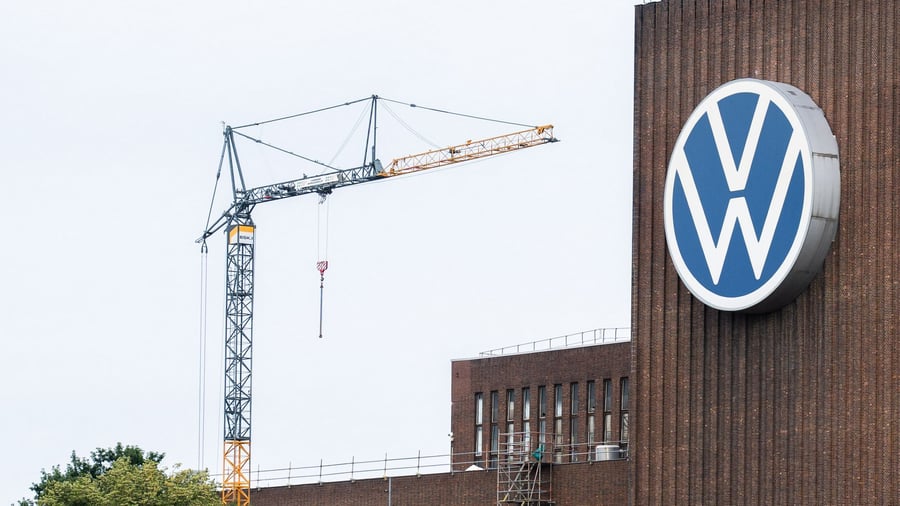
The ongoing showdown at Volkswagen's supervisory board has been avoided, but deep cuts across the group are taking place. The oversight committee of Europe's largest automaker surprisingly approved most of the 2030 transformation plan for the board led by Chief Executive Oliver Blume. The overseers unanimously agreed to the package, as the company announced.
Just a few hours earlier, it was far from clear whether the VW supervisors would even find common ground. Worker representatives and the German state of Lower Saxony had announced resistance. According to media reports, management even prepared to convene an extraordinary general meeting in case the package was rejected, with shareholders having to vote on the cost-cutting measures.
However, that did not happen. Now, a far-reaching agreement is in place. "This is a strong signal for the future," Blume said. The manager now has a mandate for the "most strategically far-reaching transformation program" in the history of the Volkswagen Group. Not all points have been implemented yet, though. A summary of the key points: Layoffs amount to a drastic cut Approximately 50,000 job cuts are being implemented worldwide, including managerial positions.
The exact breakdown by brands, countries, and locations has not been disclosed yet. Blume had previously stated during employee assemblies that he sees half of the adjustment needed in Germany. The job cuts are now actually being implemented. A consistent reduction of personnel capacity in line with economic reality is necessary due to increasing competition pressure, changing demand, and technological change.
2024, the VW management and worker representatives had already agreed on a reduction program in Germany: By 2030, a total of 50,000 positions are to be eliminated across the group. 35,000 jobs are to be cut at the core brand, Volkswagen, while the rest will be eliminated at subsidiaries such as Audi and Porsche. Four German plants remain under pressure.
The supervisory board has noted the existence of a European production surplus of 500,000 vehicles. For the EU plants Emden, Zwickau, Hannover, and the Audi plant in Neckarsulm, no competitive reassignment can be guaranteed starting from 2031 through 2034. A concept for a sustainable and competitive production structure must be presented by the end of June 2027 for these European plants.
In parallel, alternative use possibilities for the four mentioned German plants are to be examined, with official decisions on closures pending. Blume has previously always referred to closures as a last resort, aiming to create robust prospects for the locations. Other options include using the plants temporarily for armaments production and building Chinese VW models in Germany.
Financial targets The group aims to trim annual production to nine million vehicles, about one million less than currently and three million less than before the COVID-19 pandemic. By 2030, an operating profit margin of nine percent is to be achieved. As of the half-year, profit margin stood at 3.8 percent. Moreover, 135 billion euros are earmarked for investments in plant assets, research and development from 2027 to 2031.
No spin-off of the core brand A spin-off of the core Volkswagen automobile and component division is out of the question, according to IG Metall leader Christiane Benner and Business Council chief Daniela Cavallo. They successfully prevented an escalation and emphasized in their initial reaction that the supervisory board now needs to do its homework.
However, they criticize: "The confrontational course and communication of the management in recent weeks was not fruitful." The situation of VW is "more than critical" Volkswagen is struggling with high costs and a difficult environment. "We are more than critical," Blume described earlier. "We make profit, but we earn too little to finance the future."
"We are overdimensioned. This makes us often slow and complicated." Blume nonetheless sees this not as a crisis of VW, but rather as a crisis of the entire automotive industry. Two months ago, the supervisory board had for the first time discussed the cost-cutting and future plans, only to fail in the face of resistance from workers and the state.
Written by urgent.news from Handelsblatt's reporting — not their text. Machine-written — may contain errors; check the original before relying on it.