ElQA: ensuring electrical integrity in the LHC
Ongoing upgrades on the road to HiLumi ElQA: ensuring electrical integrity in the LHC 3 September 2026 The LHC has more than 1600 superconducting electrical circuits powering the magnets guiding the particle beams around the 27 km circumference of the accelerator. Every time the LHC stops for a major shutdown, all these circuits must be carefully checked for any problems. This is the job of the…
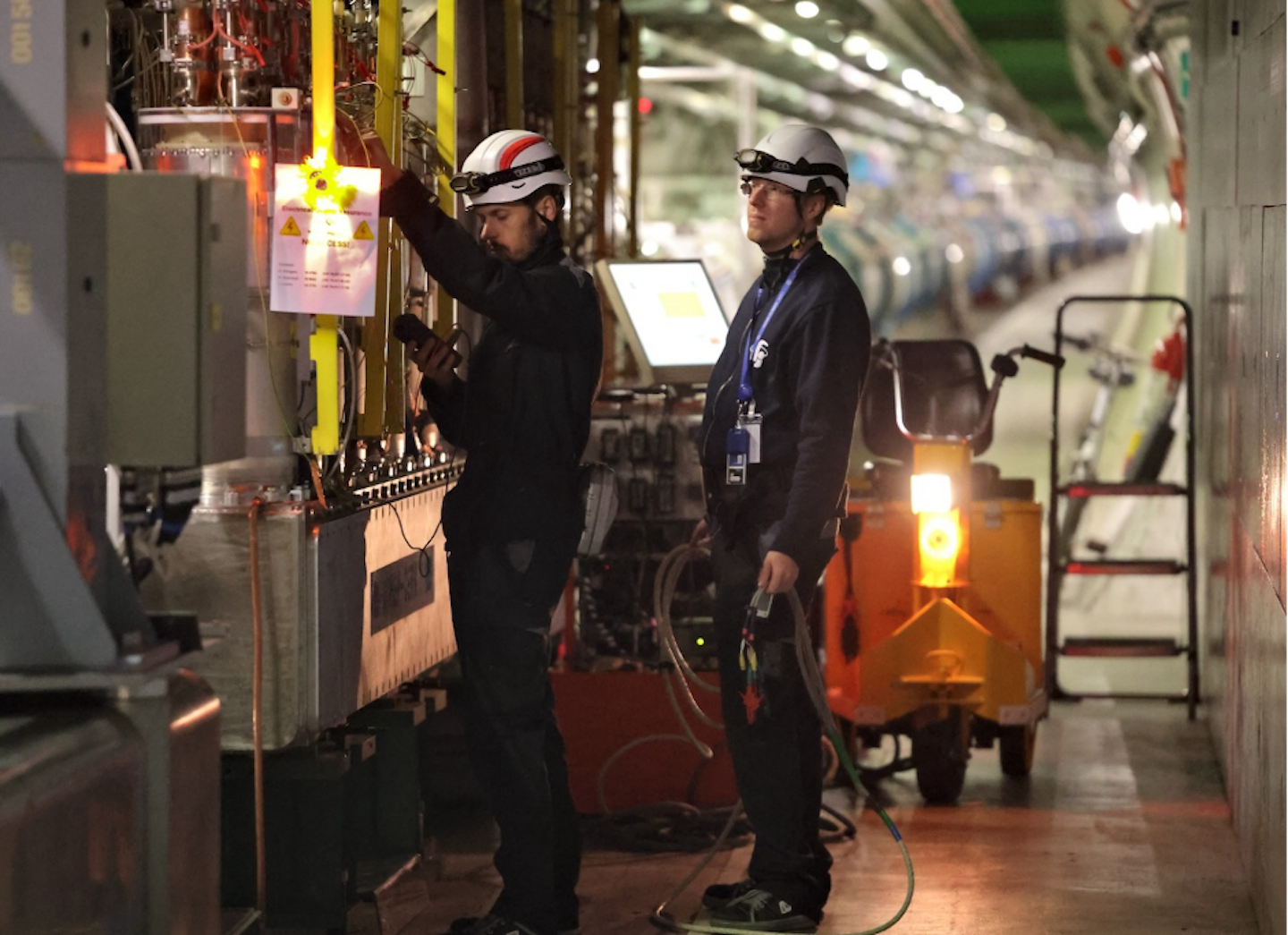
Ongoing upgrades to HiLumi are ensuring electrical integrity in the Large Hadron Collider (LHC). The LHC is equipped with more than 1600 superconducting electrical circuits that power the magnets guiding particle beams around its 27 km circumference. Whenever the LHC undergoes a major shutdown, the Electrical Quality Assurance (ElQA) team conducts thorough checks on these circuits.
The ElQA team's work is divided into three phases. In the first phase, the sectors are tested under cryogenic conditions, closely monitored during warm-up, and then tested again at room temperature to evaluate the effects of several years of operation and subsequent warm-up. During the second phase, the ElQA team assists with LS3 activities, which include replacing four magnets, repairing 11 cold bypass diodes, and installing new High-Luminosity magnets around the ATLAS and CMS experiments.
At the conclusion of LS3, each sector undergoes a third round of testing, both before, during, and after the cool-down of the magnets. This final assessment aims to identify and rectify any electrical problems as early as possible. Once these checks are completed, the circuits are prepared for hardware commissioning and the LHC resumes operation with the beam.
Written by urgent.news from CERN's reporting — not their text. Machine-written — may contain errors; check the original before relying on it.