Deconstructing the Atlantic Council’s Recommendations for Colombia
The Atlantic Council’s US-Colombia Strategic Alignment Coalition recently released an issue brief designed to guide the newly inaugurated administration of President Abelardo de la Espriella. Founded in 1961 by prominent American statesmen to bolster transatlantic alliances, the Atlantic Council operates as a highly influential, nonpartisan foreign policy think tank headquartered in Washington,…
The Atlantic Council's US-Colombia Strategic Alignment Coalition recently published an issue brief outlining four recommendations for the new government of Colombia, aimed at addressing security and socioeconomic challenges in the country. The brief, released in the context of President Abelardo de la Espriella's inauguration, seeks to guide the government's policy decisions moving forward.
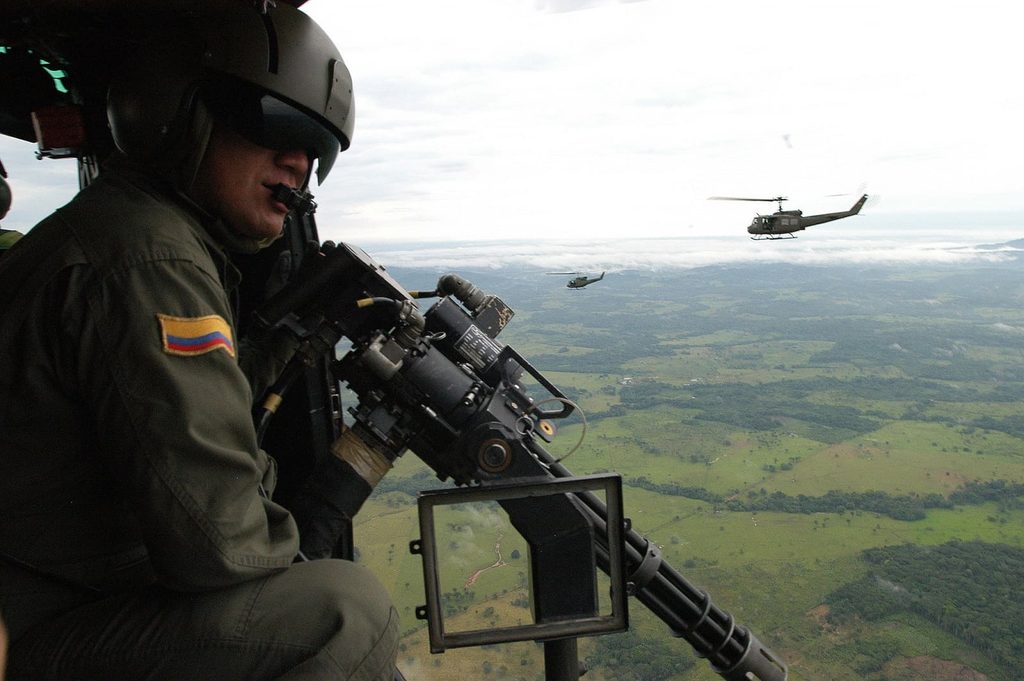
A cornerstone of the proposed strategy is a $1 billion United States assistance package, designed to re-establish state presence in areas controlled by armed groups. While the report accurately identifies the fracturing of Colombia's security landscape into a network of criminal organizations, it appears to ignore a significant historical aspect: the role of paramilitarism in the country's political economy.
The Atlantic Council's proposal to expand the National Police's rural Carabineros, coupled with increased air and river mobility, overlooks the deep-rooted distrust of state forces among local communities, particularly in regions marred by paramilitary activity. Such a deployment strategy risks being perceived as an occupying force rather than a neutral public servant, potentially exacerbating tensions and hindering the establishment of a stable state presence.
The report's second recommendation, to utilize community-identified initiatives from the Action Plans for Regional Transformation (PATR) in driving civilian presence, encounters similar obstacles. Despite the identification of 33,007 initiatives by March 2025, only 56 percent had active implementation pathways, and a significant number of projects remained unfunded.
The reliance on private capital, through mechanisms like the Works for Taxes (Obras por Impuestos), highlights a bureaucratic bottleneck. Private companies may lack the capacity to manage complex project pipelines, especially in regions where illicit economies generate greater returns and municipal institutions struggle to absorb such initiatives.
Moreover, the creation of isolated infrastructure projects in high-threat areas can inadvertently contribute to a "ink splatter" fallacy, where these assets become easy targets for armed groups. The report also addresses the allocation of Fiscal Year 2026 US funds, suggesting $15 million for human rights activities and $25 million for Afro-Colombian and Indigenous communities.
While the focus on post-earthquake reconstruction in the Choco region is commendable, the broader implication is troubling. Treating basic human rights as conditional security policy or temporary post-disaster relief fails to address systemic issues. Providing bodyguards or documentation tools may offer temporary protection, but it does not tackle the root causes of violence, such as local political corruption and shadow economies.
The report's emphasis on combating child recruitment by armed groups through Law 2590 and the creation of a national prevention plan is a necessary step, yet it reflects a broader need for addressing systemic corruption and its exploitation of vulnerable populations. In conclusion, while the Atlantic Council's recommendations offer a starting point for Colombia's new government, they must be critically examined for underlying assumptions and potential pitfalls.
To achieve lasting peace and stability, the country must prioritize not only physical security but also social and economic reforms that address the deep-seated issues driving armed conflict.
Written by urgent.news from Colombia One's reporting — not their text. Machine-written — may contain errors; check the original before relying on it.