APOD: 2026 September 3 – The Eclipse and the Stork
APOD Science APOD APOD: 2026 September 3 – The… Today’s APOD Archive Submissions Index Search Calendar RSS Education About Discuss APOD Astronomy Picture of the Day Discover the cosmos! Each day a different image or photograph of our fascinating universe is featured, along with a brief explanation written by a professional astronomer. The Eclipse […]
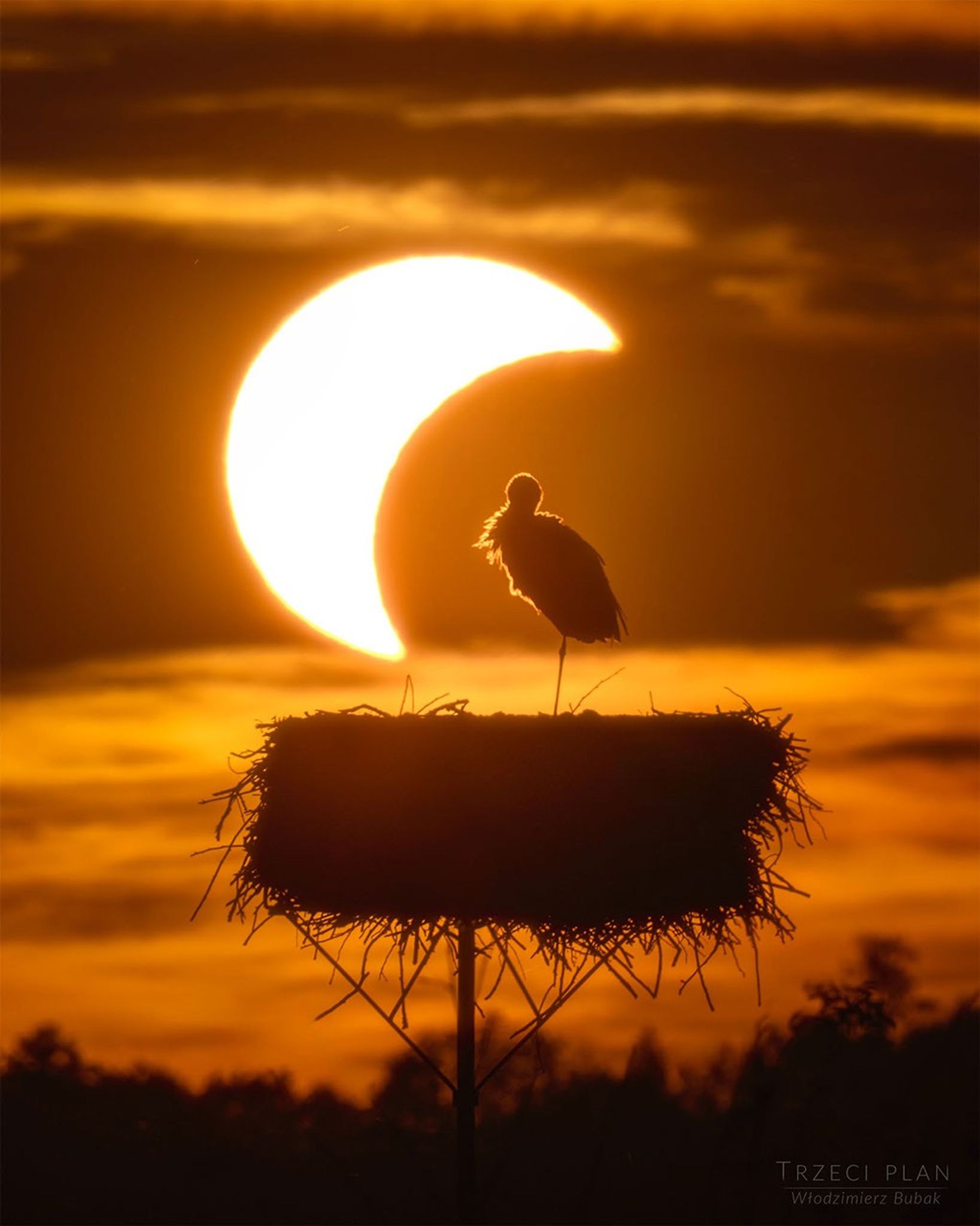
On September 3, 2026, astronomers captured a fascinating image of a stork roosting on her nest in Poland during a partial phase of a total solar eclipse. This peculiar situation provided a unique opportunity to observe animal behavior in response to the eclipse.
During the total phase of the eclipse, animals in the vicinity experienced unusual daytime behaviors. Crickets and frogs, typically active during nighttime, produced sounds as if it were nighttime. Fireflies, known for their evening glow, also emerged. Birds, on the other hand, became unusually quiet, thinking it was time to go to bed. Ducks and other waterfowl prepared to sleep on one leg, with their heads tucked under their back feathers.
As the eclipse transitioned back to partial phase, the sounds of crickets and frogs faded back into silence. When the total eclipse ended and sunlight returned, songbirds welcomed the "morning" with their dawn songs, marking the end of the temporary day and night disruption caused by the alignment of the Sun and Moon.
Written by urgent.news from NASA's reporting — not their text. Machine-written — may contain errors; check the original before relying on it.
This story
This is one outlet's version. Read the fullest account.
- APOD: 2026 September 3 – The Eclipse and the Stork science.nasa.gov