An ancient 'supervolcano' has been found hiding beneath eastern England. But experts say there's not enough evidence to call it that.
Geologists recently identified a 454.4 million-year-old volcano on England's east coast, but whether the structure can be considered a "supervolcano" remains an open question.
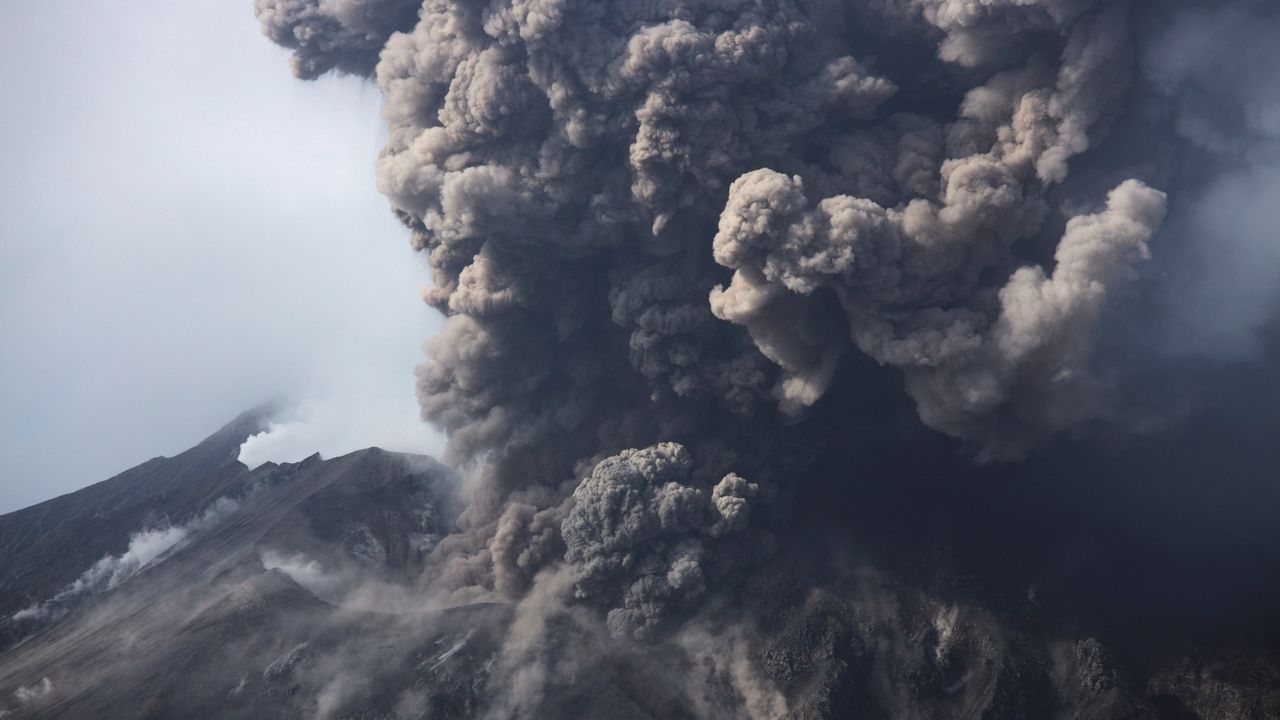
Scientists have discovered an ancient supervolcano hidden beneath eastern England, though experts are hesitant to label it as such. The caldera system, remnants of which are located beneath Norfolk and Lincolnshire, is so eroded that it took researchers three decades to determine its massive size and explosive history. While the volcano did produce at least one massive eruption, some scientists contend there isn't enough evidence to classify it as a supervolcano.
The evidence comes from zircon crystals taken from boreholes 80 years ago, now analyzed in a study published in the Geological Society of America Bulletin. These tiny crystals, found in rocks formed within molten magma before eruptions, contain uranium that decays into lead isotopes at a known rate, allowing researchers to precisely date eruptions.
The results revealed an age match between zircon crystals from Norfolk and Lincolnshire and those from the Kinnekulle tephra, a thick layer of volcanic ash found in Scandinavia and the Baltic region.
This ash plume from the now-eroded English volcano likely blew across the Tornquist Sea and settled on present-day Scandinavia, according to the study. While the eruption was undoubtedly large, some experts argue that there isn't sufficient evidence to call it a supervolcano. Michael Poland, a research geophysicist with the Cascades Volcano Observatory, prefers the term "ultraplinian eruption" to describe this type of explosive volcanic event.
However, the term "supervolcano" is often rejected by geologists due to its imprecision. Instead, they prefer to describe eruptions by the volume of material they eject. Stephen Self, a physical volcanologist at the University of California, Berkeley, agrees that the term can be too vague. The geological record is also incomplete, making it difficult to accurately determine the volume of eruptions from ancient volcanoes like this one.
Despite these challenges, the discovery sheds light on a significant volcanic system that existed in England 450 million years ago.
Written by urgent.news from Live Science's reporting — not their text. Machine-written — may contain errors; check the original before relying on it.