Why is India acquiring the Javelin anti-tank missile system? | Explained
The Javelin’s induction took nearly 15 years because India and the U.S. could not initially bridge differences over technology transfer and local production
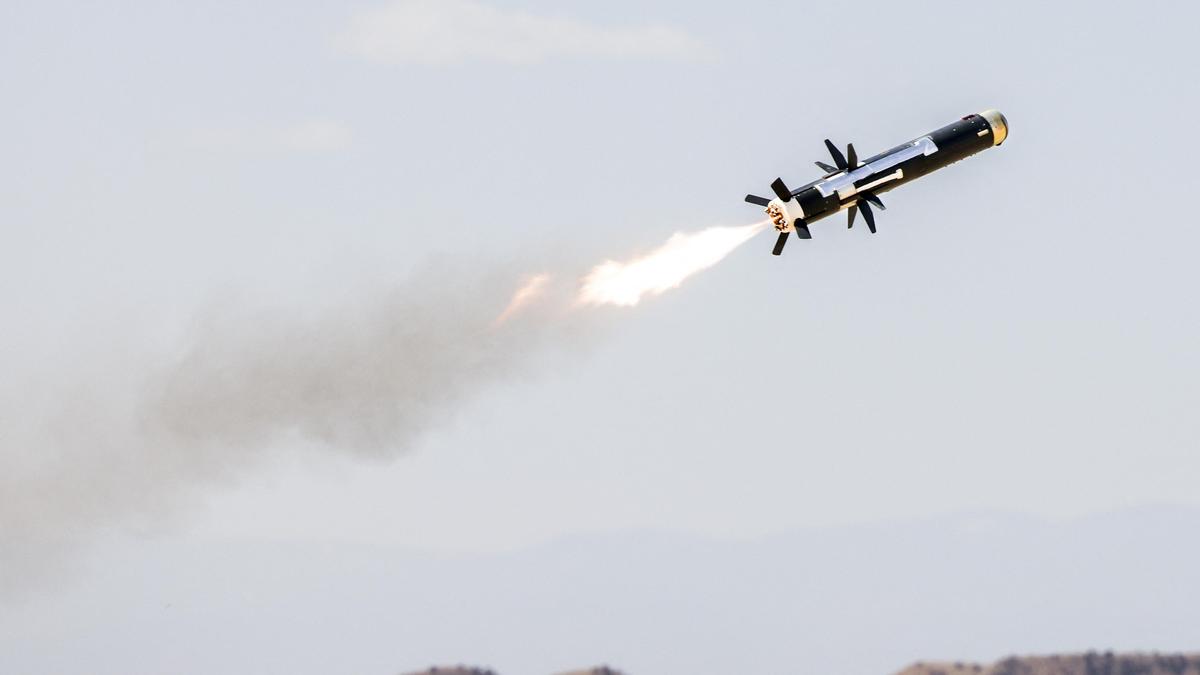
India's acquisition of the U.S.-made Javelin anti-tank guided missile system represents a significant enhancement to the Indian Army's infantry anti-armour capabilities. As modern warfare emphasizes highly mobile, precision-guided weapons against tanks and armored vehicles, the Javelin's fire-and-forget capabilities offer a crucial advantage.
Unlike previous systems that required continuous guidance, operators can deploy the Javelin and immediately relocate, improving the survivability of infantry units in close proximity to enemy armor.
Signed through the U.S. Foreign Military Sales program, the LOA for the Javelin system marks India as a customer of one of the world's renowned shoulder-fired anti-tank missile systems. This acquisition also paves the way for potential co-production in India, with Tata Advanced Systems Limited and the Javelin Joint Venture signing a memorandum of understanding to explore final assembly and integration of the Javelin All Up Round in the country.
The Javelin's top-attack capability adds another layer of effectiveness, allowing the missile to strike tanks from above, where armor protection is typically thinner.
Although India currently possesses multiple anti-tank missile programs and systems, such as the indigenous Man-Portable Anti-Tank Guided Missile (MPATGM) and the Nag missile family, these cater to different operational needs. The MPATGM, developed by the Defence Research and Development Organisation, is still in the testing and development phase, yet to reach the scale of volume induction required for wide distribution.
The Nag missile family, while providing heavier anti-tank capabilities for vehicle-mounted and helicopter-launched roles, serves a distinct purpose.
The Javelin's acquisition arrives nearly 15 years after initial discussions, as India and the U.S. struggled to bridge differences over technology transfer and local production. In the interim, India pursued indigenous alternatives and acquired limited quantities of Israeli Spike missiles to meet urgent requirements. However, the Javelin's fire-and-forget capability, proven operational use in conflicts like Ukraine, and its ability to integrate with India's evolving force structure make it an ideal option for the Indian Army.
Beyond its combat advantages, the Javelin deal holds industrial significance. Tata Advanced Systems Limited and the Javelin Joint Venture are exploring establishing a facility in India for final assembly and integration, potentially bringing advanced manufacturing expertise into the domestic defence ecosystem, creating specialized jobs, and strengthening India's role in global defence supply chains.
As the Indian Army seeks greater mobility, survivability, and precision at the tactical level, the Javelin represents a capability tailored to the demands of the modern battlefield.
Written by urgent.news from The Hindu's reporting — not their text. Machine-written — may contain errors; check the original before relying on it.