What does Zelensky’s threat to ‘close Russia’s skies’ mean? And what targets could Ukraine hit next?
Ukraine continues its campaign of strikes on Russia’s rear, and its choice of targets keeps growing more varied. In recent days, drones have hit an oil terminal at the port of Ust-Luga on the Baltic Sea, a drone base in Oryol Region, unknown facilities in Tolyatti, a power plant in Belgorod, and air bases in Yeysk and Saratov Region. But the campaign still centers on the same types of targets,…
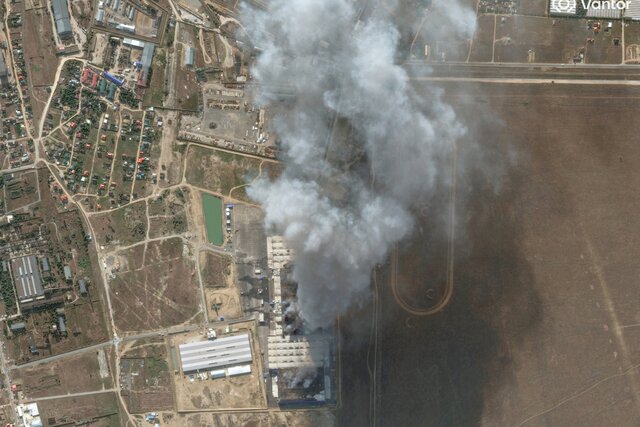
As of September 1, 2026, Ukrainian President Volodymyr Zelensky has indicated that Ukraine may consider targeting Ukraine's civil aviation infrastructure, alongside its ongoing campaign of strikes against Russia's rear. The ongoing drone strikes have expanded to include various targets such as an oil terminal at the port of Ust-Luga on the Baltic Sea, drone bases in Oryol Region, unknown facilities in Tolyatti, a power plant in Belgorod, and air bases in Yeysk and Saratov Region.
The campaign still predominantly targets oil refineries and marketplace warehouses, which consume most of Ukraine's drone stockpile.
The effectiveness of these strikes is debatable, as they bring Ukraine closer to victory. The logic behind the choice of targets remains unclear, but analysts and Western military experts believe they aim to cripple the Russian economy and disrupt its infrastructure. Ukraine's strike capabilities are limited due to the nature of its drones and missiles.
The long-range drones, designed for strikes deep behind the front line, are ineffective against more heavily defended targets deep inside Russia. Their small payload and reliance on Starlink satellite terminals, which are often blocked in Russia, limit their reach and precision.
Ukraine's allies have supplied cruise and ballistic missiles, but they are limited in number and use, often requiring approval from cautious Western governments. These missiles have a range of less than 300 kilometers, so they are primarily used against targets in occupied and border territories. Ukraine's own production of long-range missiles has fallen behind schedule and hasn't yet become a decisive factor.
In conclusion, Ukraine's targets are primarily selected based on their vulnerability and economic impact on Russia. The unpredictable nature of Russia's air defenses and the limited range of Ukraine's missiles constrain the effectiveness of its strikes. As Ukraine continues its campaign, the pressure on Russia to respond and the possibility of intensifying strikes may increase.
Written by urgent.news from Meduza (English)'s reporting — not their text. Machine-written — may contain errors; check the original before relying on it.