Thousands still missing as Nepal-Tibet flood relief and recovery intensifies
More than 1, 000 people have died and thousands are missing, with communities relying on airlifted supplies.
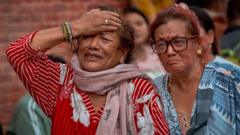
The aftermath of the recent catastrophic flash floods along the Nepal-Tibet border continues to intensify relief and recovery operations. According to the United Nations, thousands of people remain missing, with at least 1,200 deaths confirmed in Nepal and over 4,200 others unaccounted for. On the Tibetan side, the death toll stands at 21, with more than 540 people still missing.
Rescuers are grappling with the daunting task of reaching individuals who may still be alive, particularly in Nepalese hydropower tunnels where potentially hundreds of trapped workers are believed to be. A massive flash flood, likely triggered by a glacial collapse, swept through a Himalayan valley last Wednesday, destroying villages and leaving thousands displaced.
While nearly 12,000 people have been rescued so far, fears are mounting that the death toll will continue to rise. Chinese rescue teams are still searching for over 500 people missing on the Tibetan side of the border, though survivors have yet to be found at the Gyirong Port crossing between Nepal and Tibet. China, which annexed Tibet in the 1950s, tightly controls the region, limiting access and information flow.
Rescue efforts are ongoing, with heavy machinery being used around the clock to clear debris and reopen routes to the Gyirong border crossing. Temporary bridges are being constructed to aid in reaching remote areas. Drones are being deployed in hard-to-reach zones to scan for survivors, and the UN Office for the Coordination of Humanitarian Affairs (OCHA) notes that access remains a significant challenge due to over 40 destroyed bridges.
The most remote communities are depending on army helicopter flights for supplies, as villages struggle with fuel and electricity shortages. Over 3,500 people have been left homeless and displaced in 27 sites across Nuwakot and Rasuwa districts in Nepal, disrupting education and increasing the risk of disease during the monsoon season.
Prime Minister Balendra Shah emphasized the urgent need to protect survivors, provide medical treatment, and offer psychological counseling, acknowledging the unpredictable nature of the disaster.
While Nepal has declared a disaster in 15 affected areas for three months, the government and UN have agreed to launch a four-month humanitarian flash appeal to provide financial assistance, support displaced families, and deploy the army to aid in the recovery process. Experts attribute the event to climate change, highlighting the escalating risks facing the Himalayan region and the need for better early-warning systems to prevent future tragedies.
Written by urgent.news from BBC News's reporting — not their text. Machine-written — may contain errors; check the original before relying on it.
This story
This is one outlet's version. Read the fullest account.