The SIR Raises Many More Questions
When the population of a country increases, there should ordinarily be a corresponding increase in the number of voters. Births continue to outnumber deaths, and India has a large and growing population of young people. These demographic trends should be reflected in its electoral rolls. Yet, after the third phase of the Special Intensive Revision (SIR), nearly six crore names have been deleted…
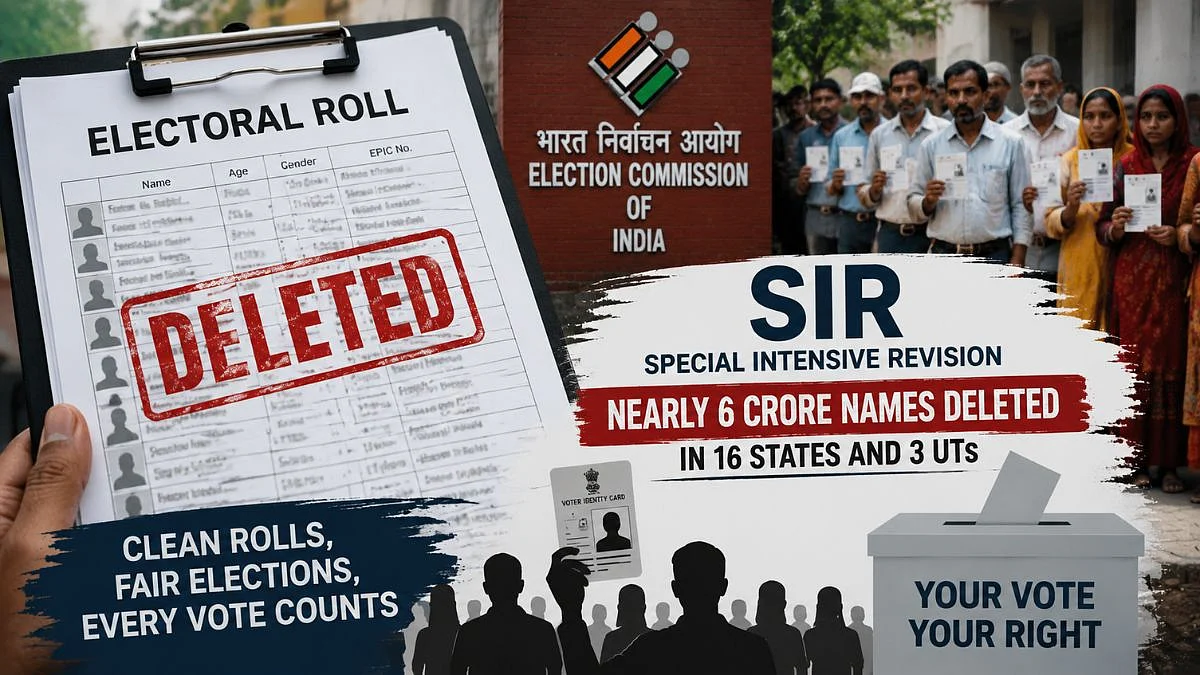
As India's population swells, one would expect a matching rise in registered voters. Birth rates consistently outpace death rates, and India's youthful demographic should translate to robust electoral rolls. However, after the third phase of the Special Intensive Revision (SIR), nearly six crore names were erased from the rolls across 16 states and three union territories.
Initially, 36.08 crore names existed, with 17.04 per cent removed—Delhi bearing the brunt with 32.78 per cent deletions, while Maharashtra saw the largest absolute reduction at 2.06 crore. The government cites illegal infiltration as the reason, yet the sheer volume of deletions raises serious questions about the process itself.
The crux of the issue lies in the methodology: many citizens, including the poor, illiterate, and migrants, find it hard to prove their voter status from 2002. Aadhaar, ration cards, and other documents are not being accepted for eligibility verification as expected. This leaves genuine voters—who have participated in past elections—who could be unfairly excluded from future rolls.
The Supreme Court has validated the SIR process, but this doesn't excuse every aspect of its implementation. The Election Commission must now address these concerns during the claims-and-objections period starting September 6, especially after Chief Ministers from Karnataka and Telangana raised alarms over "massive and unjustified" deletions.
Every legitimately registered voter impacted must be given a straightforward path to regain their status. An electoral roll is more than a government list; it is the cornerstone of a citizen's right to choose their government. If millions are barred from voting due to an inability to provide outdated documents, the revision of electoral rolls could spiral into a broader overhaul of the electorate itself. The goal is to eliminate ineligible voters, not to disenfranchise the already enrolled.
Written by urgent.news from Free Press Journal's reporting — not their text. Machine-written — may contain errors; check the original before relying on it.