The moon might be hiding a history of ancient supernova explosions
Scientists have managed to extract the history of supernova explosions in our cosmic backyard from radioactive isotopes found in moon dust.
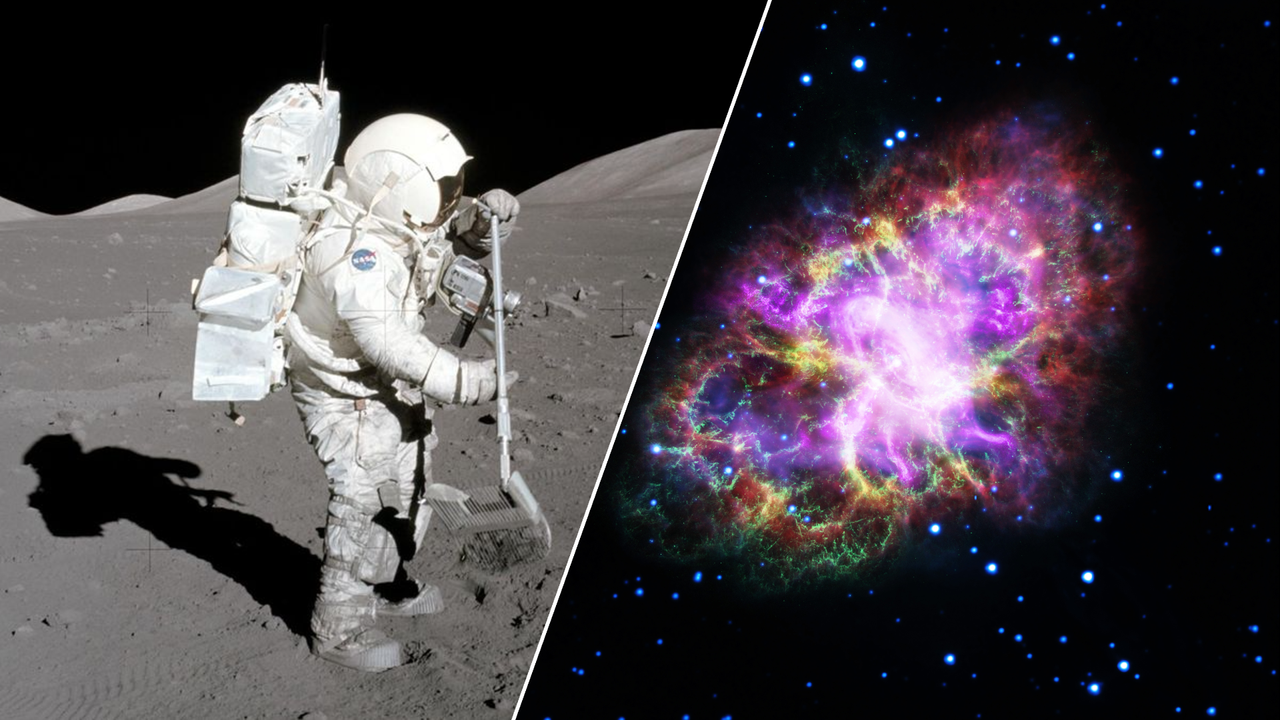
Recent studies reveal that the moon may hold clues to a history of ancient supernova explosions. A new computer model allows scientists to separate the sprinkling of supernova dust on the moon from the lunar dirt it is mixed with, essentially turning the moon into a time capsule. When stars explode as supernovas, they release debris, including radioactive isotopes, which travel at high velocities.
Some of these radioisotopes enter the solar system and fall onto all planets and moons, including Earth and the moon. Studies of radioisotopes in deep-sea sediments and lunar soil from the Apollo missions suggest two peaks in supernova activity, 2.3 and 7.3 million years ago. Emily Costello, a planetary scientist from the University of Hawaii at Mānoa, believes that studying the remains of past stars can help us understand the history of our Earth-moon neighborhood if we can learn to interpret the stardust.
Unlike Earth, the moon has no atmosphere, wind, rain erosion, or plate tectonics, allowing it to potentially hold a record of supernova activity dating back 80-100 million years. However, the moon does experience "impact gardening," where impacts from objects ranging in size from tiny micrometeorites to large asteroids mix up the regolith, including radioactive supernova debris.
To decipher the depths at which various radioisotopes have been mixed down, Costello's team developed a mathematical model to decode the treasures in the lunar regolith. This model balances complex physical mechanisms, such as impact compaction, excavation, radioactive decay, and space weathering. By comparing the model's predictions for the depth-concentration of supernova radioisotopes with data from Earth's deep-sea sediments and Apollo samples, researchers found an excellent match.
With future Artemis missions bringing back deeper lunar samples, scientists hope to gain new insights into an untold chapter of supernova history and better understand our solar system's journey through the galaxy.
Written by urgent.news from Space.com's reporting — not their text. Machine-written — may contain errors; check the original before relying on it.