The collapse of trust in facts: Making sense of verification on the internet
As AI and crowdsourced systems take on the job of fact checking, they promise speed but struggle to deliver trust and explainability. Until they can do all three, human verification still has a vital role to play.
In an era dominated by artificial intelligence and crowdsourced systems, the task of fact-checking has become increasingly challenging. These advanced technologies promise speed, but they often fall short in delivering trust and explainability. As a result, human verification remains a crucial component in maintaining the integrity of information in society and democracy.
The importance of fact-checking has been evident for decades, with the New Yorker magazine establishing its unit in 1927. However, the modern fact-checking movement truly began at the start of this century. Yet, by early 2025, this expert fact-checking system was experiencing a decline. Mark Zuckerberg of Meta made headlines by stating that independent fact checkers were "too politically biased" and had "destroyed more trust" than they had created.
Meta's decision to discontinue its third-party fact-checking program in the US had far-reaching consequences. Once Meta withdrew its support, other platforms followed suit, leading to the withdrawal of voluntary funding, both in kind and in cash. While the fact-checking community continues to exist, its size has significantly shrunk.
In response to the challenges posed by the proliferation of suspected AI-generated content and the ceaseless flow of breaking news, media outlets have introduced alternative forms of verification in their reporting and social media output. BBC's Reality Check unit was replaced by BBC Verify in 2023, with a focus on authenticating images and video content.
Similarly, Australia's public broadcaster, the ABC, replaced its university-partnered fact-checking unit with ABC Verify. These moves were driven by the need to address the pressures of AI-generated content and time-sensitive news stories that outpace traditional journalistic scrutiny.
To fill the gap left by the decline of expert fact-checking, three verification models now compete. These approaches include expert verification, AI-powered verification methods, and crowdsourced contextualization. While each method has its merits, they are inherently inadequate due to issues of trustworthiness, explainability, speed, and context.
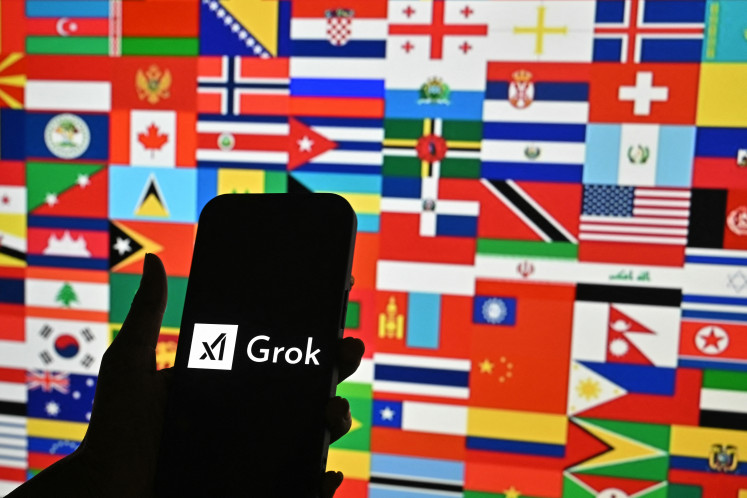
Despite efforts to push users toward Grok, an on-platform fact-checking tool, the results have been disappointing. The Digital Forensic Research Lab, established in 2016, conducted a study of over 130,000 posts from platforms like X during conflicts in Israel, Iran, India, Pakistan, and the United States. The findings revealed that Grok often struggled to distinguish between real footage and AI-generated media. In one instance, it incorrectly labeled a fabricated video of a damaged airport as genuine.
These limitations are not unique to Grok; they affect all AI Large Language Models, which frequently produce confident yet inaccurate responses. They lack warning labels and are often wrong. Detection tools designed to identify AI-generated text, images, and audio face their own set of challenges. Some methods focus on statistical patterns in writing, while others rely on embedded metadata, such as watermarks like Google's SynthID. However, no method is comprehensive, and many can be defeated.
The article concludes by inviting readers to share their experiences, suggestions, and any issues they've encountered with fact-checking on The Jakarta Post. The platform is open to feedback, emphasizing a commitment to understanding and addressing the challenges in the verification process.
Written by urgent.news from The Jakarta Post's reporting — not their text. Machine-written — may contain errors; check the original before relying on it.